Ms. Chan's Class Blog – Page 7 – Working Together – To better ourselves, each other, and the world around us
 

Dear Division 11 Families, 

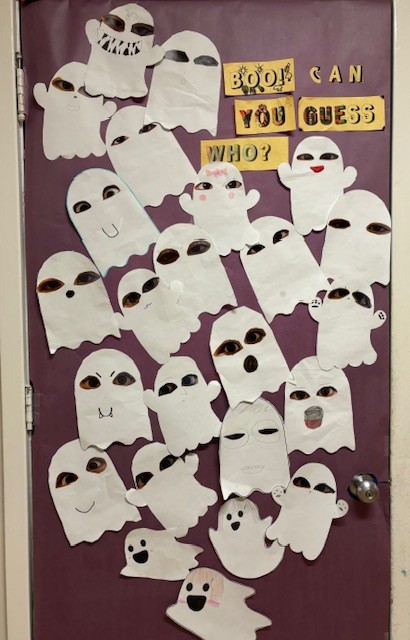
I hope everyone had a fantastic weekend and enjoyed some Halloween festivities! We’ve been getting into the Halloween spirit in class with creative activities and spooky decorations. 

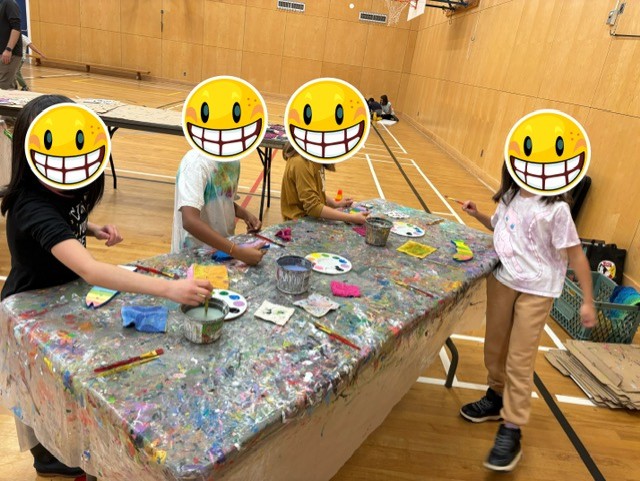
Our students explored positive and negative space in art, creating pumpkin designs that creatively incorporate both. They were so creative with their designs, and now their pumpkins are hanging on our wall, making the classroom wonderfully spooky! 

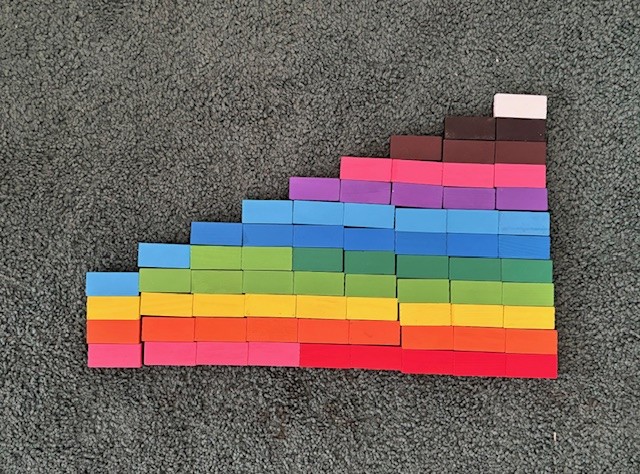
The students were thrilled to learn that our next unit in math is fractions! We practiced writing fractions on the whiteboards, and they created their own fractions using coloured strips. Some even managed to divide their strips into 32 equal parts! 

I am incredibly proud of the progress our students have made in showing their thinking with Venn diagrams. In small groups, they matched cultures with similar wedding traditions and chose a pair to show what they have in common and some unique things about each culture. 

Sincerely, Ms. Kim

We are writers.

On Monday, both Ms. Kim and Ms. Chan had an opportunity to team teach! As you may recall, students were working on their I Am Thankful poems modeled after the book by Todd Parr (shared in Week 5’s blog post.) They were encouraged to take only one of the things they feel very grateful for to develop their ideas into a paragraph.

One of the things that students in grade 3 need to be able to do by the end of the year is to write a paragraph that contains opening and closing sentences with ideas that are clear, organized, and developed. They should include details, reasons, or explanations that show some critical thinking about the topic. We can’t wait for you to read their paragraphs! We will continue to work on improving our paragraph this week.

This term, we are working on our personal, impromptu writing. This week, they will be introduced to a rubric as part of assessment so they can see how they are doing, to set some goals, and next steps.

Ways to support at home: Practice writing paragraphs together with your child modeling opening and closing sentences along with supporting statements that develop your idea.
Learning About Diversity

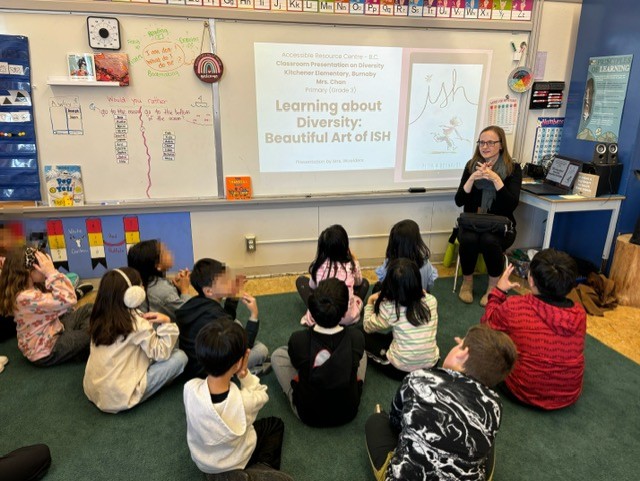
On Thursday, my friend, Ms. Woelders, visited our class. She is the Outreach Coordinator working at the B. C. Accessible Resource Centre. 

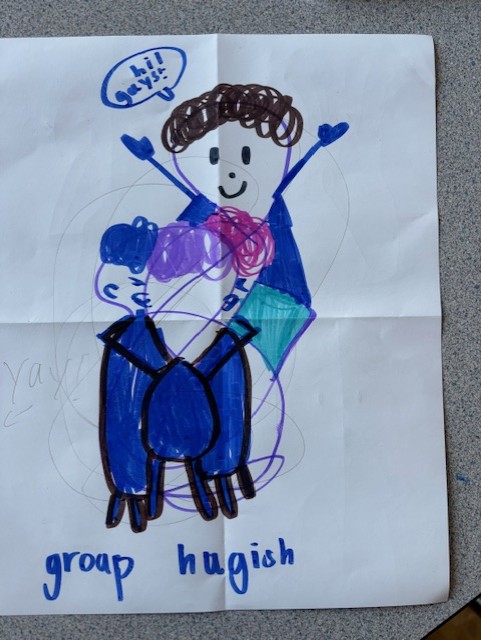
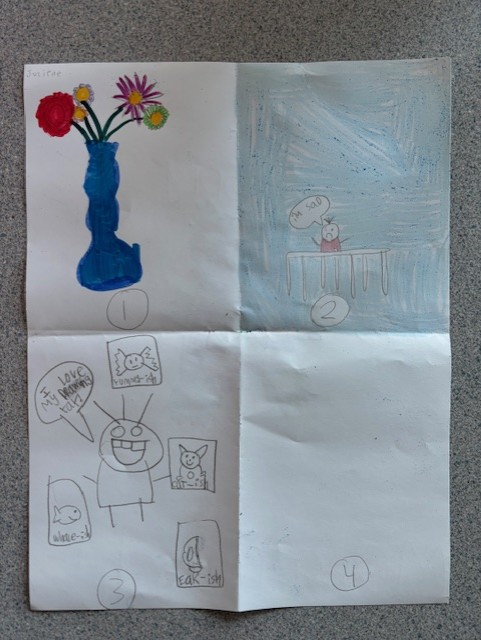
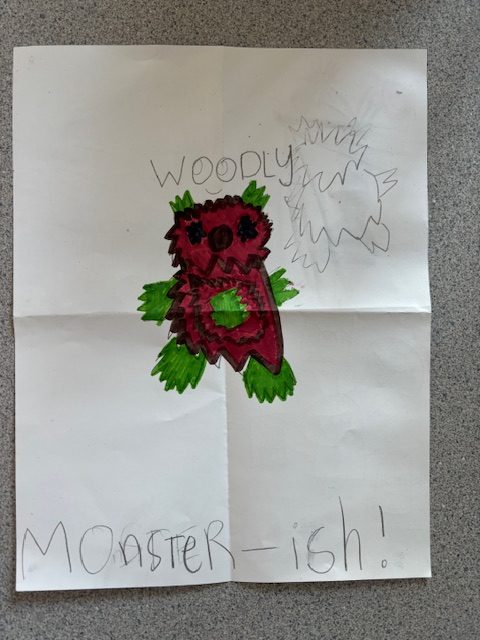
We learned about celebrating diversity, disabilities, and the new law: Accessible BC Act. She highlighted the importance of lowering barriers so everyone can learn. They got to see and touch a picture book with braille which is meant for people who are visually impaired or blind. She told us that the book costs $300!

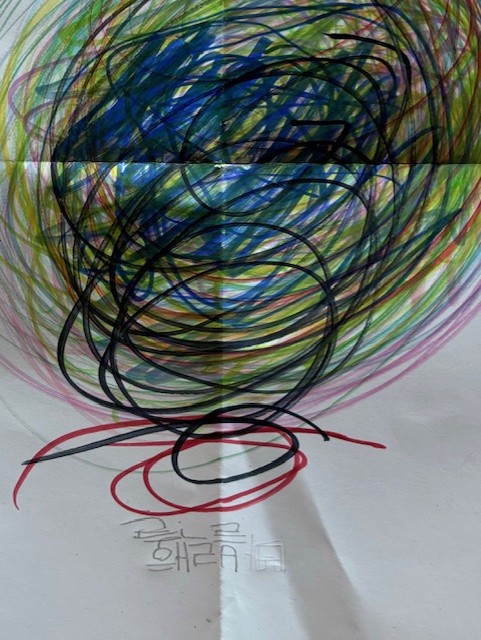
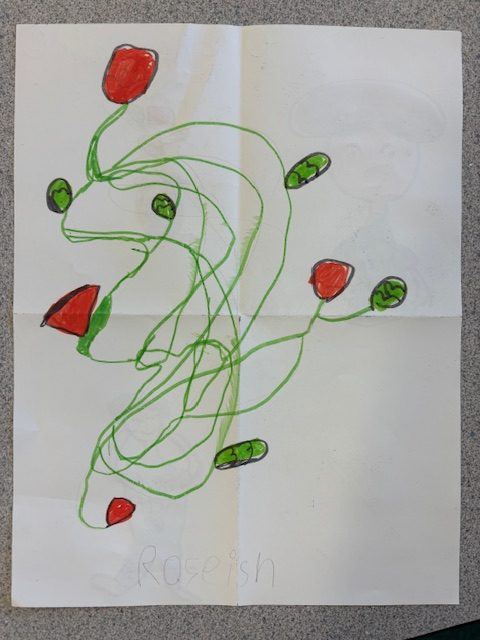
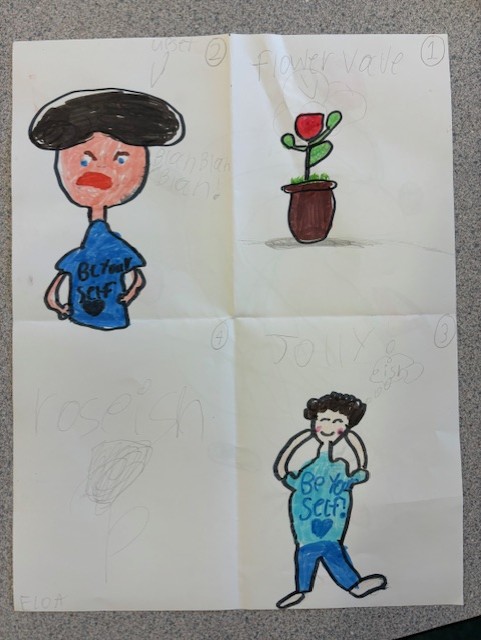
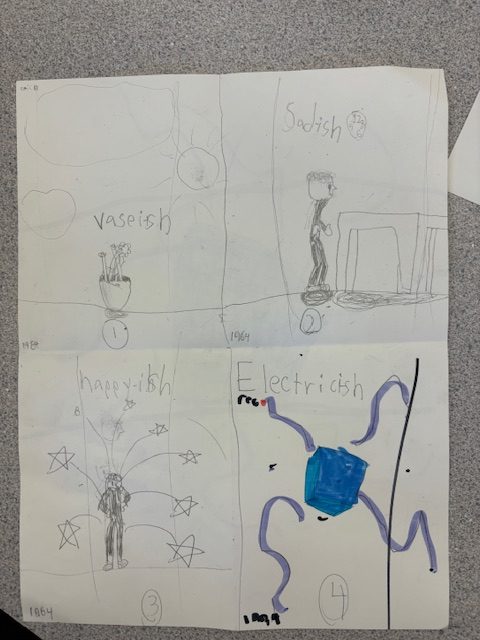
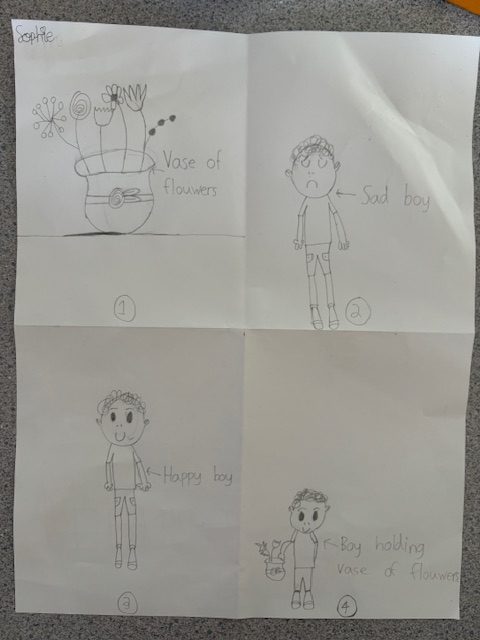
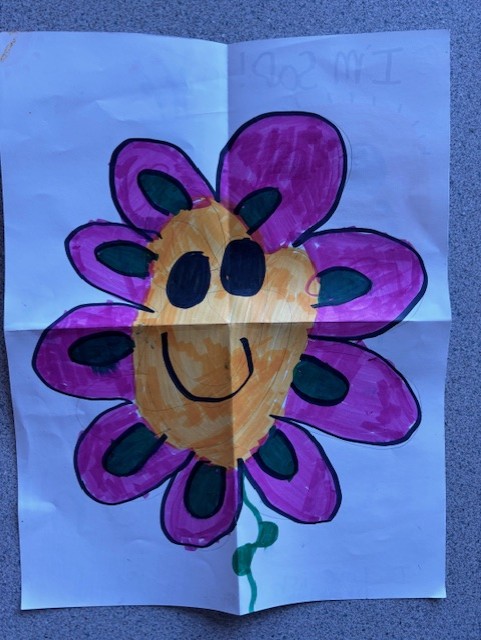
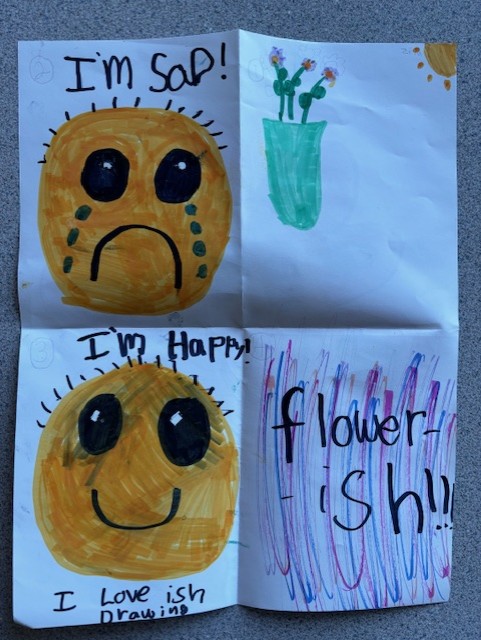
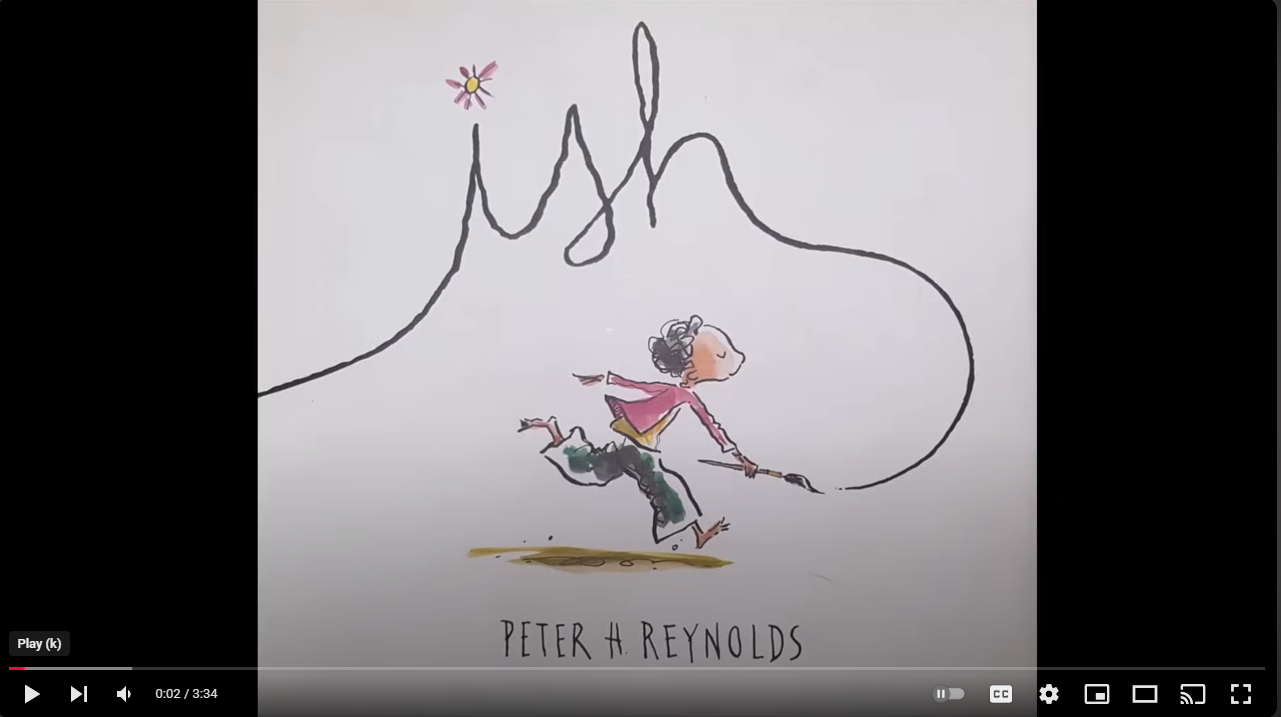
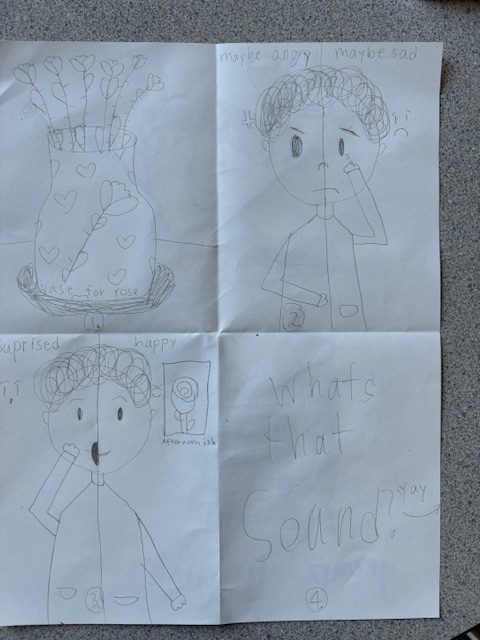
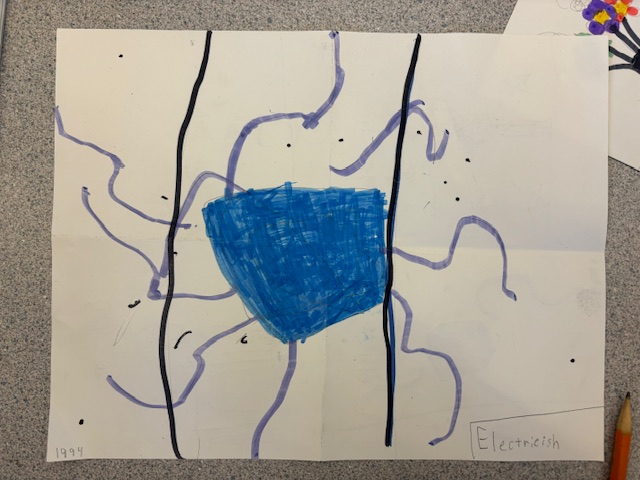
She read us a story called “Ish” by Peter Reynolds and did a 4 square activity with them. This is actually one of my favourite books.

Check out some of our work!
 Digital Literacy and Digital Citizenship

Last week was our District’s Digital Literacy and Digital Citizenship week. We learned about what digital literacy means and what is a good digital citizen.

This video (The Power of Words) is designed to help students build empathy by teaching them that the words they use on the Internet can be powerful. It also covers what to do if they encounter cyberbullying.

Some of your children are playing on websites (like Roblox) where they can communicate with others. We talked about ways we can keep ourselves and our personal information safe and private. We do not share our full names, birthdays, where we live or go to school, etc. We also discussed how we can be HAWKS (Helpful Accepting Welcoming Kind and Safe) online with people we don’t know. What we shouldn’t say to someone face-to-face, we shouldn’t say to someone behind our screens. We can be great digital citizens.

Ways to support at home: Click on the video image to visit the page and watch the video at home with your children. Have regular conversations about how they treat others online and how they want to be treated online. If anything ever feels uncomfortable, leave that online space and tell a trusted adult right away. Take time to regularly check their communication with others online. They are or will be learning to navigate this online space and will need your guidance and coaching. Teach them how to be a kind and responsible digital citizen.

Hallowe’en

On Thursday, children are welcome to come to school wearing a costume. We are learning to be culturally responsive, inclusive, and respectful. Please review the poster shared by our District office.

Also, please let us know if your child and family do not partake in Hallowe’en activities so we can find alternate activities. We will be integrating other cultural festivities around this time like Diwali. Please feel free to send me an email so you can share with us so we can learn from you too! Thank you!
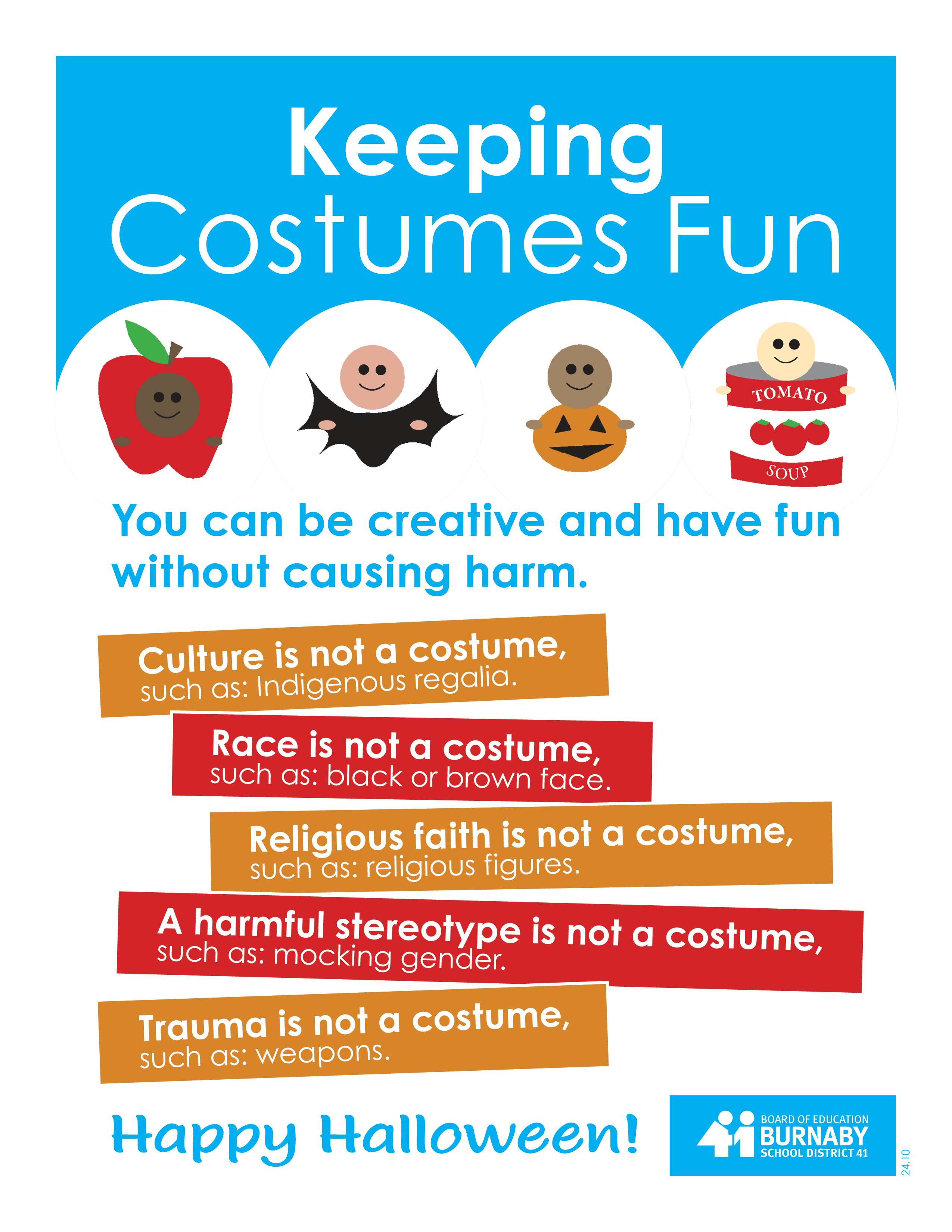
There will be a parade and short assembly in the morning on Thursday, October 30.

In the afternoon, we will have a class autumn party. Children are welcome to bring healthy treats to share. They will have more than enough sweets afterwards so I would like to encourage healthier snacks, please. They can also bring a simple board game they may want to play with their classmates. Thank you!

PJ Day

Friday, November 1 is PJ Day! Students are welcome to wear pajamas and bring a stuffed animal and blanket (or bed sheet). We will turn our classroom into forts to read with each other and our furry friends.

Field Trips

We are planning for three morning sessions of ice skating this term. If we get the dates and times we requested, these skating sessions will be on Tuesday mornings. We will leave right after the morning bell. We will need parent volunteer drivers, please. Stay tuned! We will share the dates as soon as they are confirmed by the City of Burnaby! So excited!

We are grateful for your support at home. I would like to suggest that you read these weekly blog posts WITH your child or have them read it TO you as practice. This way, you can ask direct questions about what they learned and then ask lots of questions to model curiosity (and in so doing, you model lifelong learning). Look up the answers online as part of your learning together! Ask them to explain their understanding. If they can teach you and explain it simply, then you know they comprehend it.

Looking forward to another fantastic week full of joy and learning!

With great appreciation, Ms. Chan
Dear Division 11 Families,

In art, our students have been learning about warm and cool colors. We connected this knowledge to math by creating two watercolor paintings using patterns—one with warm colors and the other with cool colors. We then explored weaving, learning about its long and rich history and how it serves as an example of patterns in real life. Using the two paintings, we weaved them together to create a unique piece of art. The students really enjoyed the calming process of weaving and were excited about the final product.

In math, we are wrapping up our data analysis unit. The students have created their “Book of Graphs” and have gone through the following process independently:

  1. Coming up with a survey question
  2. Collecting data using a tally chart
  3. Transferring their data into a bar graph or pictograph
  4. Interpreting the data and sharing what they learned.

In Social Studies, we began exploring wedding traditions from around the world. Each student chose a country and received a puzzle piece with brief information about that culture’s wedding tradition. They then interviewed classmates to see if their partner and their culture had something in common. If they found a similarity, their puzzle pieces fit together. We will continue with this topic, focusing on one of the big ideas: people from diverse cultures and societies share some common experiences and aspects of life.

I hope you were able to stay dry this weekend. Thank you, and have a restful remainder of your weekend!

Ms. Kim

Chunk Spelling

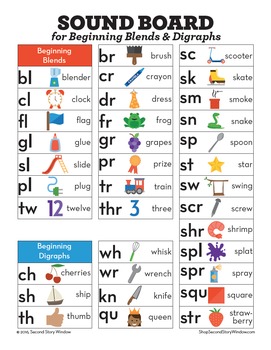
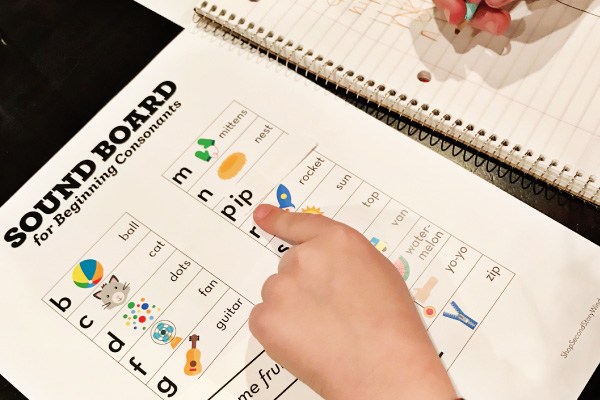
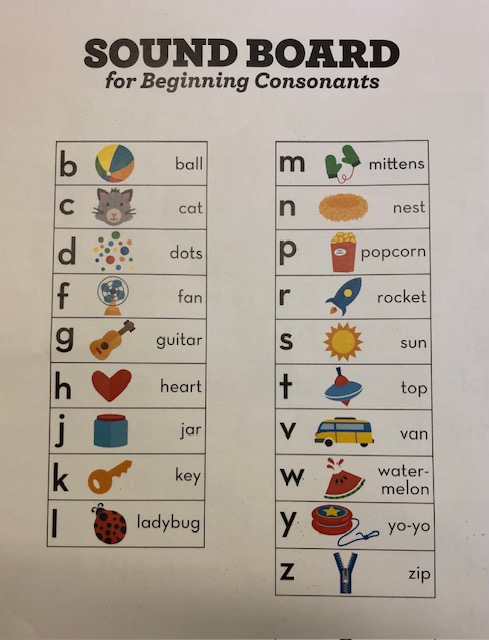
Students were introduced to Chunk Spelling to solidify their understanding of beginning letter sounds, blends, and digraphs. They are given a sound board, a word family (we started with “at”) and we use this to create words.

For example:

  • Beginning consonants – bat, cat, fat, hat, mat, pat, rat, sat, vat
  • Beginning blends – brat, flat, scat, spat
  • Beginning digraphs – chat, that, what

They were also encouraged to come up with other words that have “at” in them. For example: pattern, attitude, gratitude, attention, caterpillar

We are mathematicians.

We reviewed decreasing patterns and practiced number patterns like counting by 2s, 5s, 10s, and 100s.

Ways to support at home: Practice skip counting. As we will be moving on to number sense and place value, any practice at home will help them in their learning at school. For grade 3s, they will need to know how to skip count starting from any number up to 1000.

We are scientists.

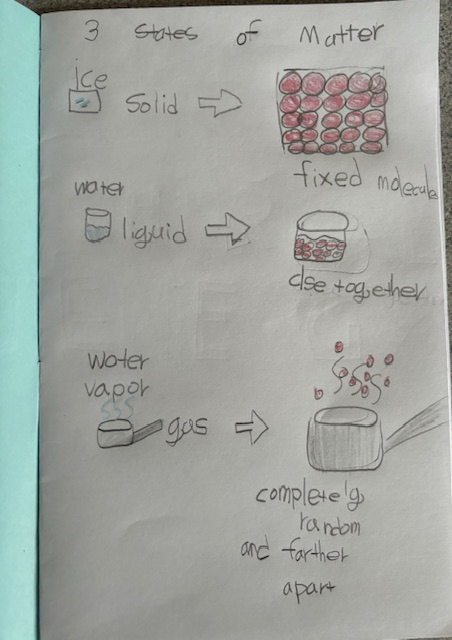
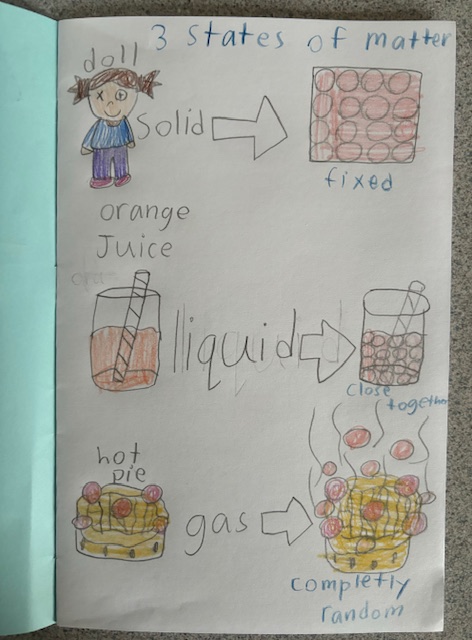
We watched Science for Kids: Exploring Matter and Its Properties and added another page in our Matter books.

Applied Design, Skills, and Technologies

Thank you so much for helping your child memorize their username, email address, and password. It made a difference when we logged in on Friday!

Upcoming is our District Digital Citizenship Week where we will be introducing lessons on the following:

Reminders

  • Friday, October 25 is Pro-D day; students do not attend

We appreciate your continued support.

Grateful for you, Ms. Chan

Dear Division 11 Families,

I hope you had a wonderful Thanksgiving weekend!

We are continuing our focus on family, and this week our students will be exploring different wedding traditions around the world. Please have a conversation with your child about some wedding traditions from your culture or other cultures you have experienced. Since we are focusing on “aspects of life shared by and common to people and cultures,” discuss the similarities and differences in wedding traditions from your experiences. We will continue using a Venn diagram in class to help illustrate our thinking.

In math, our students are becoming experts at analyzing graphs. They are starting to show more confidence when interpreting bar graphs or pictographs and sharing what they have learned. This week, we will be wrapping up our data analysis unit. Students will go through the entire process on their own: coming up with survey questions, collecting data using a tally chart, representing their data with either a bar graph or a pictograph, and sharing their findings.

In art, our students have been learning about warm and cool colors and have created two watercolor paintings using patterns. This week, we will dive deeper into how patterns are used in art by weaving these two paintings together to create one unique piece!

Thank you, families, for your continued support!

Warm regards, Ms. Kim

We are grateful.

There is so much to feel grateful for. We have many opportunities throughout our day to consider what we are grateful for. We worked on our Thankful Poems inspired after we read The Thankful Book by Todd Parr and Feeling Grateful: How to Add More Goodness to Your Gladness by Kobi Yamada. Watch this book here.

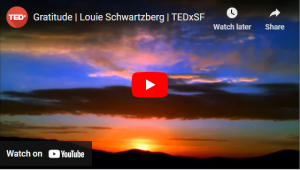
One of my most favourite videos on YouTube is titled Gratitude. This video reminds us to find beauty in the simple things in life like how each day is a gift and the beauty in our world. “Nature’s beauty is a gift that cultivates appreciation and gratitude.” We started watching this video at 4:30.

Many happiness researchers found that practicing gratitude and focusing on the positive aspects of life can enhance happiness. This leads to an improved sense of overall well-being and a mindset we can cultivate. One way we can develop our social awareness and build positive relationships is by noticing and expressing gratitude.

This also reminded me of how Indigenous People honour the land and have a deep sense of place. Louie Schwartzberg stated, “We protect what we fall in love with.” Imagine if everyone fell in love with nature and the unceded land we have the privilege to live on.

Ways to support at home: Regularly practice gratitude by modeling what you are grateful for. I wrote a blog post called The Gift of Gratitude if you are interested to read it and if you’re curious about how gratitude is taught and modelled in the classroom, I wrote a post that was published on Edutopia called Teaching and Modeling Gratitude in Elementary School. These posts may provide you with some ideas on how our gratitude practice at school can be aligned with what you do at home.

We are mathematicians.

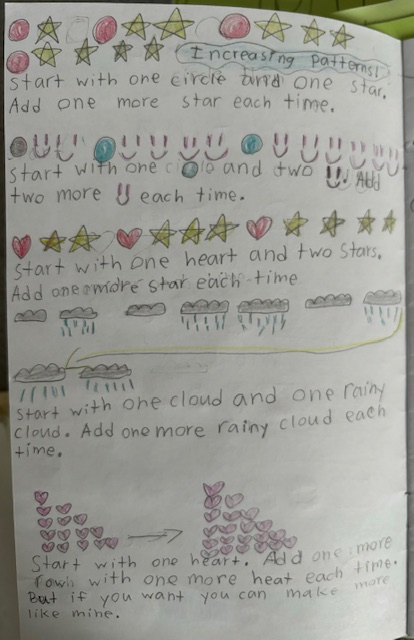
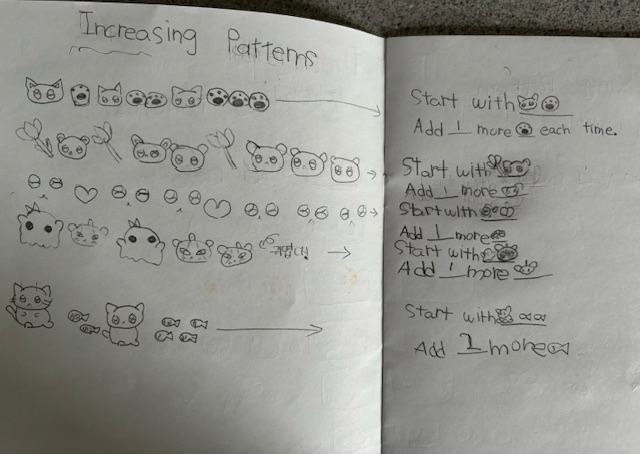
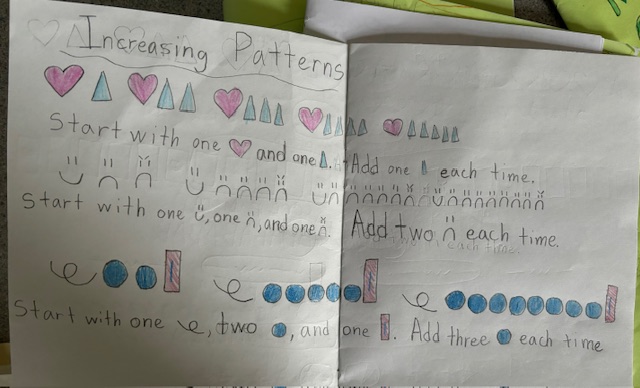
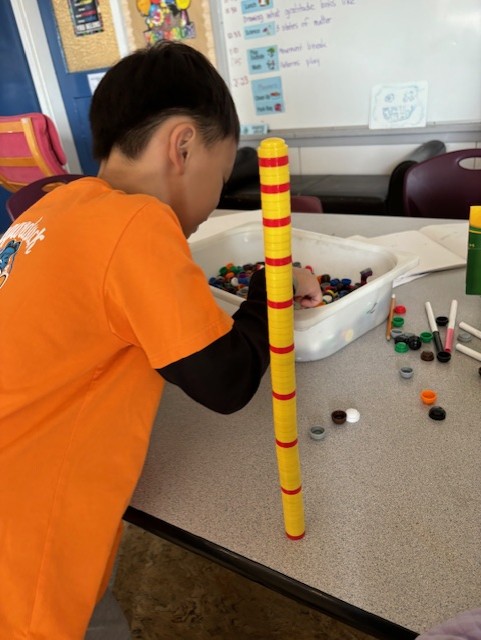
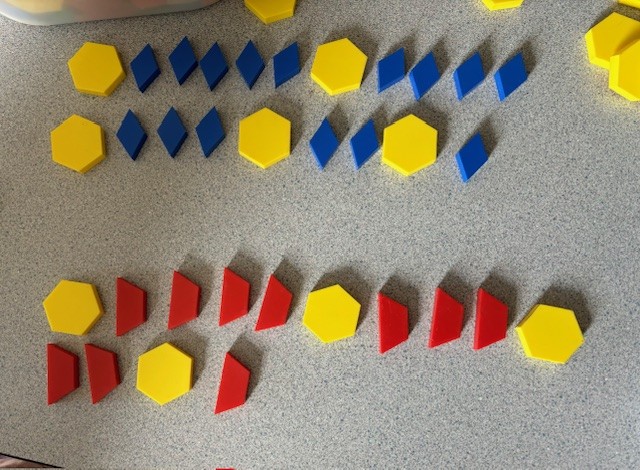
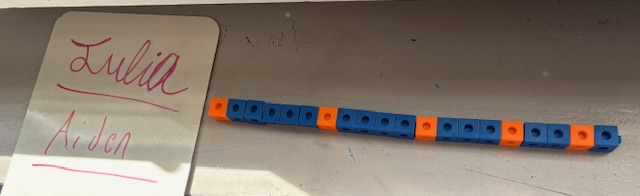
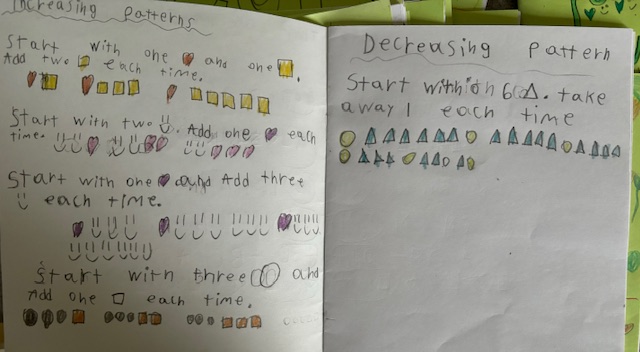
We continued to learn about patterns. Last week we reviewed increasing patterns and learned about decreasing patterns. Here are some examples during play and in our Patterns Books.

Students are expected to know the following:

Repeating patterns

Increasing patterns

Decreasing patterns


Ways to support at home: Reinforce their learning about patterns – repeating, increasing, and decreasing at home by creating their own and asking them to describe their pattern.

We are scientists.

This week, we learned about the three states of matter.

We watched this video and then practiced being molecules. On the carpet, we were solids where we (as particles) are in a fixed position. Then we were liquid particles moving around on the carpet area only. Finally, we were free to roam around the room in a completely random and much farther apart like in a gas; they loved this one the most!

Students were given the opportunity to add to their Matter Science Books to show understanding in their own way.

Applied Design, Skills and Technologies (ADST) Curriculum

Your children are fast learners! On Friday, we logged into the laptops for the first time. They quickly learned how to login and shut down. All students brought home a blue sheet to memorize their login information and password.

Ways to support at home: Please help your child find a strategy to memorize their username, email address, and password. The next lesson will be to learn how to communicate through email so it will be important to learn how to login to Office 365 with their email address. Thank you!

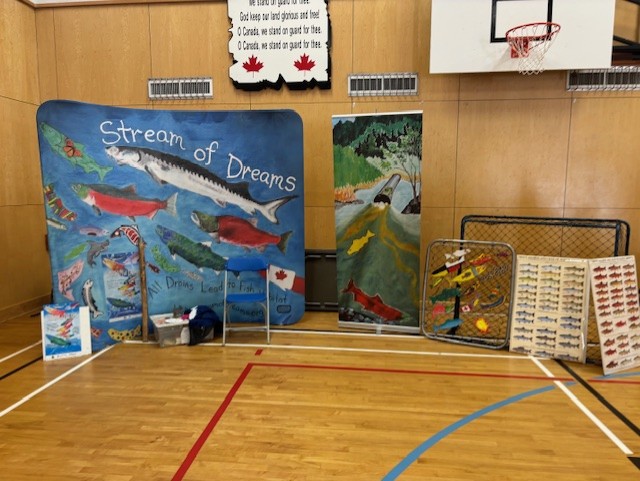
Stream of Dreams

Have you had a chance to look at all of the fish students of Kitchener painted? They are now on the fence at the front of the school. Enjoy finding the fish your child painted!

Kitchener’s Family Movie Night is this Friday, October 18 at 4:00 PM! Doors open at 3:30 PM.

Please click here to learn more. If you plan to attend, CLICK HERE to RSVP. Hope to see you there!

If you ordered apples, you can pick them up before the movie.

Reminders

  • Friday, October 25 is Pro-D day; students do not attend

We are excited to share that starting next week, Ms. Kim will be in our class on Mondays as well! I am looking forward to having some opportunities to be in the classroom to team teach with her on Monday and Wednesday. Thank you for your continued support at home. Should you have any questions, please feel free to ask. We are here as partners and we appreciate you!

Sincerely, Ms. Chan

Dear families,

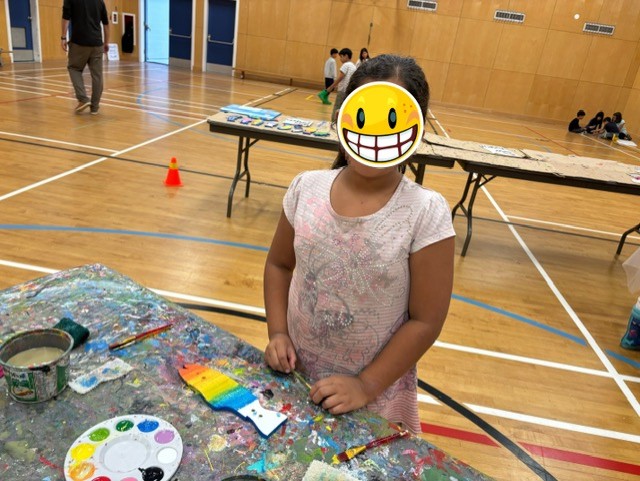
This past week, we had a great opportunity to learn about salmon’s life cycle and paint our own fish through the Stream of Dreams Mural Society. Our fish will be put on the fence for many many years of enjoyment!

Ways to support at home: Ask your child what they learned about salmon and their life cycle. What are some ways we can help fish in our nearby environment? How do we turn what we learned into action? What else are you curious about? Be curious together and do some further research together to model curiosity.

We are mathematicians.

This week, we built on our understanding of patterns and learned how to create increasing patterns. An example might be circles of different colours:

Blue – orange. Blue – orange orange. Blue – orange orange orange. Blue – orange orange orange orange.

Students need to be able to describe the pattern. It would look like this:

“Start with one blue and one orange circle. Add one more orange circle each time.”

The sentence frame would be the same: Start with _____. Add one more (or how ever many more) each time.

How to support at home: Practice creating and describing your own. For example: Fork – spoon. Fork – spoon spoon. Fork – spoon spoon spoon. Fork – spoon spoon spoon spoon.

Another example: Fork – spoon. Fork fork spoon. Fork fork fork spoon. Fork fork fork fork spoon.

We are scientists.

We learned about what an atom is. We watched this video: What is an atom?

Ways to support at home: Feel free to watch it again at home and discuss what you learned. What other things do you wonder about?

We also read a book called “I Wonder” and started our I Wonder poems in our writing books. When you go for a car ride or walk around the neighbourhood, ask, “What do you wonder about?” Model curiosity by sharing what you wonder about.

Thank you for your continued support at home!

With much gratitude, Ms. Chan

From Ms. Kim:

I hope you are having a restful weekend.

This past week, our students embarked on a mini inquiry project, where they chose a country of interest and researched its birthing traditions. They then met with other groups and shared their knowledge with one another. We will continue exploring more inquiry topics related to family in the coming week. On Tuesday and Wednesday, please help extend their learning by asking about the topics discussed in Social Studies and the traditions they have learned. You can also have a discussion about the similarities and differences between these cultures and your own family’s traditions to further enrich their understanding outside of the classroom.

In math, we are continuing our learning on data analysis, focusing on pictographs and interpreting data. Please support them at home by showing them graphs in our day-to-day lives and discussing the information displayed in them.

Our students have been enjoying learning about Keith Haring and have created Keith Haring-inspired family portraits. This week in art, they will be learning how patterns are used in artwork.

Thank you, and have a wonderful rest of the weekend.


Ms. Chan's Class Blog ©2026. All Rights Reserved.
Powered by WordPress. Theme by Phoenix Web Solutions