Fall Scenes

img_4948

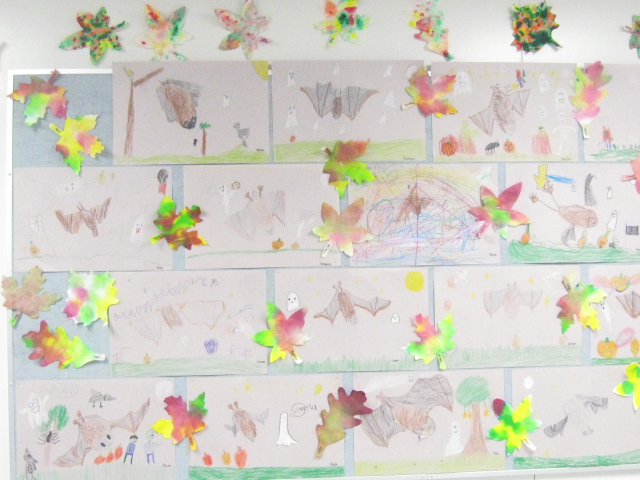
We spent some time experimenting with colour theory by using the three primary colours – red, blue, and yellow – to create some interesting looking variegated leaves. We used leaves cut out of special colour diffusing paper.  On one of the leaves students coloured it with the three primary colours using food colours; with the other one they used Solucryl water colour paint.  Most students enjoyed using the food colours better than the paints, with this particular paper.

These leaves are placed around the bulletin board in the hallway which holds our bat pictures.  These bat pictures are the students’ third bat drawings.  We initially did two directed drawings of the same bat on regular drawing paper.  The students then created this same bat drawing on grey construction paper.  They could then add some background details that would be found in the Fall.
Fin’s Friends

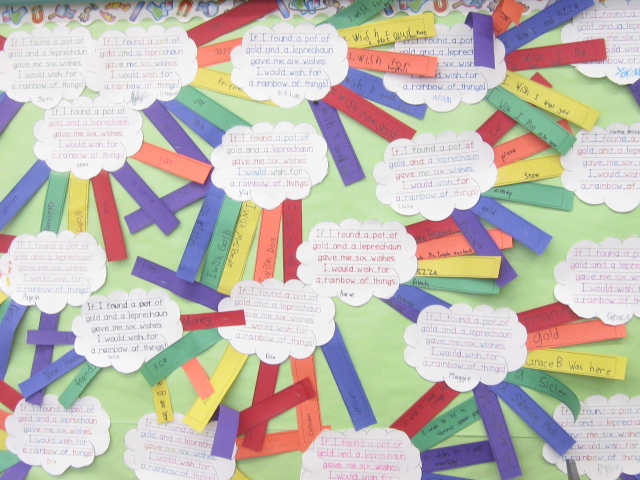
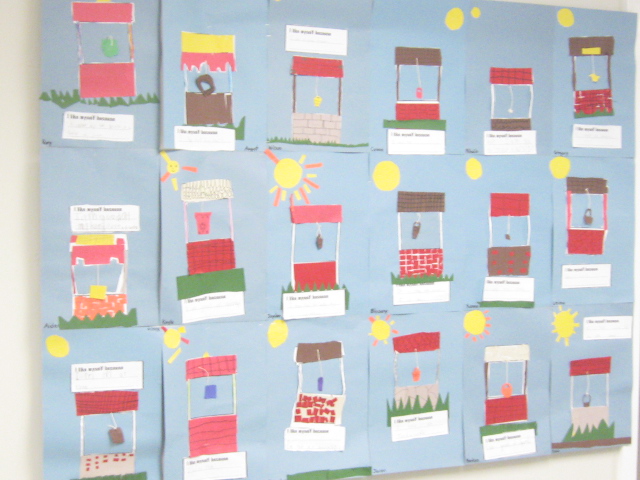
This is a programme from the Vancouver Canucks organization which focusses on personality traits involved with social and emotional learning.  We will be doing several lessons over the course of the school year.  We began our lessons by discussion some personality traits such as: kindness; friendliness; and perseverance. We read a book called, “I Like Me”, which is about a chubby pig who likes herself for being just the way she is – whether she is on her own or with others.  Students then thought about things that they like about themselves – things they are good at doing, how they treat others, etc.

They then created wishing well art pieces with their written statement about themselves incorporated into the art.

img_4950

I look forward to many more lessons over the school year.


Colour Theory

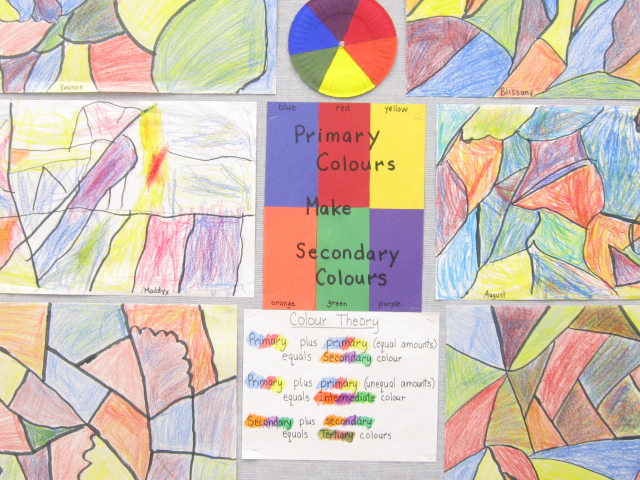
On Friday we spent some time reviewing Colour Theory, including:

  • Primary Colours – yellow, blue, and red
  • Secondary Colours – green, orange, and purple
  • How secondary colours are made from primary colours

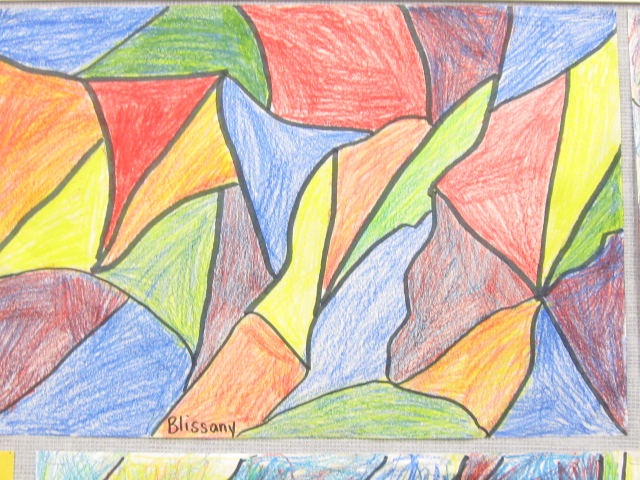
Students then made a tesselation on their paper; initially drawn in pencil and then traced over with black marker.  The criteria for their artwork was to fill in each section by only using the three primary colours in wax crayon.  They were to create their own secondary colours.  Students were allowed to do some sections in primary colours but the goal was to create mostly secondary colours.  Adjoining sections needed to be different colours.

img_4918

These art pieces are placed on the bulletin board at the back of our classroom.  There are some not finished; they will be added to the board when they are completed.  I think the lesson reinforced the colour theory for the students.

img_4919

We Are Thankful For …

Last Friday we spent the day doing things all about being thankful.  We read about the history of Thanksgiving in Canada.  Students learned that the first Thanksgiving in North America was in Canada in 1578 (in Newfoundland) with Martin Frobisher and other immigrants from England.  They were celebrating being thankful for surviving the long journey and the bounty of foods grown in the ‘New World’.  After being celebrated on many different dates over the years, the Parliament of Canada declared (in 1957) that the second Monday of October would be the recognized day of thanks in Canada.

We discussed traditions and modern celebrations.  Students enjoyed a sample, or two, of pumpkin pie!

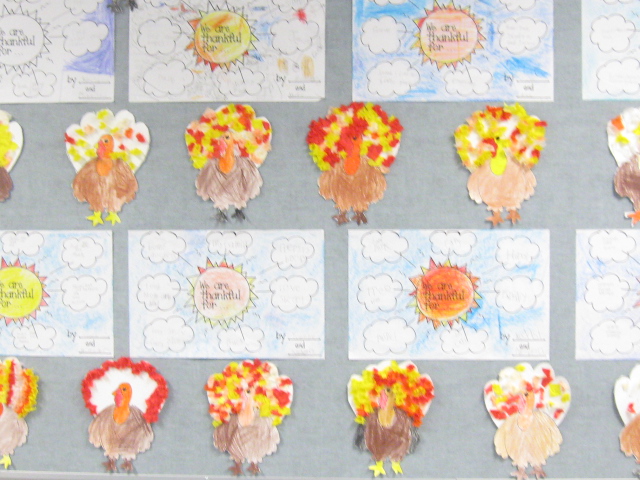
After a class brainstorming of things that we are thankful for, students were paired and set to work writing their own things to be thankful for.  These are posted on the bulletin board in the hallway.

These ‘thankful’ posters are intermingled with the tissue papered turkeys that the students worked on during Art on Friday afternoon.

img_4917

Seuss!!!

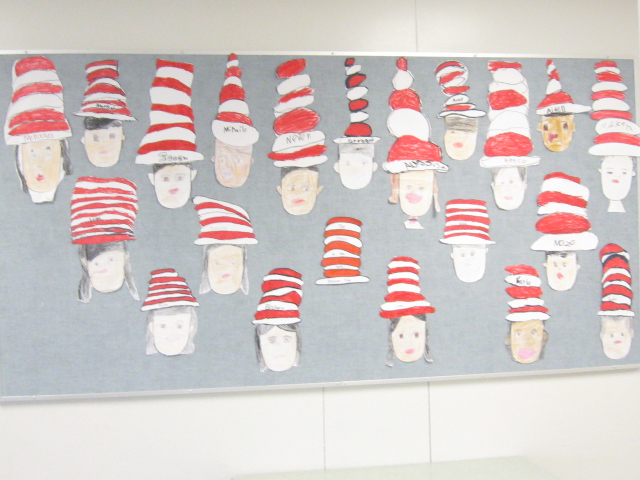
While we are awaiting the onset of our Reading groups (in a few weeks) we are going to be doing a literary study of the books by Theodore Seuss Geisel – also known as, Dr. Seuss.  We will do all sorts of activities around some of his books: writing, predictions, extensions, and artwork.  Some activities will be individual and others will be group based.

This week we have begun with the iconic classic, The Cat in the Hat.

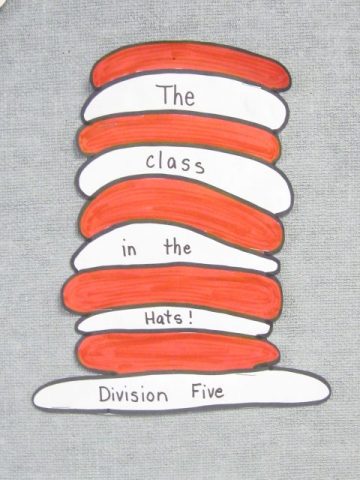
We had an extended directed drawing lesson on facial features.  Students then created their own faces through their drawing.  Hats, in the style of The Cat in the Hat, were made and added to their portraits.  These are on our main bulletin in the hallway.

img_4892

img_4890

Make sure you check them out when you come by for our Intake Interviews next week!

Axis Theatre – Raven Meets the Monkey King

To top off a busy week of Fine Arts the whole school enjoyed a great presentation of this play on Friday, May 27th in the morning.  The story line melded two great legends – one Chinese and one from our local Aboriginal history – with a modern aspect of having the story take place in our modern time.

The students enjoyed the comedy and the actions involved in this play.  I had read the two legends to them the day before the show.  Many of our students of Chinese ancestry already knew the legend of the Monkey King.  This really made the whole experience special for them.


Fine Arts Night

On Wednesday, May 25th students, under the guidance of Mr. Olson, presented songs that they have learned in their Music classes.  Each division performed 2 – 3 songs for the parent audience at both the 1:00 p.m. and 7:00 p.m. shows.

We were also treated to a display of wonderful student art on the walls.  I hope you enjoyed our class’s Sunflowers done in the style of Vincent Van Gogh.  We are currently working on ‘A Starry Night’, also by Van Gogh

Mother’s Day Gifts

The students have been very creatively preparing for Mother’s Day!  Normally these gifts would be sent home on Friday.  This year, as we are holding an Earthquake Drill on Friday afternoon, I will be sending these home on Thursday.  For the Earthquake Drill students will be awaiting pick-up by you on the field.  I didn’t want them to have to be out there with their surprises for Mom in bags.

Value

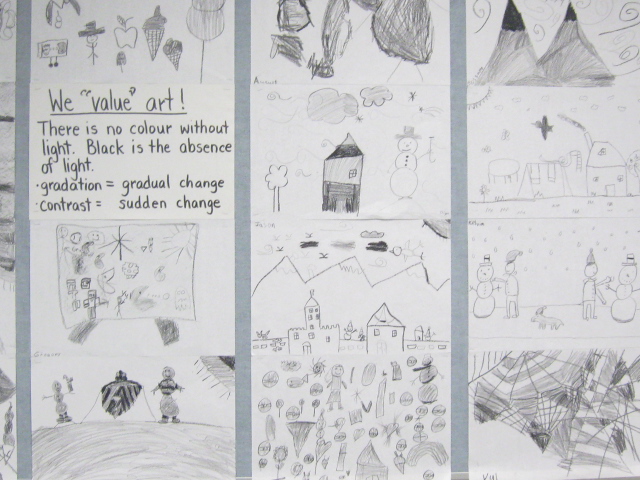
In our Art classes we have been studying the element of Art – ‘value’.  Students have learned where the colour that we see is (in the light) and that white and black are NOT colours.  White is the lightest light and black is the darkest dark.  Without light there is no colour.

IMG_4795

Students worked with white paper and only a black wax crayon to create a picture. They used ‘contrast’ – a sudden change from dark to light – and ‘gradation’ – a gradual change using the difference in pressure of crayon on paper. The lighter the touch the lighter the result, and vice versa with darkness.

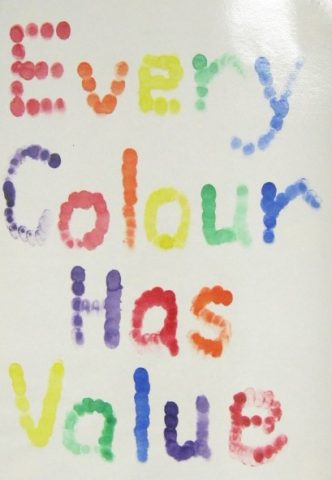
Value is not only with blacks, whites, and greys.

IMG_4797 (2)

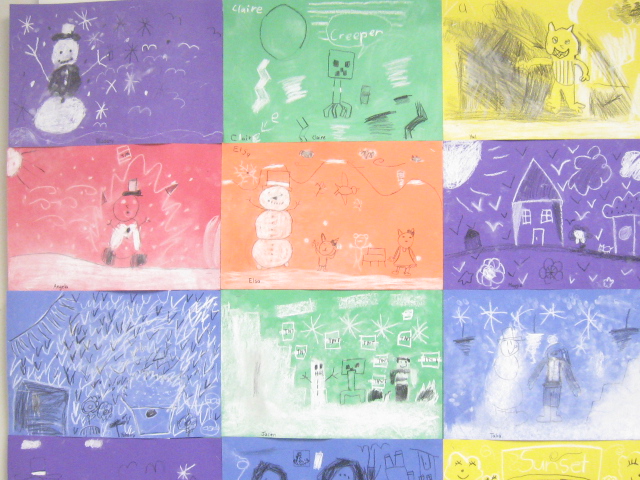
Last week students learned that when black is added to a colour (red, orange, yellow, green, blue, violet) that the result is not a change in colour but that it becomes a darker ‘shade’ of the original colour.  For example, when black paint is added to red it creates a darker, deeper ‘shade’ of red – it doesn’t become black.  Students were reminded that ‘shade’ comes from ‘shadow’, which they know is when there is less light.  In contrast to this, when white paint is added to a colour the result is called a ‘tint’ – a lightening of the same colour.  For example, when adding white paint to red paint we get lighter versions of red which we call ‘pink’.

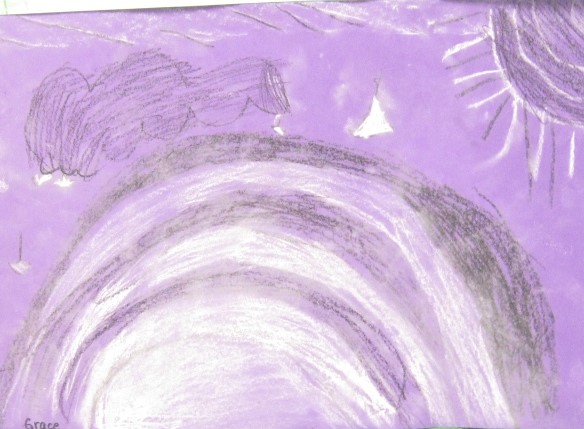
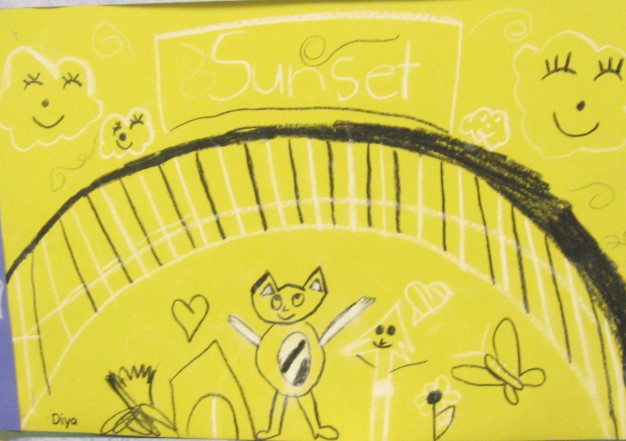
Students used coloured construction paper, black wax crayons, and white chalk to create these pictures.  Many seemed to think that ‘snow’ was necessary – even in April with our ‘heat-wave’ 🙂

IMG_4799

These sets of pictures are on the two bulletin boards outside of our classroom before the Office.  Come by and check them out!

IMG_4804 (2)

IMG_4803

I think they look awesome!