We’ll be making cards inspired by this video to give out to our community and our local healthcare heroes!
Feel free to watch the video and make your own version at home for friends or family!
A collection of moments from our Grade 7 learning community
We’ll be making cards inspired by this video to give out to our community and our local healthcare heroes!
Feel free to watch the video and make your own version at home for friends or family!

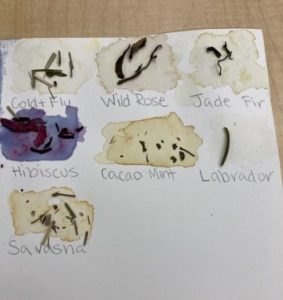
Have you ever tried hibiscus tea? How about cacao mint rooibos? Labrador tea? This week, we examined some very interesting teas from local and global sources!

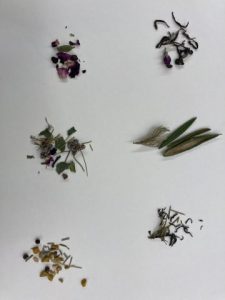
Take a look at some of the teas we investigated this week!
Top left: hibiscus tea
Top right: wild rose white tea
Middle left: ‘cabin’ tea (foraged from forests in Whistler, B.C.)
Middle right: Labrador tea (an important tea in many Indigenous cultures)
Bottom left: turmeric-ginger tea
Bottom right: jade fir tea

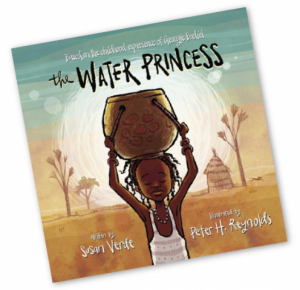
This week, we began our discussion about water scarcity both in Canada and around the world. We learned that a very small percentage of the water on Earth is fresh, clean, and drinkable. Many people across the world do not have access to clean water, which effects their lives in many ways.
In The Water Princess, Gie Gie tells the story of her daily routine with her mother. They wake up before the sun rises, walk many miles to a water source, wait in line, gather the water, make the trek home, and then boil the water to try to remove some of the impurities as microorganisms. The cycle repeats the next day, and the day after.
We will continue to discuss water preservation, scarcity, and purification over the next few weeks.
Hi everyone! On Thursday, November 26th I will be sending home a sample of one of the teas we have been learning about in Science. Please feel free to brew and taste the tea together at home! Here is some information about the tea:
To serve: Steep the tea in hot water for 3 minutes. Strain and enjoy. You may also want to add a little maple syrup for sweetness, or a slice of lemon for flavour.
Please let me know if you try the tea, and I hope you enjoy this unique blend of Green tea and Fir tea! I’ve attached a video of an Indigenous chef discussing how he sustainably harvests ingredients for tea:
Hello Scientists,
Please don’t forget that your homework for tomorrow is to brainstorm an idea for an experiment involving our bean sprouts!
For Thursday, please come prepared with an idea of what you’d like to ‘test’ in your experiment.
For example: I am going to test whether the beans grow larger if they are watered with tap water or bottled water.
We will design our hypothesis, control, etc. tomorrow in class!
Today, we watched the short film (and read the book upon which it was based) The Fantastic Flying Books of Mr. Morris Lessmore. The story is about the importance of books, the cycle of life, and how important it is that everyone has a chance to tell their story. If you have 15 minutes to spare, check out the Academy Award Winning short film, linked above!
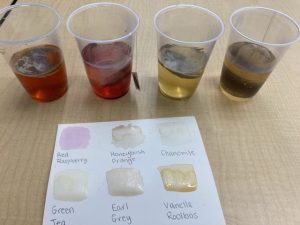
Did you know that tea is the most popular drink in the world (other than water)? People all over the world drink different kinds of tea. You might drink iced sweetened tea, hot mint tea, or even fruit-flavoured tea with boba! Today, we examined some of the Science behind making tea.
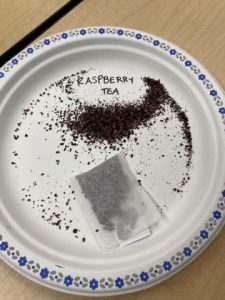
We started by making observations about the tea. What colour(s) did we notice? What texture/size were the particles? What scents/smells did the tea have?

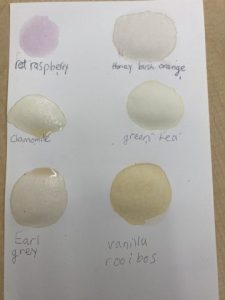
We made observations about 6 kinds of tea: Earl Grey, Vanilla Rooibos, Chamomile, Green Tea, Honeybush Orange, & Red Raspberry. Then, we predicted what colour the tea would be when we diffused it (steeped it) in water.
Then, we added hot water to our tea and let it steep. We observed how the tea changed in colour and scent when steeped in water. Finally, created a Science Journal page by painting a small ‘swatch’ of each tea.
One of the most surprising discoveries for our class… the Green Tea was not very green, and the Earl Grey tea was not grey at all!


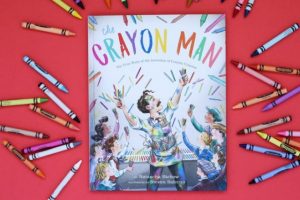
Today, we learned about the inventor of Crayola crayons. Edwin Binney was a fantastic, successful innovator because he worked hard, listened to others, and always wanted to solve problems. He heard many children complain that the old style of crayons weren’t bright enough, were too bulky, and too expensive. So, with his team, Edwin created a new kind of crayon… the Crayola crayon!

Over the next few weeks, we will be learning about innovators and inventors like Edwin Binney, Leonardo Da Vinci, and many more!
Check out the video below to see how Crayola crayons are made today!
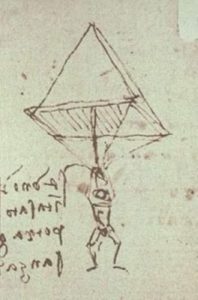
After our very successful catapult STEM challenge (pictures/video to come), our class will be exploring the genius of Leonardo Da Vinci and his amazing flying machines! We will first be examining his blueprint/design for a parachute, and using his journals as inspiration to design our own parachutes!

When we design our parachutes, students may bring up to 2 OPTIONAL MATERIALS from home (ex: paper towel roll, fabric). We have just begun blueprinting our designs, but stay tuned for our results!

Why do people sprinkle salt on their driveways when the weather gets cold? We tested what substances would melt ice the most quickly: fine salt, coarse salt, or sugar. We also tested what liquids would melt the ice quickly: salt water, regular water, oil, or vinegar.
What do you think our results were?