This week, we read a story set in the country of New Zealand! In the story, someone wants to perform the ‘haka’, a traditional ceremony in Maori culture. The haka is a combination of rhythmic movement, song, speech, and facial expressions that was traditionally used in battle. Now, many Maori people perform the haka to feel connected to their culture and history. Below is a video of the haka being performed by athletes before a game:
To celebrate national Ice Cream Day & national Origami Day this week, our class made origami ice-cream cones! Feel free to follow the tutorial video and make your own at home!
Mr. Murray also spoke about the connections between mathematics, science, technology and art. See the video below for more information!
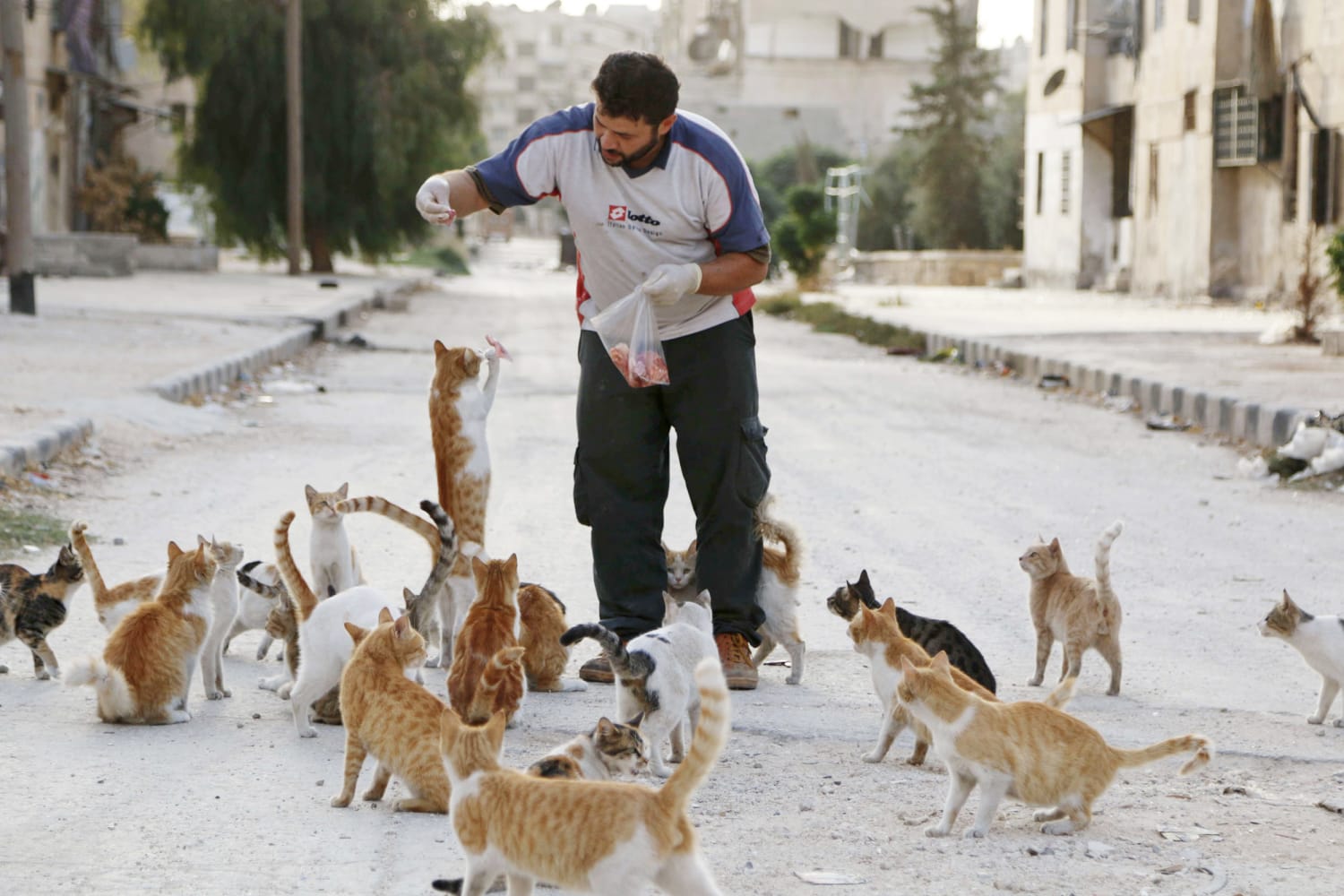
As Fred Rogers once said, when we talk about war or tragedy it is important to always “look for the helpers”. There are so many people who are doing their part to support each other, even in challenging or scary situations. The Cat Man of Aleppo, Mohammad Aljaleel, is one person who made a huge difference in his home country of Syria.
Mohammad worked as an ambulance driver when war broke out in his country. Many of his family members and his friends had to leave Syria as refugees. Thousands of cats and other animals were left behind because people could not take them with them as they fled the country. Mohammad decided to make a difference by feeding these cats, and then by opening a sanctuary for them. He also supported his community by opening and orphanage and by helping to feed the hungry,. Now, Mohammad has become an inspiration and received many donations from people across the world.
These are a few photos of Mohammad and his cats!
What are some ways that we can make a difference in our communities? Who are some other people who help support their communities (people, animals, and environment)?
Check out this video below of a woman in California who has opened her own cat sanctuary and shelter (with over 1000 cats):
Hello, writers! Please be aware that your everyday authors duotang (the orange duotang sent home a few weeks ago) is due by the first week of December. You still have about a month to complete your writing prompts!
Please reach out to Ms. Ward if you are struggling!
Again, you can complete one a day, set a timer for 10 minutes, or do a few a week. I look forward to hearing all about your growth and experience as writers!
Today, we read a true story of a service dog who helps to support a veteran. Many veterans may struggle with physical injuries or mental health after returning from war. The veteran in the book, Luis, has PTSD. This means he can have vivid nightmares, he struggles with loud noises and busy places, and he has flashbacks (memories of being in war). Luis also requires a cane and help to walk around. His service dog Tuesday helps support him emotionally and physically. Tuesday and Luis have a reciprocal relationship; they love and help each other.
If we see a service dog, it is important not to distract them. They have an important job to do! Check out this video below of a service dog helping a woman recover from her seizures:
Please click the link above to access the article about the important role of Indigenous soldiers in Canadian history.
November 8th is a day that we honour Indigenous soldiers and veterans. Thousands of Indigenous people have served in wars throughout Canadian history, including WWII and the Korean War. Sadly, however, these soldiers risked their lives to protect a country that still demonstrated racism and prejudice towards them.
For Brain Breakfast this morning, we read about the real-life story of ‘Soaring Soren’, the first French Bulldog to win an agility competition! Many people did not think Soren could participate in agility training. much less win, because of his short legs, his large head, and his weight. Soren and his trainer Deb proved everyone wrong through practice, teamwork, and perseverance!
The video below includes photos and clips of Soren completing his agility training:
Some questions to discuss:
-Why did so many people think Soren could never do agility training?
-When is a time someone thought you couldn’t accomplish your dreams? Did you prove them wrong?
-Why is it important not to judge someone based on their appearance?
BONUS: Here is Rudy the Bulldog’s infamous run of the agility course!
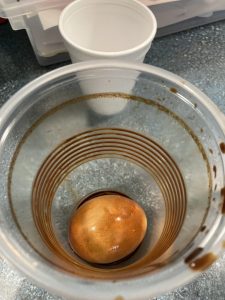
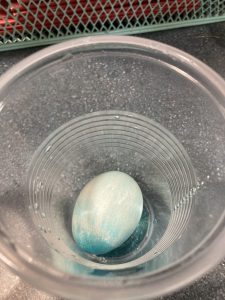
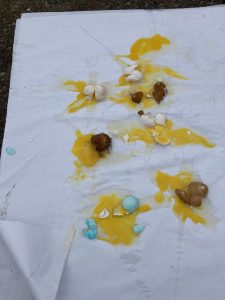
As part of our ongoing investigation into the Science behind our teeth, we soaked eggs in a variety of liquids for one week. Above, you can see the staining that came from soaking the egg in coffee (left) and cotton-candy + water (right). The calcium in eggshells is similar to the calcium in our teeth. We noticed that the egg that was soaked in vinegar had no shell remaining. We determined that acidic solutions can weaken calcium. Then, we smashed the eggs to test the strength of their shells.
Mr. Murray also discussed another toothy animal during Science… we learned about shark teeth! Unlike humans, sharks continue to lose teeth their entire lives. When one tooth is lost, another one easily fills the gap. Humans only have our ‘baby teeth’ and ‘adult teeth’, so it is important we take care of them by brushing and flossing regularly!