
This week, our class has been exploring the work of master storyteller Hayao Miyazaki. Miyazaki is a Japanese artist and director who creates animated films through Studio Ghibli. These films often include a special storytelling technique called ‘magical realism’, which blends reality with fantasy. Our class is watching Ponyo, a film loosely based on ‘The Little Mermaid’. Check out the trailer below!
Feeling Words: Imposter Syndrome
Do you have a hard time taking a compliment? Many of us may feel uncomfortable when people tell us we are doing a great job, and may feel as though we are not talented, smart, or hard-working enough to be successful. This is a phenomenon called “imposter syndrome”, when a person feels that they don’t deserve any of the success they have worked for. “Imposter syndrome” is a big theme in the short film “Twenty Something”, where the character Gia has to try to ‘fit in’ as an adult (even though she still feels like a kid who has not figured her life out yet).

Women’s History Month: Evonne Goolagong
Today we learned about the influential tennis player Evonne Goolagong. Evonne was born in Australia in the 1950s, when many Indigenous Australian people were forbidden from playing sports with white athletes. This meant that Evonne had to teach herself to play tennis by watching the tennis lessons through the fence, and by practicing on the court after everyone else had left. Despite this, Evonne became one of the most successful tennis players of all time, even competing in Wimbledon! She has also given back to the Indigenous community by creating opportunities for BIPOC children to participate in tennis lessons.
Invasive Species: Human Impact on Environments
Today, our class will be learning about invasive plants and animals with Ms. Willis. An invasive species is a plant or animal that was introduced to an environment (either on purpose or accidentally) by humans. These species are not native to the environment, and they can quickly overtake and harm the plants and animals that live there. Since many of these invasive species do not have natural predators, they can become a problem very quickly:
Our students will be choosing an invasive species to raise awareness about. To find some examples of invasive species, click the links below:
https://www.earthrangers.com/top-10/ten-of-the-worlds-most-invasive-species/
https://www.cbc.ca/news/science/10-invasive-species-threatening-canadian-habitats-1.950951
https://www.natureconservancy.ca/en/what-we-do/resource-centre/invasive-species/index.jsp?page=1
Reminders for this week:
Please don’t forget to DRESS FOR THE WEATHER tomorrow! If you have garden gloves, please bring them to school as well! We will be outside with Ms. Willis for an activity on invasive plant species.
Our Book Fair continues this week. If you would like to purchase a book, our class will be able to buy books tomorrow from Ms. Lynka.
If you were unable to pick up your COVID-19 tests, please see the office to receive your box. Please don’t hesitate to e-mail me if you have any questions!
Finally, please bring back the report card envelopes at your earliest convenience.
Thanks everyone!
Ms. Ward
Our Next Art Activity: Tiny Art Show
What does it mean to be ‘tiny’, ‘miniature’, or ‘small’? Our class is inspired by the Tiny Art Show, a public Art installation where artists create tiny paintings, sculptures, etc. for people to see!
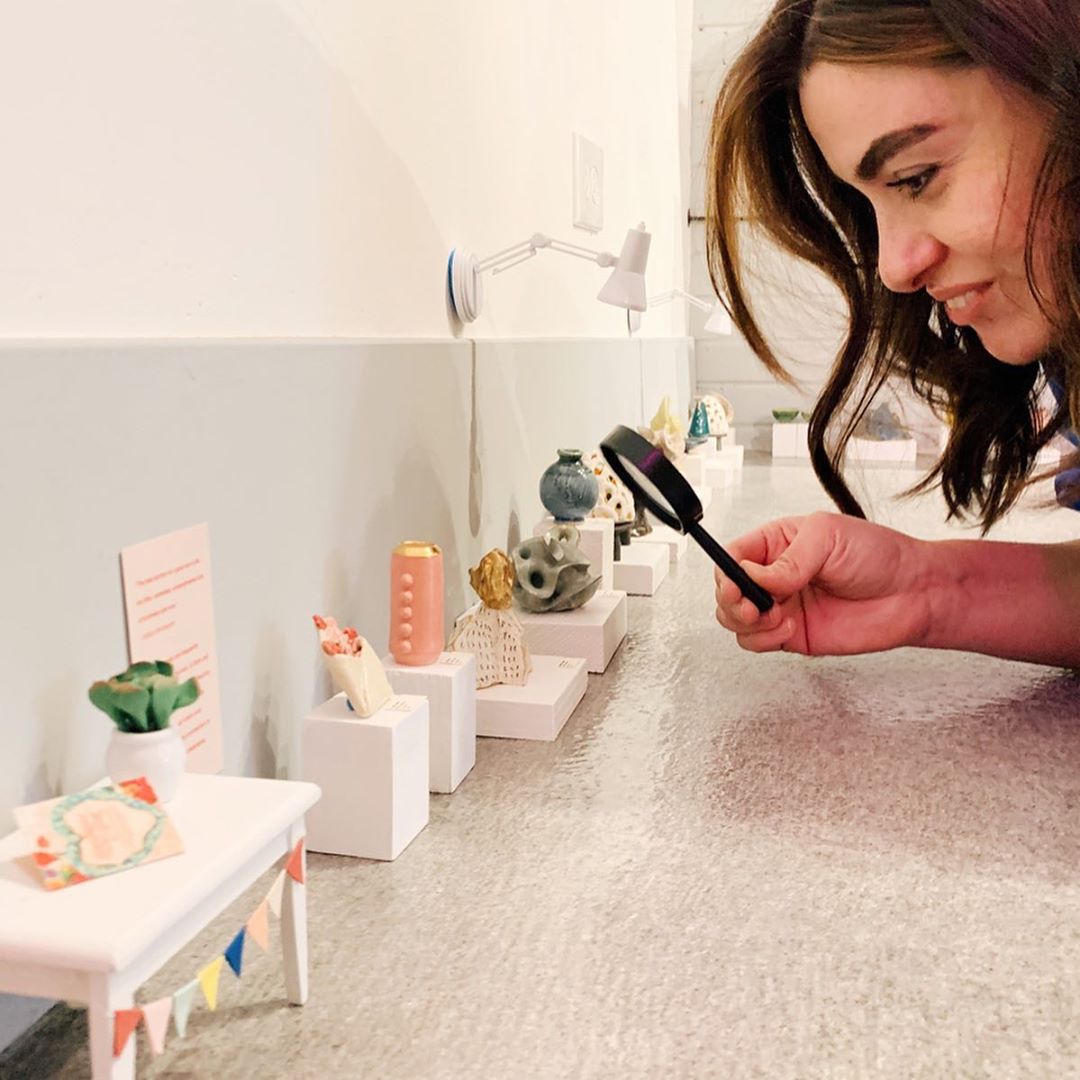
Image above: Jenny Lemons, an internet artist, and her Tiny Art Show.

Each student will create their own tiny art on a small canvas. We will then create our own miniature art show. Stay tuned for our progress!
What skills does it take to make something miniature? Watch the video below for some kids trying tiny versions of their favourite foods!
International Women’s Day:
Today, we observed International Women’s Day. As part of Women’s History Month, we are learning about changemakers, artists, activists, and athletes throughout history. Who are some important women in your life?
The ‘Future’ of Fashion: What Did People in the Past Think?
Our class read a story about Mary Edwards Walker, a woman who was arrested for wearing pants during an era when women were expected to wear dresses or skirts.

Above: Mary Walker in her 60s, dressed in a suit.
We discussed how our fashion and clothing can express our identities. We talked about how clothing trends and norms change over time. Finally, our class watched a video of what people in the past thought we would be wearing in the 2000s. Check out this video below… did any of the predictions come true?
School Lunches Around the World:
Our class has been investigating the role that schools play in health and nutrition. Many schools around the world have lunch programs that provide food for students during the school day. Some countries, such as Brazil and Finland, have funding (money) that the government provides to these schools so that students can be given a healthy, homemade lunch. Some schools do not receive funding from the government, and have to try to budget their money to pay for these meals.
Check out the video below for a few examples of what school lunches can look like in different countries:
Some questions to consider:
-What are the pros and cons of having a school lunch program?
-What do you think is an example of a ‘healthy’ lunch?
-If you could eat anything for lunch, what would it be?
Music & Messages: Songs about Equality
This week, we have been discussing if Music can change the world. Throughout history, songs have been used to spread messages. Often, songs have been used to ‘speak out’ against racism, war, and prejudice. Feel free to listen to both songs below: the first “A Change is Gonna Come” by Sam Cooke (1963) & the second “Stand Up” by Cynthia Erivo (used in the soundtrack of Harriet).
What songs have a message that resonates with you? Why do you think musicians include lyrics that send a message?