Thanks everyone!

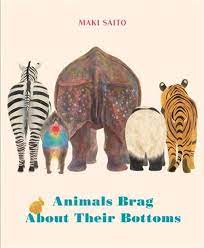
Picture above: one of the read-alouds from our meeting today, Animals Brag About Their Bottoms.

Thank you to everyone who was able to join us for our Zoom meeting today! Our Zoom meeting tomorrow will also be at 11:00 and will include a read-aloud (possibly a chapter from Out of My Mind or a different picture book) and a game/discussion.

Please don’t feel pressured to attend our Zoom meetings if you are not able to (they are optional). We are using Zoom as a tool to stay connected over the next 3 days, chat and check-in with each other, and to answer any questions about the online learning you might have.

Feel free to reach out to me via e-mail as well if you have any questions or want to submit your Extreme Writing or Math work!

I miss you all! I look forward to when we can safely return to our classroom!

-Ms. Ward

Math Activity from Ms. Ramen

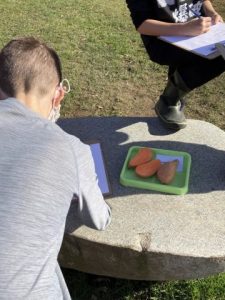
Recently, we have begun our new unit on measurement! Your task for today is to measure a variety of objects and see if you can find some that fit the following criteria. Remember to think about whether you are measuring in centimeters (cm) or millimeters (mm). Please use a ruler.

  1. How many millimeters are in a centimeter?
  2. Find an object that is less than 10 cm long.
  3. Find a food that is greater than 60 mm long.
  4. Find an object around your house that has a length between 90 mm to 150 mm.
  5. Find an object that has a width of 5 cm.
  6. Find an object that has a width between 10cm and 20cm.
  7. What is a trick you can come up with to help you remember the difference between length and width?

Please write down your results on a piece of paper to be handed in on Thursday. You can also email Ms. Ward and/or Ms. Ramen your answers as well.

Animals and Language: What Do You Think?

Today for Brain Breakfast, we discussed whether we believe animals are able to use language and communication. We watched this video of Billi, a cat who has been a part of the ‘Hungry for Words’ program. This program is researching and testing whether animals like dogs and cats can use human language/words when given the tools and training.

Check out the video below of Billi using her word buttons!

Some discussion questions for at home:

-Do you think that Billi really understands the words she is using? Why or why not?

-What are some ways that animals might communicate with humans or other animals? Do they have their own ‘language’?

-If you could talk to a pet, what do you think they would say? What questions might you ask them?

Extreme Writing: Bonnie the Bossy Goose

Today, in Extreme Writing, our topics were:

  1. Write about a time you felt bossy, frustrated, or angry. What happened? Does Bonnie remind you of anyone you know?
  2. Write a story from the perspective of Bonnie, the bossy goose! Or, write from the perspective of one of the animals living at the sanctuary!
  3. Would you ever have a pet goose? Why or why not? What is your ideal pet?

Change-Makers and Rule-Breakers: Notable Women in History

Today, we said thank you to all of the change-making and rule-breaking women who have helped pave the way for a more equitable future. We ‘stand on their shoulders’ and can build on their accomplishments. We will continue to take steps to create a future without racism, sexism, homophobia, and prejudice.

Who is someone whose ‘shoulders you stand on’? Who inspires you?

‘Roots, Stems, Leaves, and Flowers’: Investigating How Our Food is Grown

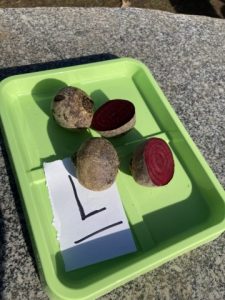
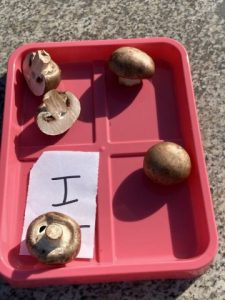
When you are diving into a salad or a bowl of mashed potatoes, do you think about where your vegetables come from? Do you think about how they grow? Today, our class investigated how the vegetables we eat are grown… whether they are roots, tubers, leaves, stems, or flowers.

The vegetables we examined were: artichokes, mushrooms, turnips, broccoli, lettuce, radish, brussels sprouts, yams, green onions, beets, and asparagus.

One of the most popular examples of a ‘tuber’ is a potato! Check  out how they are grown (under the ground) below:


Reassembling Skeletons: A Paleontology Mystery

When paleontologists discover fossils, often they have to make educated guesses about what the dinosaur looked like, where it lived, what it ate, whether it was a predator or prey species, etc. Sometimes, the skeletons will be incomplete or mismatched. Today, we tried to assemble a skeleton based on the fossils that paleontologists founds. Check out all of our different results!

This is a picture of what the fossil looked like when it was uncovered.

Based on educated guesses, paleontologists think this dinosaur may have looked like this: