Our Pumpkin Math Explorations

After our trip to the Laity Pumpkin Patch, we did some Mathematical explorations with our picked pumpkins.  These involved the concept of estimations.  I gave the students a baseline to judge by with my pumpkin – i.e. its weight, stem length, circumference. Students then did their own ‘good guesses’ on their pumpkins (in comparison to mine) in regard to:

  1. the number of vertical lines
  2. the length (in centimetres) of the stem
  3. the weight (in kilograms)
  4. the circumference (in centimetres)
  5. how many seeds are inside

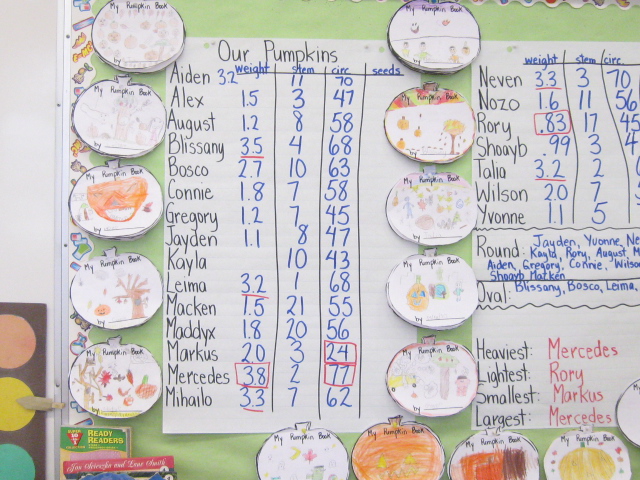
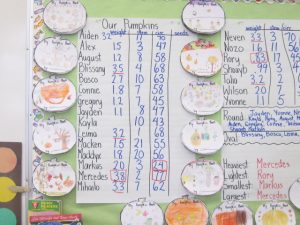
Then students did the actual counting of lines, the weighing, and the measuring of the stem and circumference.  We charted the numbers for each student and determined who had:

  1. the heaviest one
  2. the lightest one
  3. the smallest one (circumference)
  4. the largest one (circumference)
  5. round shaped pumpkins
  6. oval shaped pumpkins

Students then completed their booklets.  These are pinned to a bulletin board in our room.  They look like this …
img_4920

The pumpkins were sent home on Tuesday.  Once the students have carved their pumpkins at home, they are asked to count the number of seeds inside their pumpkin. They should then write the number in their planner so that they can record it in their booklet.  They are also asked to bring in 6 seeds to glue into their booklets.  This is from a story we read called, ‘Pumpkin, Pumpkin’ about a boy named Jamie who grew a pumpkin and at the end, after carving his Jack O’Lantern, he saved six seeds to plant the following Spring.

Thank you for helping your child do these two final stages to complete their booklets.
 

Colour Theory

On Friday we spent some time reviewing Colour Theory, including:

  • Primary Colours – yellow, blue, and red
  • Secondary Colours – green, orange, and purple
  • How secondary colours are made from primary colours

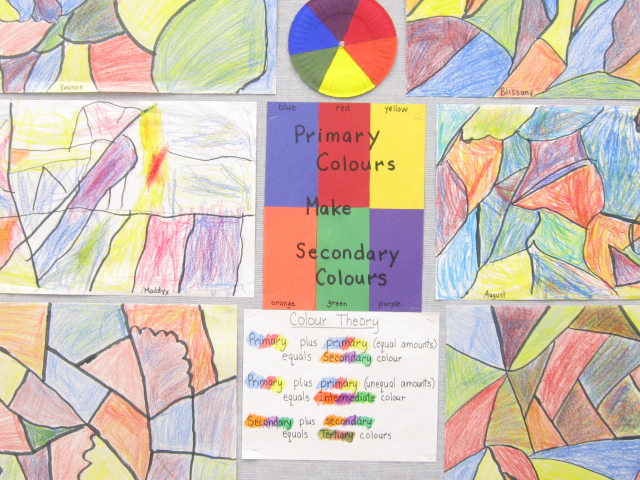
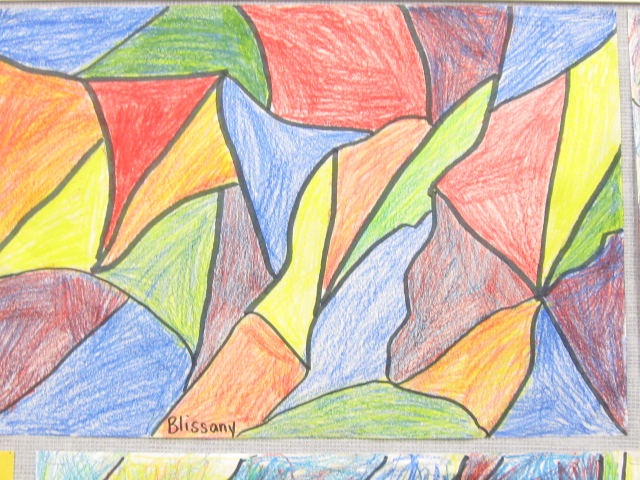
Students then made a tesselation on their paper; initially drawn in pencil and then traced over with black marker.  The criteria for their artwork was to fill in each section by only using the three primary colours in wax crayon.  They were to create their own secondary colours.  Students were allowed to do some sections in primary colours but the goal was to create mostly secondary colours.  Adjoining sections needed to be different colours.

img_4918

These art pieces are placed on the bulletin board at the back of our classroom.  There are some not finished; they will be added to the board when they are completed.  I think the lesson reinforced the colour theory for the students.

img_4919

We Are Thankful For …

Last Friday we spent the day doing things all about being thankful.  We read about the history of Thanksgiving in Canada.  Students learned that the first Thanksgiving in North America was in Canada in 1578 (in Newfoundland) with Martin Frobisher and other immigrants from England.  They were celebrating being thankful for surviving the long journey and the bounty of foods grown in the ‘New World’.  After being celebrated on many different dates over the years, the Parliament of Canada declared (in 1957) that the second Monday of October would be the recognized day of thanks in Canada.

We discussed traditions and modern celebrations.  Students enjoyed a sample, or two, of pumpkin pie!

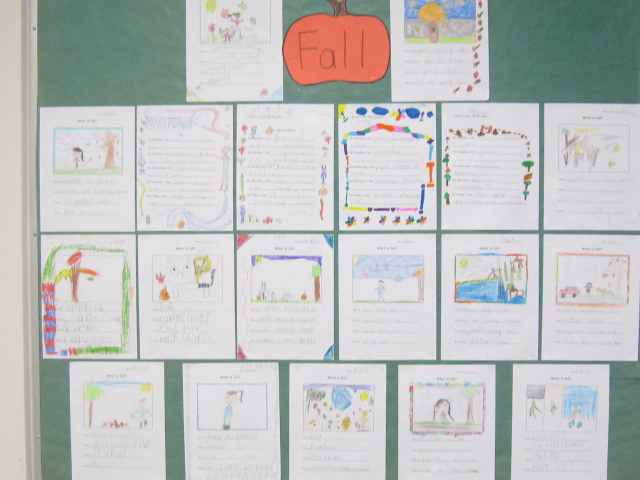
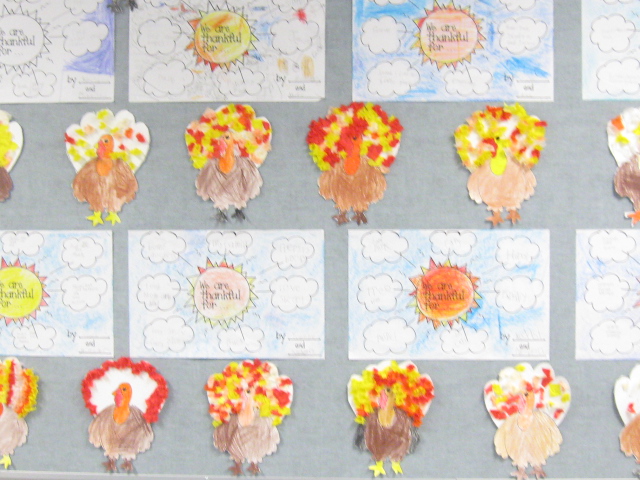
After a class brainstorming of things that we are thankful for, students were paired and set to work writing their own things to be thankful for.  These are posted on the bulletin board in the hallway.

These ‘thankful’ posters are intermingled with the tissue papered turkeys that the students worked on during Art on Friday afternoon.

img_4917

The Lorax

We have wrapped up our Seuss unit with reading and having a class discussion on The Lorax.  Some students were aware of the story from the movie version.  After our discussion the students brainstormed things that the Lorax would say to the Once-ler if he were given the chance.

img_4907

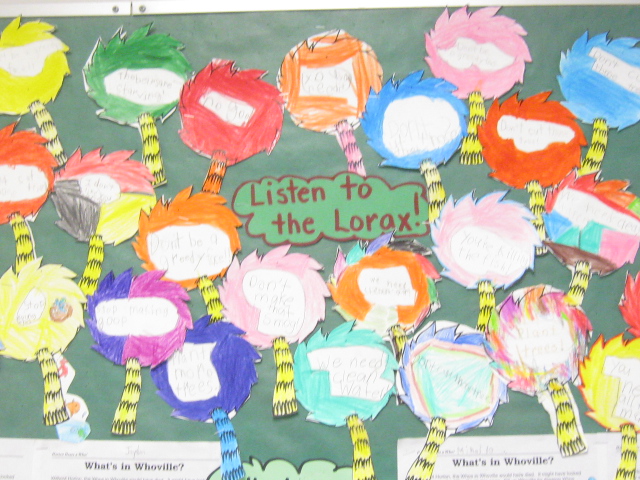
Students then chose one of these sentences – or created their own – and wrote it on a Truffula tree.  These were then decorated, cut out, and are posted on the bulletin board above their ‘What’s Happening in Whoville’ designs.

img_4910

All in all, I think that the students have enjoyed our time with Dr. Seuss.  There are a few more books that I will read (tomorrow or early next week) as a final goodbye.

img_4914


If I Ran the Zoo – Seuss

We enjoyed the book, “If I Ran the Zoo”, which is about a young boy who finds the typical animals in the zoo just a little too boring for him.  He uses his imagination and creates a variety of very Seuss-like animals for his zoo – if he was to have one of his own.

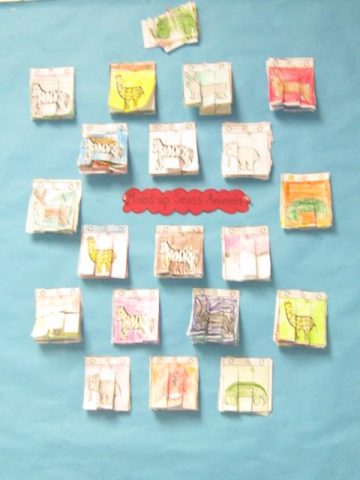
Students made flip books which had 6 typical animal pages and 2 pages where they could create their own outlandish animals.  Some students were very innovative with the animals they produced.

These books are pinned to the small bulletin board outside of our hallway door.  Check them out if you get by the school!

img_4906