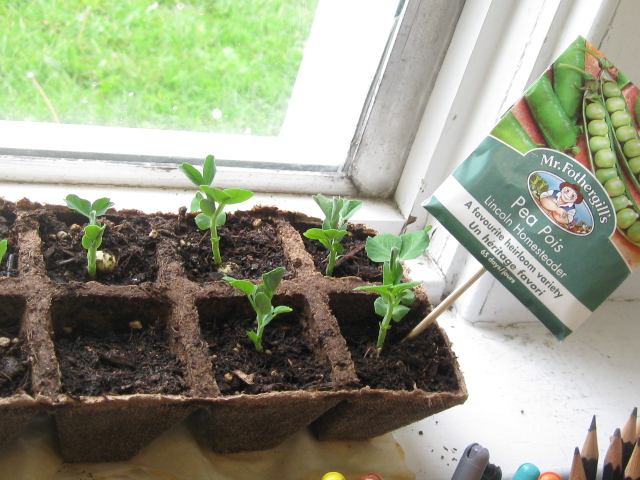
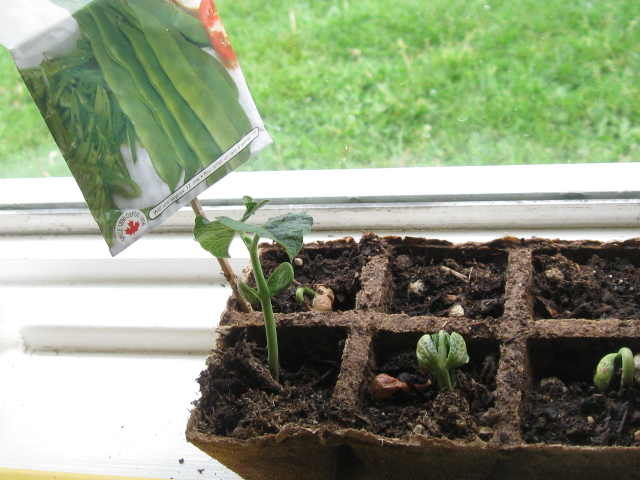
As we had planted beans in baggies we decided to also grow some in soil. We planted some peas, as well. These have recently begun to sprout.
Kindergarten and Grade 1 Experiences at Rosser Elementary
As we had planted beans in baggies we decided to also grow some in soil. We planted some peas, as well. These have recently begun to sprout.
Over the course of this school year we have been discussing WANTS and NEEDS in relation to ourselves. We discussed that while you may WANT something that there are actually a few basic NEEDS that are necessary for survival. For human beings these are: air, water, food, shelter (including clothing), and we added in ‘love’ (families).
Students have also been learning about what a plant NEEDS to survive. In this experiment we wondered if all of the seeds that a plant produces will grow successfully into a new plant. Ziplock baggies were prepared with dampened paper towels and bean seeds. These were placed on the windows to ensure that they received a fair bit of sunlight. Students followed the progress of their individual baggie by charting the changes.
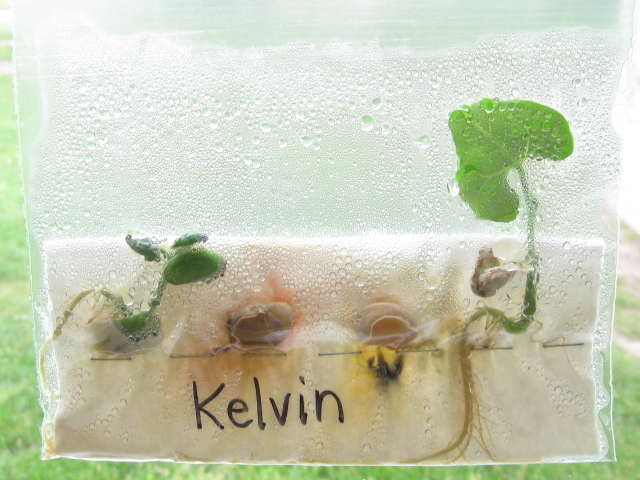
Each baggie had four bean seeds in it. A fair number of these seeds developed with a natural progression: roots came out of the seed and went down to the bottom of the baggie; the shoot pushed upwards; leaves developed; and then flowers appeared.
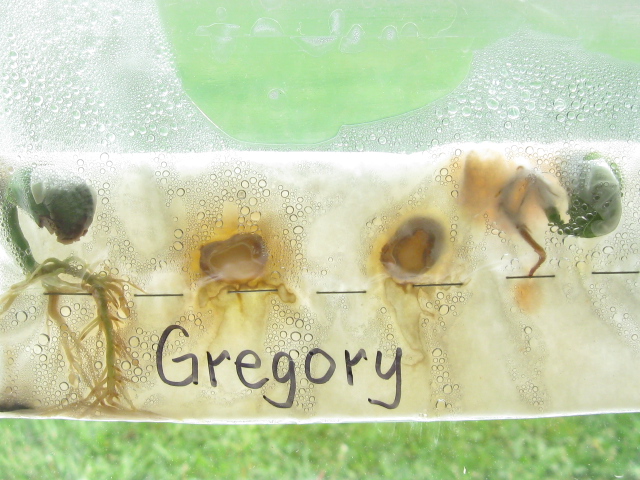
While some seeds followed this development students noticed that the majority of the seeds did not follow this growth cycle. Many turned black with mold; while some just went brown and mushy-looking.
Students learned that plants produce a huge number of seeds because not all of them will be successful in reaching maturity. In order for a plant species to thrive it needs to give itself a good chance by making a lot of seeds.
Over the course of this school year we have been discussing WANTS and NEEDS in relation to ourselves. We discussed that while you may WANT something that there are actually a few basic NEEDS that are necessary for survival. For human beings these are: air, water, food, shelter (including clothing), and we added in ‘love’ (families).
Students have also been learning about what a plant NEEDS to survive. In this experiment we wondered if all plants need soil in which to grow. We took a sea sponge and put it into a plastic container. We soaked it with water, and ensured that there was always water in the bowl to keep it wet. Grass seeds were sprinkled over the sponge. You can see the result …

So while we usually think of plants needing soil – and a great many of them do need soil – clearly not ALL plants do. We also tried this experiment with grass seeds on a pine cone. While some grass grew in the bottom of that container (in the water) none grew on the actual pine cone. Perhaps it wasn’t kept wet enough …
Over the course of this school year we have been discussing WANTS and NEEDS in relation to ourselves. We discussed that while you may WANT something that there are actually a few basic NEEDS that are necessary for survival. For human beings these are: air, water, food, shelter (including clothing), and we added in ‘love’ (families).
Students have also been learning about what a plant NEEDS to survive. In this experiment we took two identical plants and gave them the same soil, air, and water. We denied one of these plants sunlight. You can see what happened …
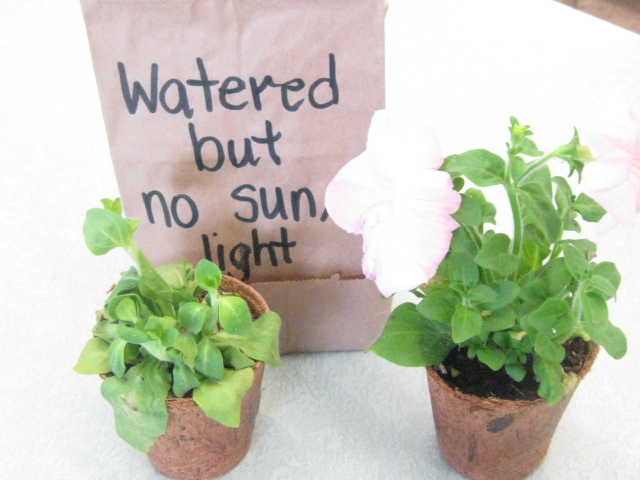
The plant on the right has a flower in bloom, nice green leaves, and is growing nicely. The one on the left is showing signs of fading. It hasn’t grown in height and it is a much paler green colour. Students learned that a plant needs sunlight to grow to its potential.
Over the course of this school year we have been discussing WANTS and NEEDS in relation to ourselves. We discussed that while you may WANT something that there are actually a few basic NEEDS that are necessary for survival. For human beings these are: air, water, food, shelter (including clothing), and we added in ‘love’.
Students have also been learning about what a plant NEEDS to survive. In this experiment we took two identical plants and gave them the same soil, air, and sunlight. We denied one of these plants water. You can see what happened …
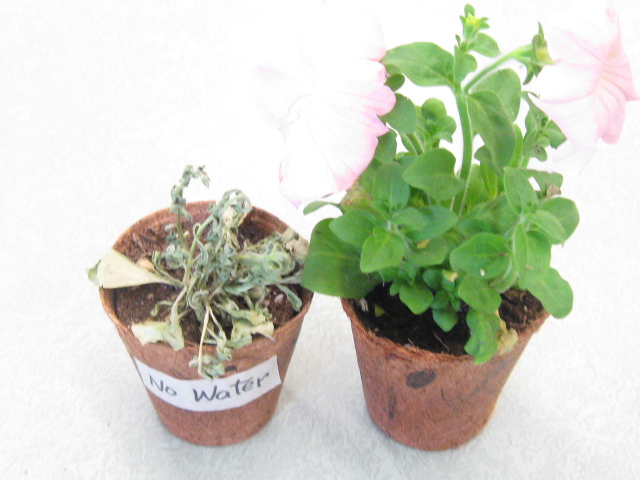
Students learned, that like human beings, plants will not survive without water.
As part of our plant unit we have been doing a series of experiments to demonstrate the ‘jobs’ that each part of the plant has in the healthy growth of the whole plant. This experiment showed the role of the ‘stem’.
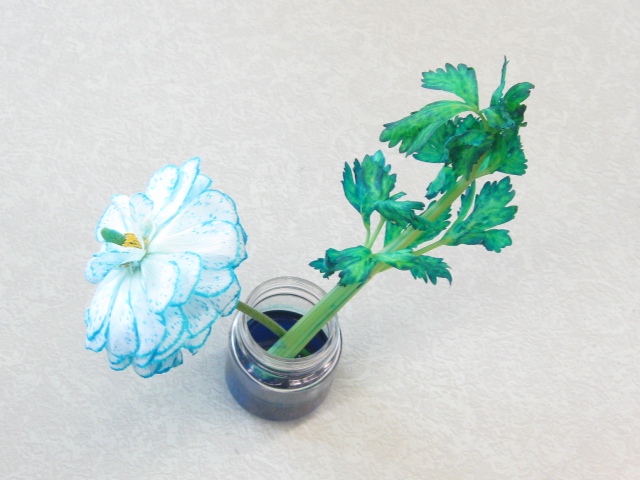
We put a stalk of celery and a white flower into a jar with blue food-coloured water. The next day we noticed quite the difference! Students learned that the job of the stem is to suck the water up from the roots to share it with the rest of the plant. The addition of the blue food colouring showed that this process took place in our experiment.
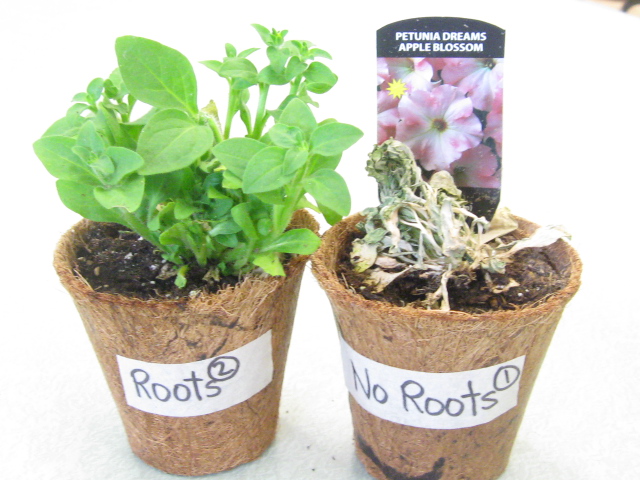
As part of our plant unit we have been doing a series of experiments to demonstrate the ‘jobs’ that each part of the plant has in the healthy growth of the whole plant. In this experiment we wanted to see what would happen to a plant if it was separated from its root system. We took two identical plants. We put one into a new pot; the other we put into a second pot but we cut the root ball off of it first. Both of these plants have been placed side-by-side on the window ledge so that they both received equal sunlight. They also received equal amounts of water. Three weeks later you can see what has happened … Students learned that the role of the roots is to suck water up from the ground, which is then sent to other parts of the plant. Its second job is to hold the plant securely in place so that it doesn’t get blown away.
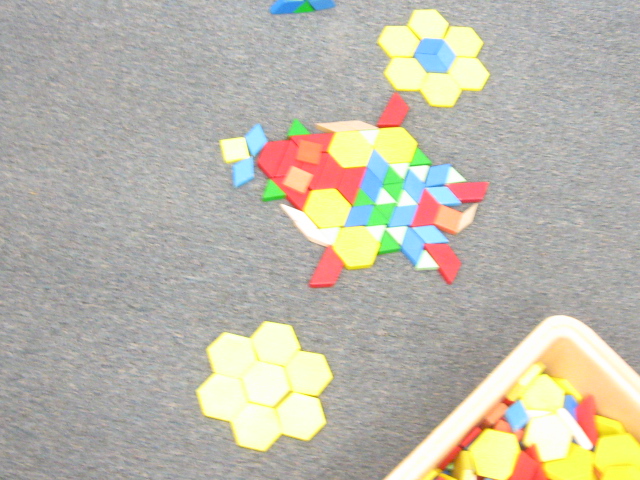
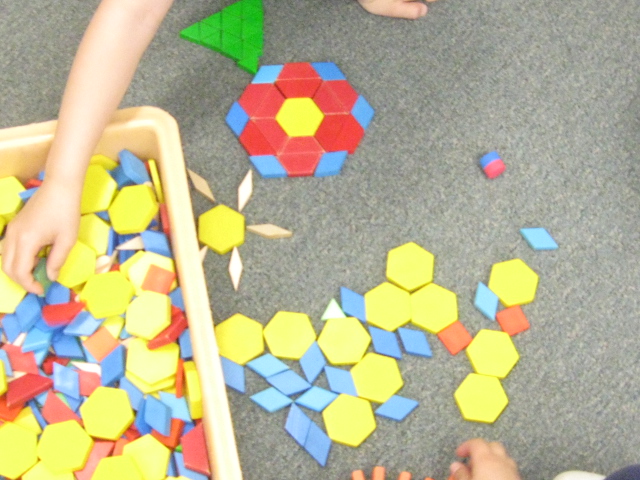
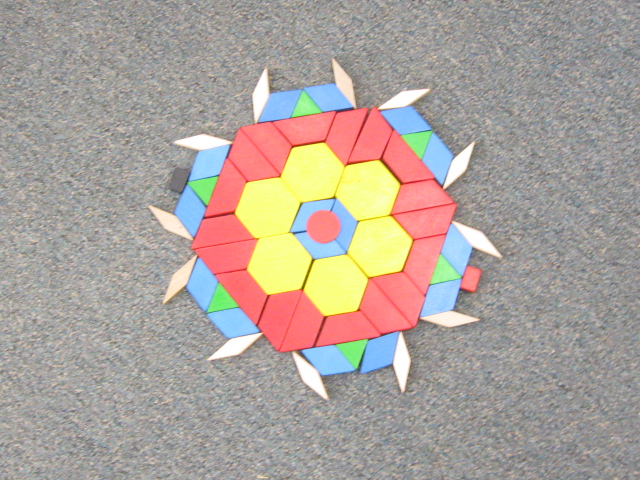
Students spent some time playing around with the pattern blocks …
In our Art classes we have been studying the element of Art – ‘value’. Students have learned where the colour that we see is (in the light) and that white and black are NOT colours. White is the lightest light and black is the darkest dark. Without light there is no colour.
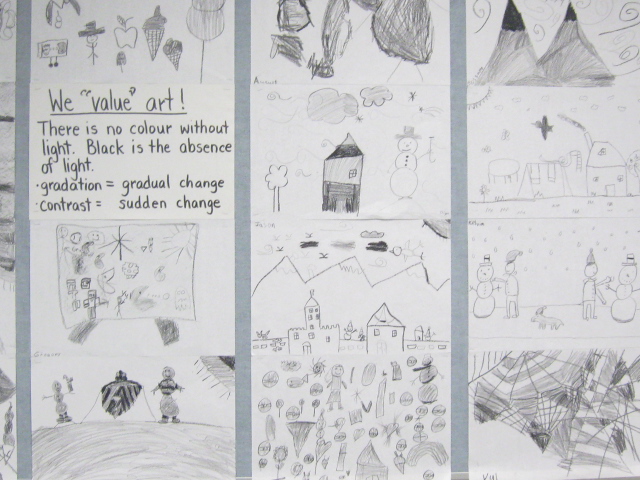
Students worked with white paper and only a black wax crayon to create a picture. They used ‘contrast’ – a sudden change from dark to light – and ‘gradation’ – a gradual change using the difference in pressure of crayon on paper. The lighter the touch the lighter the result, and vice versa with darkness.
Value is not only with blacks, whites, and greys.
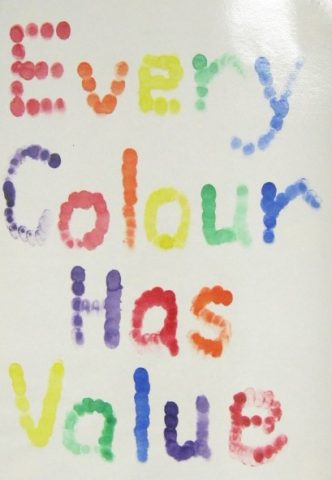
Last week students learned that when black is added to a colour (red, orange, yellow, green, blue, violet) that the result is not a change in colour but that it becomes a darker ‘shade’ of the original colour. For example, when black paint is added to red it creates a darker, deeper ‘shade’ of red – it doesn’t become black. Students were reminded that ‘shade’ comes from ‘shadow’, which they know is when there is less light. In contrast to this, when white paint is added to a colour the result is called a ‘tint’ – a lightening of the same colour. For example, when adding white paint to red paint we get lighter versions of red which we call ‘pink’.
Students used coloured construction paper, black wax crayons, and white chalk to create these pictures. Many seemed to think that ‘snow’ was necessary – even in April with our ‘heat-wave’ 🙂
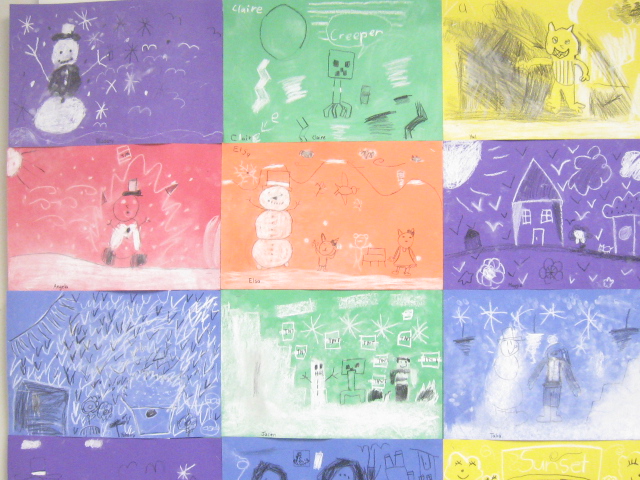
These sets of pictures are on the two bulletin boards outside of our classroom before the Office. Come by and check them out!
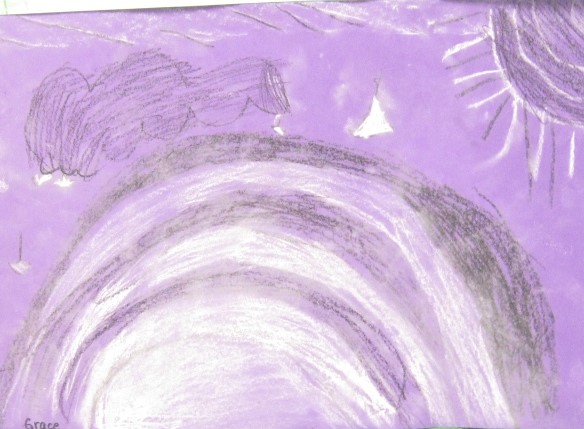
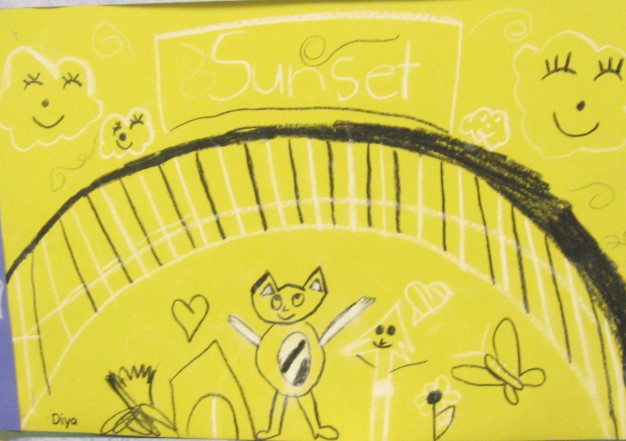
I think they look awesome!
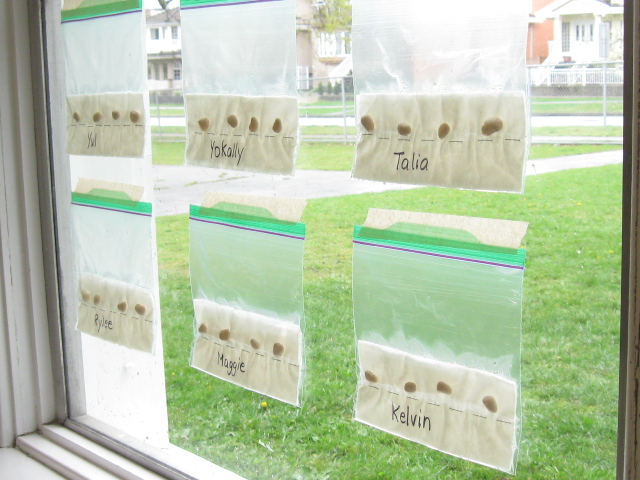
We have begun our plant study by making bags which have wet paper towels and beans in them. These are taped to our windows so that they will have the sunlight needed to grow. Students will be monitoring their seeds’ growth on their recording sheets.
We have also planted some flower seeds in individual pots, along with some beans and peas in other containers.
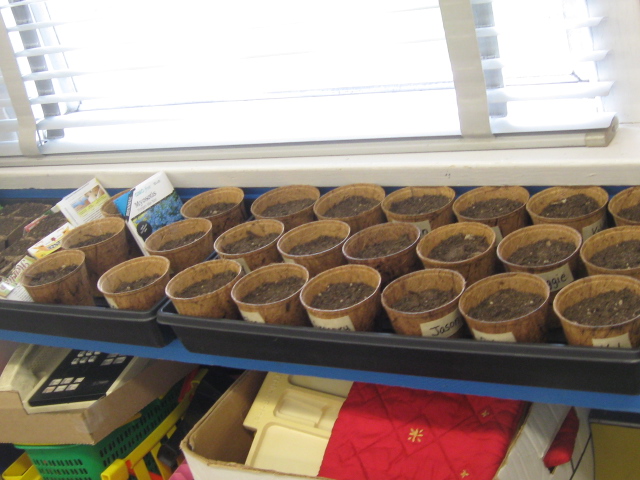
Over the course of the next several weeks we will be doing many experiments with plants. Stay tuned …