Happy New Year!

Welcome back to a new ‘calendar’ year in the midst of our current ‘school’ year.  We have six short months remaining together and a lot of great learning left to do.

We are currently exploring the sport of hockey – the floor variety.  Students are learning correct hand positions on the sticks and the fundamentals of the game.  A huge focus of ours is in safe play.  We had a great class discussion yesterday on why we have to be more careful than the ice hockey players do.  I was really impressed with how much the Grade 2’s shared about what they had learned last year!!  Without all the padding and safety equipment (helmets, face guards, mouth guards, etc.) that ice hockey players have, we are more vulnerable to injury and therefore need to exercise more caution.

We have also begun the process for our artistic entries which will be included in a biennial art programme put on by the Burnaby Art Gallery called, Arts Alive.  This event is a great opportunity for our students.  Arts Alive happens every year but alternates between secondary and elementary schools – this year being ours.  Completed art is adjudicated by a jury panel from the Burnaby Art Gallery who come out to the schools.  Pieces of art which are chosen are taken to the BAG to be put on display for the duration of the art show – about one month in the Spring.  All art pieces are photographed for the ‘digital display’ which can be viewed at the art gallery and is also available on-line.

Themes are chosen for each year and the theme for this year is ‘places of memory’.  In preparation for our art production we are exploring the concept of ‘memory’.  I read a picture book by Mem Fox called Wilfrid Gordon MacDonald Partridge.  This story is about a young boy learning about and exploring the idea of what memory is through bits of advice he receives in his quest to help an elderly woman from the ‘old folk’s home’ next to his house regain her ‘lost’ memory.

Students have been thinking about their own family memories.  We have had many discussions about the different kinds of memories – happy, sad, angry, worried, precious.  We will be talking about ‘powerful’ memories later this week.  Students will be choosing a  special, powerful memory about a place they have been to or know well.  The process of developing their final art pieces will be explored through drawings and writings and will then be melded into a final artistic piece in an unusual (surprise) medium for creating pictures.  More information to come – stay tuned!
 

Fun with Clay

We have been enjoying getting our hands dirty in Art class!

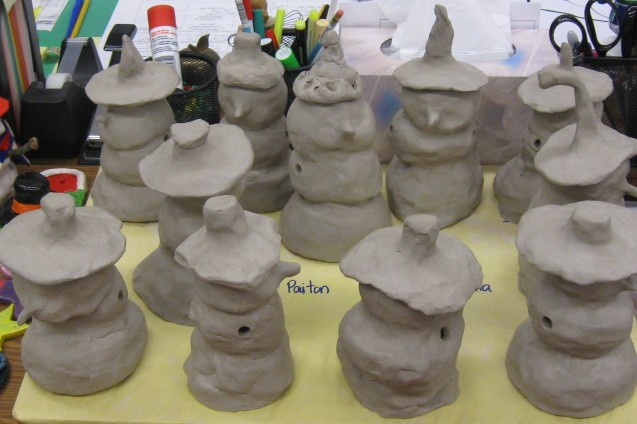
Our Grade 1’s spent a wonderful afternoon yesterday creating nice, fat, jolly looking snowmen – and some snowwomen, as well!!  Students built these snowpeople around a wooden dowel, attached to a baseboard, which creates a hollow form inside.  They then made hats for them.  I attached these after school when I took the snowmen off of the dowel so they could dry.

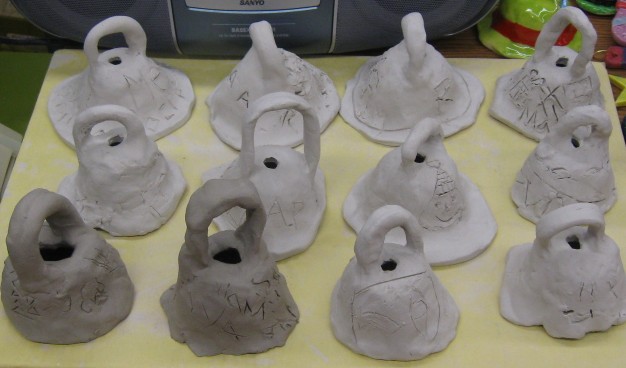
As our Grade 2’s had made snowpeople last year in my class, this year they created Christmas bells.  Most of the students made these last week – two who were absent last week worked yesterday on their bells.  We were very fortunate to have Mrs. Figueroa’s student EA (Miss M) come into our room as an extra helper.  You can tell which are the most recently made due to the colour difference.

Once all of the pieces are dried they will be fired in the kiln, glazed, and then re-fired.  Final touches will be added and then they will be ready to go home!!


Our Poppies

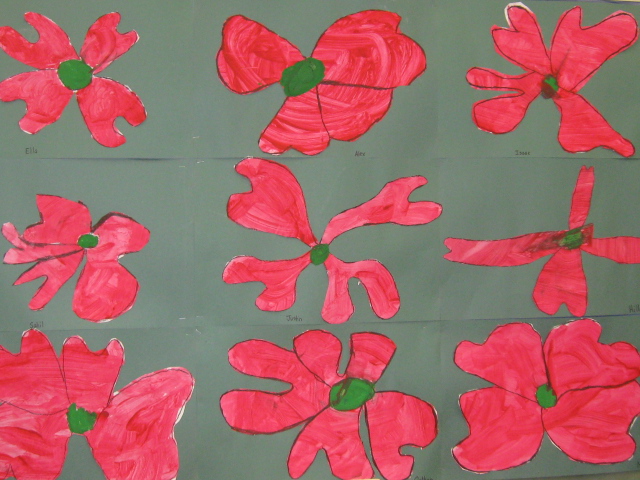
We created some beautiful poppies for Remembrance Day.  We began by drawing the poppies on white drawing paper.  Students then traced over their pencil lines with china grease markers.  Using tempera paint, students painted the centres green and the petals red.  They were encouraged to go ‘over the lines’ of the china markers.  A few days later, when the paint was dried, students cut out their poppies and glued them onto dark green construction paper.

I really enjoy how all the poppies are uniquely different from each other.  These 9 are only a sample of the class collection.  They are all displayed in the classroom on the back bulletin board – with two on the bulletin board outside of our door in the hallway.  Drop by to see them if you get a chance.

Colour Theory with Paint

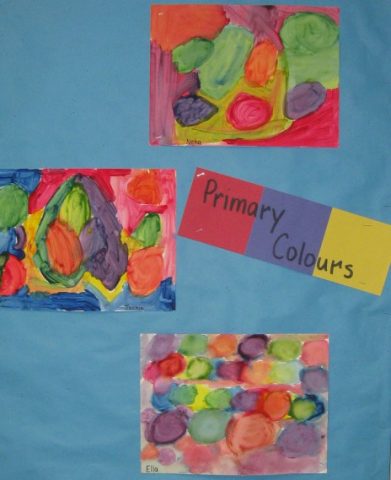
 As a follow up to our experimentation with wax crayons in primary colours (red, blue, and yellow), where we made the intermediate colours (orange, purple, and green), we had fun last Friday working with Solucryl acrylic paint and water.

We began by working on regular bond paper to get used to using this media.  Most of the students had previous experience with tempera paint but this paint has a different texture and maneuverability than regular paints.

I then gave them each a sheet of 140 lb. water colour paper to work with.  Their instructions were that they needed to: 1) only use the three primary colours given to them  2) create an abstract (not realistic) picture  3) cover the entire paper (no white showing) and  4) have all six colours represented in their finished work.

Most students managed to complete their artwork with all four criteria covered.  Come and check out the bulletin boards outside of our classroom.  I think they look great!

Making Intermediate Colours

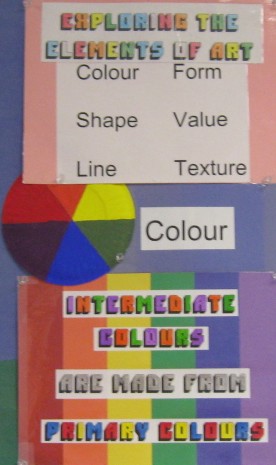
We have been learning about one of the elements of art – colour theory.  Students were directed to use only the three primary colours – red, yellow, and blue – to create the three intermediate colours – orange, purple, and green.  Students began by creating a design of a variety of shapes with a felt marker.  They then filled these shapes in by blending the primary colour wax crayons to create the intermediate colours.  They experimented with differing degrees of pressure (for darker and lighter hues) and different amounts of each primary to create a variety of shades and tints.

Class Assignment Expectations

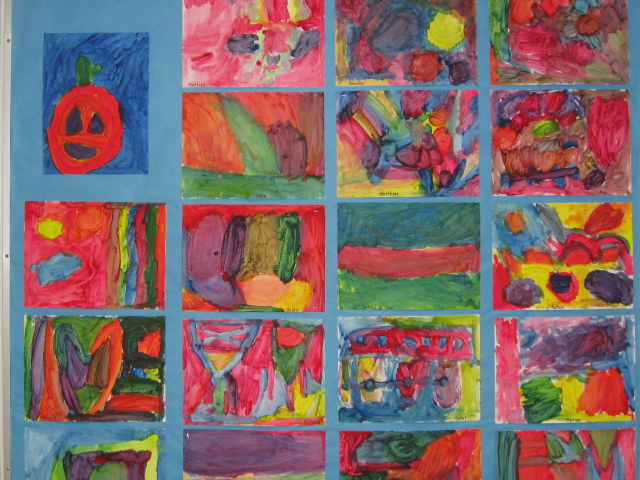
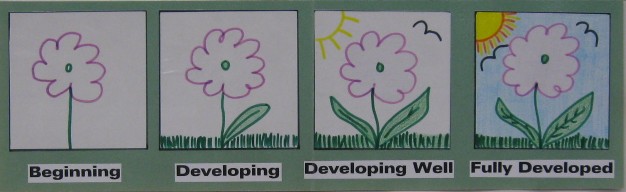
When students are doing their ‘seatwork’ assignments there is a wide variety in the final outcome of what each student will produce.  There are, of course, different learning outcomes for different subject areas; just as there are different levels of expectations for each grade.  I use this visual to explain the difference between a minimal effort and one that has met all the expected criteria.  This idea is used for all areas of our curriculum – not just their artwork – and visually demonstrates what is meant by including ‘details’.  For artwork they can see what is meant by ‘details’ through the gradually more developed pictures.  In their written work, students are reminded that ‘details’ are the way their writing has answered the reader’s questions of ‘who’, ‘what’, ‘where’, ‘when’, ‘why’, and ‘how’.

Texture – An Element of Art

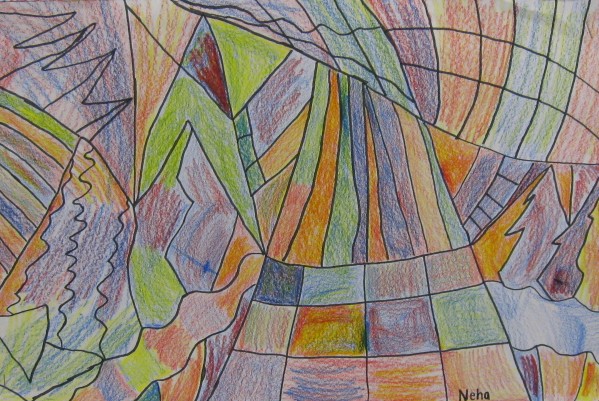
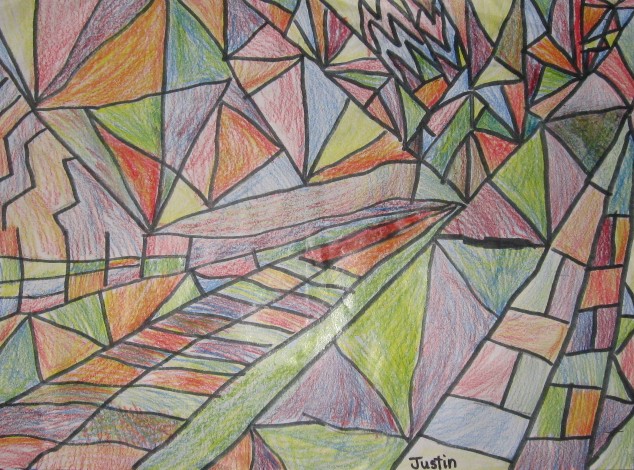
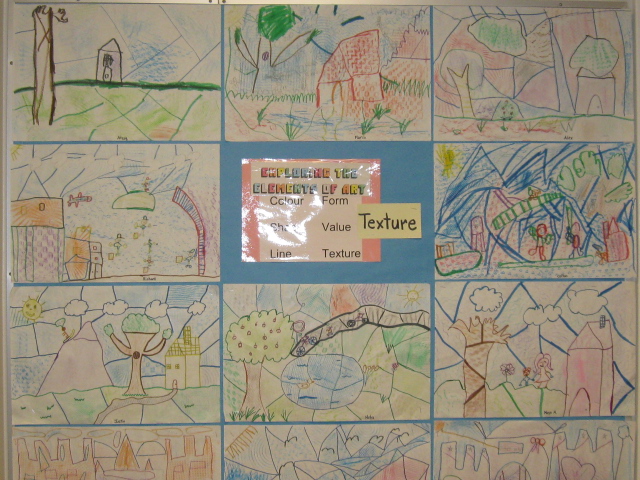
In our continuing lessons on the Elements of Art we have recently been exploring ‘texture’.  Texture is how something feels – or how it looks like it feels.  Students spent some time practising with various everyday items and doing crayon rubbings.  They then created pictures which they segmented and coloured using differently textured plates to create the illusion of different surfaces.

Easter Craft Fun!

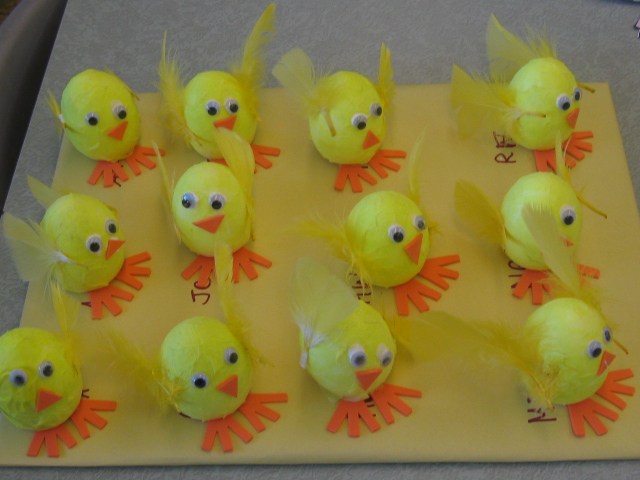
Students have been learning some valuable skills this week.  We began by learning weaving for our Easter baskets – and also braiding for pipe cleaner handles.  We used yellow tissue paper which we collaged over styrofoam eggs.  When we added the details they became these adorable little baby chicks.

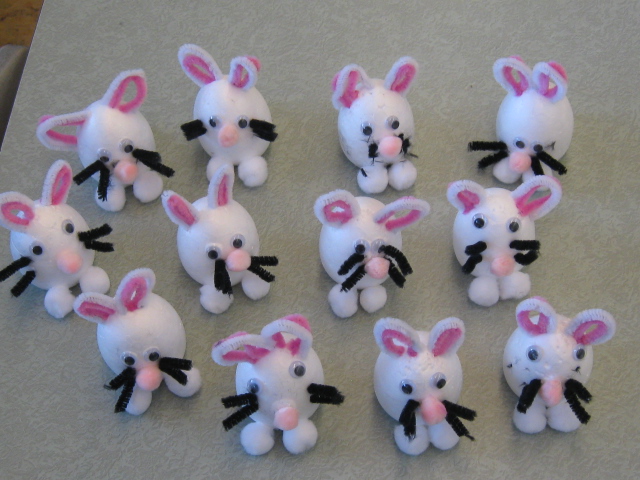
We then took pipe cleaners, google eyes, and pom poms and created these cute little bunnies on another set of styrofoam eggs.

These will be placed amid a bed of ‘craft grass’ in their Easter baskets (maybe with a few chocolate treats).  Ask your child which craft was the hardest to do.  You may be surprised by their answer.

Happy Easter!!!!

The “Value” of Art

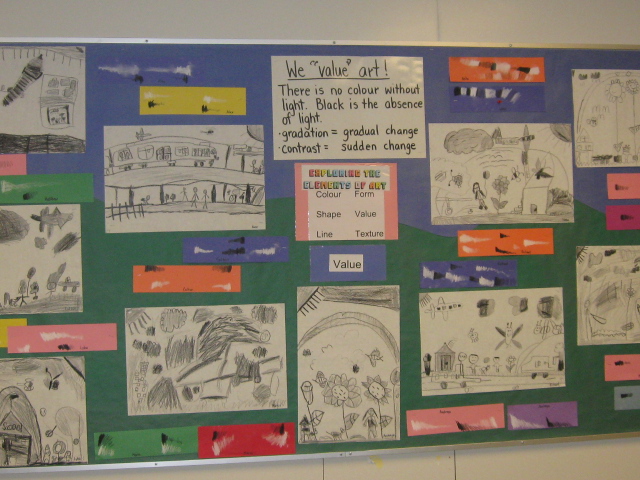
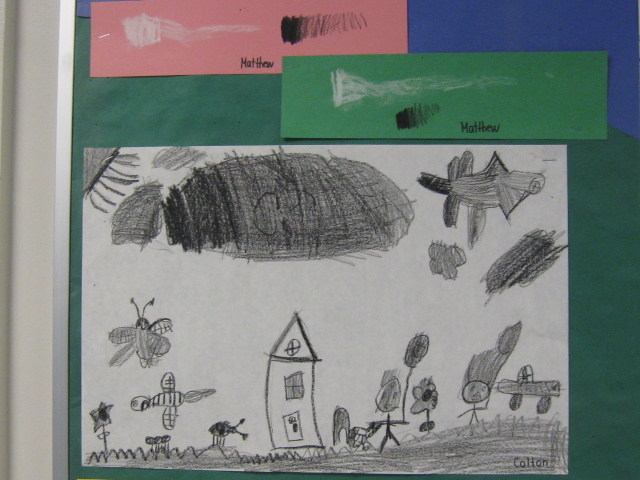
For our Art programme this year we have been studying the elements of art.  We are currently exploring ‘value’.  Students have learned that value refers to the varying degrees of ‘lightness’ and/or ‘darkness’ an object possesses.  We began by choosing coloured construction paper and using a piece of white chalk and a black wax crayon to experiment with differing pressures to show the different values on the paper.

Students then used a piece of white paper and a black wax crayon to create a picture of their choice.  The criteria was that they needed to show different levels of value – some parts of their pictures were lighter or darker than other parts.  This resulted in a quite dramatic effect in their work.

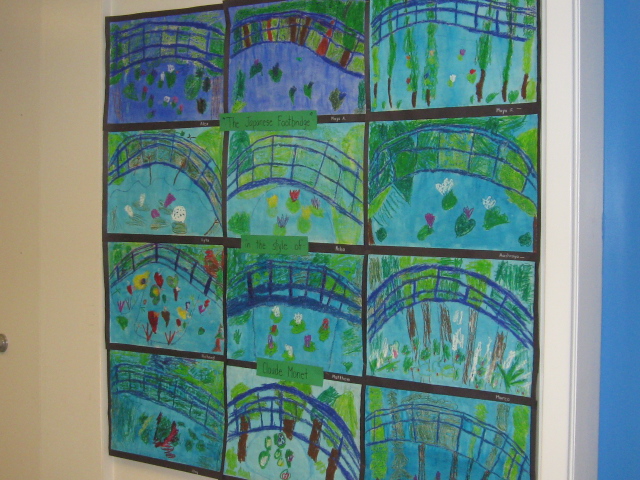
Hopefully you will get a change to come by and check out the two bulletin boards outside of our classroom.  They create quite a contrast between the colourful Monets and the monochromatic ‘black and white’ pictures.

Claude Monet – The Japanese Footbridge

Last week we took a close look at some of the paintings by a wonderful French Impressionist painter – Claude Monet.  We saw photos of his actual garden in France (which has been maintained as a heritage site) and then we looked at a number of paintings that he did of that garden.  Monet painted many pictures of the same scene at different times of the day to show how the light altered the look of the different paintings.  Monet had a fondness for his pond with its water lillies – and, of course, his footbridge.

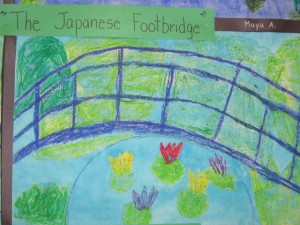
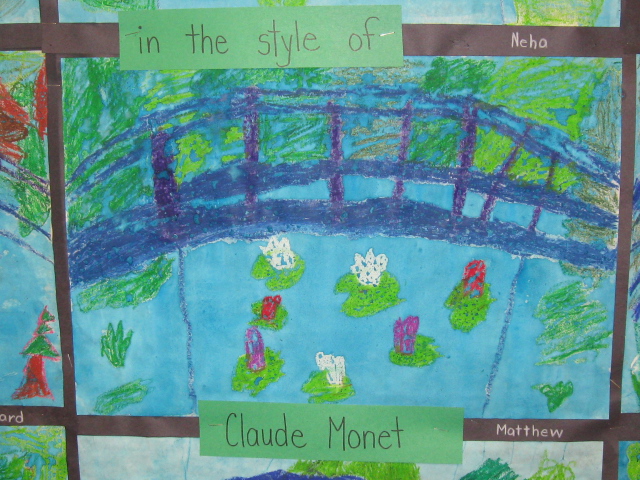
Students began with a simple pencil sketch of the bridge which they then went over with a thick layer of blue oil pastel.  Using various colours of green oil pastels they then added a collection of trees, bushes, and shrubs on the sides of the ‘pond’ area and behind the bridge.  They needed to colour the ones behind the bridge in between the bridge supports and not colour on top of the blue bridge.  The last part that students used the oil pastels for was the addition of green lily pads with coloured lillies attached.  Students were encouraged to add one white lily even though this was hard to see on the white paper.

The next day students did a paint ‘wash’ over the entire picture using either a light or dark blue paint disc.  Students noticed that the paint coloured in between the oil pastels and did not stick well to the pastels.  The overall effect is quite stunning – don’t you agree?