Science – Page 2 – Div 3 Class Blog
 

Category: Science

Teen Art Contest 2025

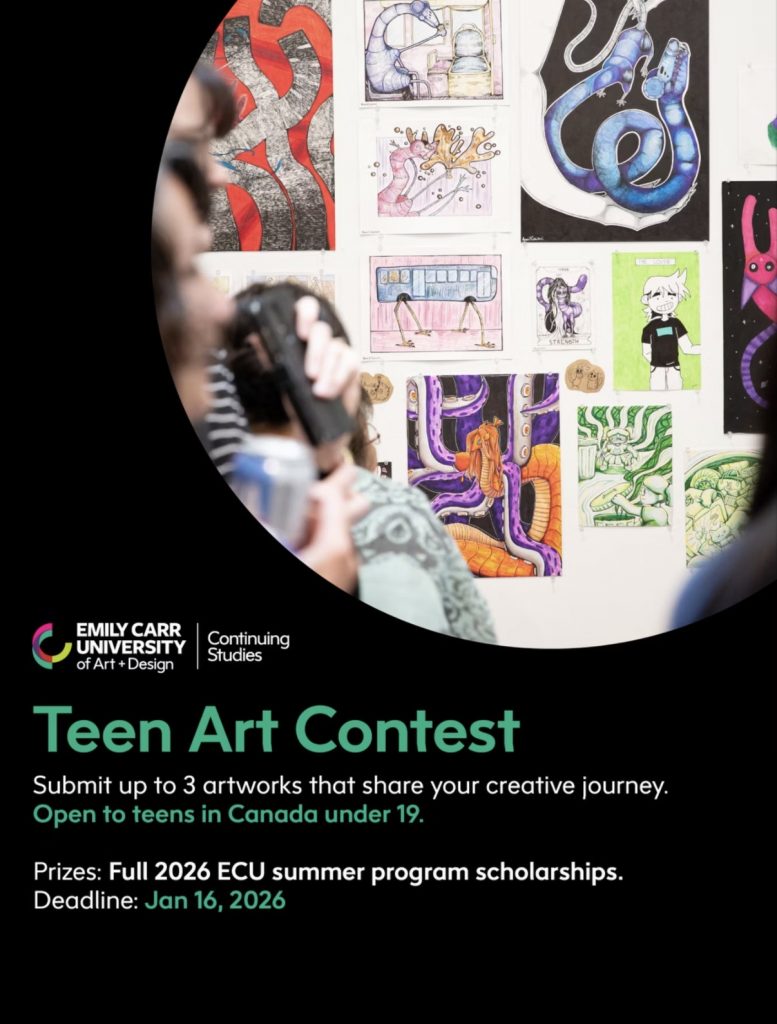
We invite teens to submit art pieces that reflect your artistic journey where you have experimented, taken risks, and created artworks that matter. You are encouraged to combine curiosity and imaginative thinking to create work that is expressive, thoughtful, and truly your own.

Submissions are open now until January 16, 2026.

LEARN MORE AND ENTER CONTEST.

ECU is celebrating the creativity, imagination, and innovation of young artists. This is your chance to dream big, explore new ideas, and show how art can spark bold possibilities.

In recognition of Emily Carr University’s 100th anniversary, this year’s contest carries a special theme: “Where curiosity + bold creative thinking meet.”

We invite all teens to submit individual art pieces that reflect your artistic journey where you have experimented, taken risks, and created artworks that matter. The theme invites you to celebrate your creativity, share your unique perspectives, and demonstrate how art can inspire others and make a meaningful impact. You are encouraged to combine curiosity and imaginative thinking to create work that is expressive, thoughtful, and truly your own.

Grand Prizes 

  • Junior Teen Category: 1 full tuition scholarship to the Junior Art Institute 2026, recognition as Teen Art Contest Winner, artwork featured
  • Senior Teen Category: 1 full tuition scholarship to the Summer Institute for Teens 2026, recognition as Teen Art Contest Winner, artwork featured

Selected students’ first and last names, along with their artworks, may be featured on the Summer Teens Squarespace website, ECU’s website, social media, catalogues, exhibitions, and promotional materials.

The teacher who recommends the grand prize winner for either the Junior or Senior Teens Category will receive one Continuing Studies adult individual course of their choice.


Eligibility


  • Open to all future and current ECU Continuing Studies teens.
  • Entrants must be under the age of 19 as of July 1, 2026.
  • Open to Canadian residents enrolled in a school (Grade 7 to Grade 12).
  • To be eligible for the Junior Teens Category, participants must be 13 – 15 years of age or have completed Grade 7 by July 1, 2026.
  • To be eligible for the Senior Teens Category, participants must be 16 – 18 years of age or have completed Grade 10 by July 1, 2026.


What You will Need to Provide


  • Follow instructions on the online form to submit entry.
  • Submit one high-resolution photographic and/or media files (View Terms + Conditions for details and specifications) of original and finished artwork. Refer to our PDF tip sheet for suggestions.
  • One artist statement (max 200 words); include a description and meaning of the work
  • Optional: One teacher recommendation letter (max 300 words)
  • Consenting to terms + conditions and release of media for ECU use

Maximum three (3) entries per student. Please download to read and understand the full Terms + Conditions for the Contest.


Submit Your Application


  • Click on Submit Entry button on the right side of this page.
  • Follow the instructions on the form.
  • Upload the artwork file and provide artist statements, and optional teacher recommendation letter
  • Provide teen and guardian consents

Contest closes on January 16, 2026, 11:59pm (Pacific Time). Winners will be notified by mid-February 2026. 

Questions?

Email teens@ecuad.ca

Contest Rules

Please download to read and understand the full Terms + Conditions for the Contest.

Today, all Aubrey students had the exciting opportunity to take part in a special presentation led by the Vancouver Warriors. The session introduced students to the sport of lacrosse, where they learned about key skills and techniques, the fast-paced nature of the game, and what it takes to play at a high level.

Students also explored the rich history of lacrosse and its deep Indigenous roots, learning how the game has long been played as a sport, a ceremony, and a way to build community. This historical perspective helped students better understand the cultural significance of lacrosse beyond the modern game.

Adding to the excitement, students learned that lacrosse will be included as an Olympic sport at the 2028 Games, highlighting how this traditional sport continues to grow and gain recognition on the world stage.

The presentation was engaging, informative, and inspiring, leaving students with a greater appreciation for the sport, its history, and its future. A big thank you to the Vancouver Warriors for sharing their knowledge and passion with our students!

Here is the flyer they gave out in case you missed it at today’s assembly and want to redeem this special offer:

Over the past few weeks, our class has been exploring a unique intersection of art, technology, and identity. Students have been learning the foundations of electrical circuits—from understanding positive and negative pathways to experimenting with conductive tape, LEDs, and switches. But this wasn’t just a lesson about circuits or how electricity flows. It was a lesson about how ideas flow, how identity forms, and how design brings meaning to life.

Today, our classroom transformed into a studio-lab hybrid: sketches, circuit templates, reflection cards, LEDs, copper tape, and personal artifacts spread across the tables. As students worked, the room buzzed with quiet concentration, collaboration, and that unmistakable excitement that comes from making something real.

The Goal
To create a small illuminated artifact that represents a part of each student’s identity—a value, memory, interest, or personal symbol—and to use circuits as a medium to bring that symbol to life.

The Design Process

Students moved through the same creative process engineers and artists use:
• Understanding context: Who am I? What story do I want to tell?
• Planning & sketching: Mapping out a circuit and deciding where light would add meaning.
• Building & testing: Laying down copper tape carefully, troubleshooting loose connections, and making adjustments when things didn’t quite work the first time.
• Reflecting: What does this artifact represent? How does light change or highlight the message?

This process wasn’t always smooth—and that was the best part. Students learned that friction is part of creativity: lights that didn’t turn on right away, tape that wrinkled, designs that needed rethinking. These moments pushed them to think critically, problem-solve, and collaborate.

Identity Through Light

Each student chose a symbols that reflected something meaningful to them. Some selected:
• an initial representing their name or family,
• a favorite object or hobby,
• an abstract image reflecting emotion or personality,
• or a metaphor from their ongoing Designing for Justice work.

The addition of light invited students to ask deeper questions:
• What part of my story needs illumination?
• Where do I want others to look first?
• How does light change the way someone understands my design?

This combination of circuits + identity became a powerful entry point into multimodal expression. Students weren’t simply “learning circuits”—they were designing meaning.

Why This Matters

This project brings together many threads of our learning this term:
• Science/ADST (Applied Design, Skills & Technologies): Learning circuits, iterating, prototyping, and testing designs.
• Arts Education: Using visual storytelling and symbolism to communicate an idea.
• Language Arts: Crafting a narrative through artifacts and reflective writing.
Core Competencies:
• Creative Thinking: generating ideas and trying new approaches.
• Critical Thinking: solving problems when circuits didn’t work as expected.
• Communication: explaining identity through visual and technological choices.
• Personal & Social: reflecting on who they are and what matters to them.

Through these lessons students are beginning to see themselves not only as learners—but as designers, makers, and storytellers.
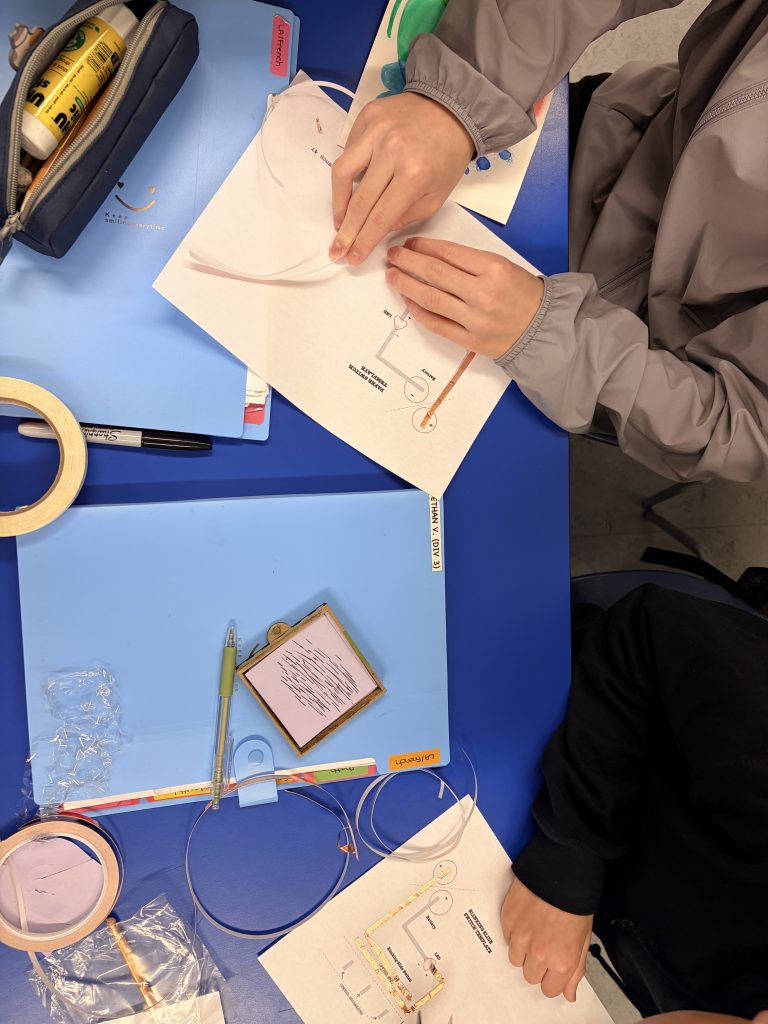
A Glimpse Into the Classroom

The photo above captures the beautiful mix of technical skill and personal expression that filled our learning space today: careful hands laying down copper tape, sketches transforming into circuits, and identity artifacts slowly taking shape.

Every student’s project tells a story.

Every glowing LED is a reminder that creativity, identity, and technology can come together in powerful ways.

We can’t wait to share the finished artifacts with you as our work continues to evolve.
| Leave a comment

Parent–Teacher Conferences are coming up, and I’ve opened additional dates and times to offer families more flexibility. Because I also run Literacy Buddies and our after-school Science program, my schedule may differ slightly from other teachers—thank you for your understanding.
Key Dates

  • Early Dismissals: Tuesday, November 25 and Wednesday, November 26 students will be dismissed at 2:00 p.m.
  • Science Buddies: There will be no session on Wednesday, November 26. Sessions will resume on Wednesday, December 3.

Book Your Conference

Please use the link below to sign up for a meeting time that works best for your family:
👉 Parent–Teacher Conference Sign-Up

If you don’t see a suitable time, please let me know and I’ll do my best to find an alternative that fits your schedule.

If we have met recently, or if you feel a conference isn’t necessary at this time, please let me know.

Thank you for your ongoing support. I’m looking forward to meeting and discussing your child’s progress and goals.

Kindest Regards,

Ms. Smith


| Leave a comment

Dear Families,

I am excited to share an update on the New Genius Science enrichment program, offered after school on Wednesdays for interested Grade 6/7 students. This program is made possible through a wonderful partnership with high school science mentors from Burnaby North Secondary, who volunteer their time to teach and guide our learners through hands-on biology, cells, DNA, and genetics activities, which I sponsor and supervise for Aubrey students.

Over the first two sessions, students explored:

Lesson 1: Cells & Their Functions

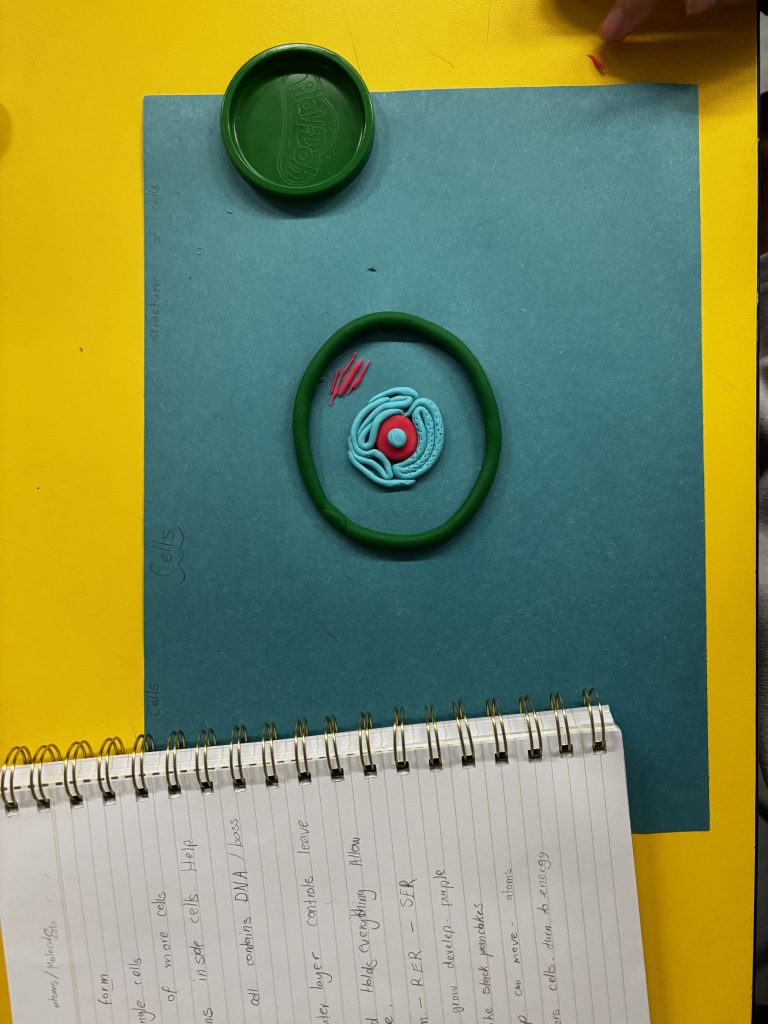
Students were introduced to the basic structures inside plant and animal cells. They learned about key organelles and their roles, and then created their own Play-Doh cell models to visually represent what they learned. The hands-on building helped deepen their understanding and sparked a lot of conversation and curiosity.

Lesson 2: DNA Structure & Sequencing

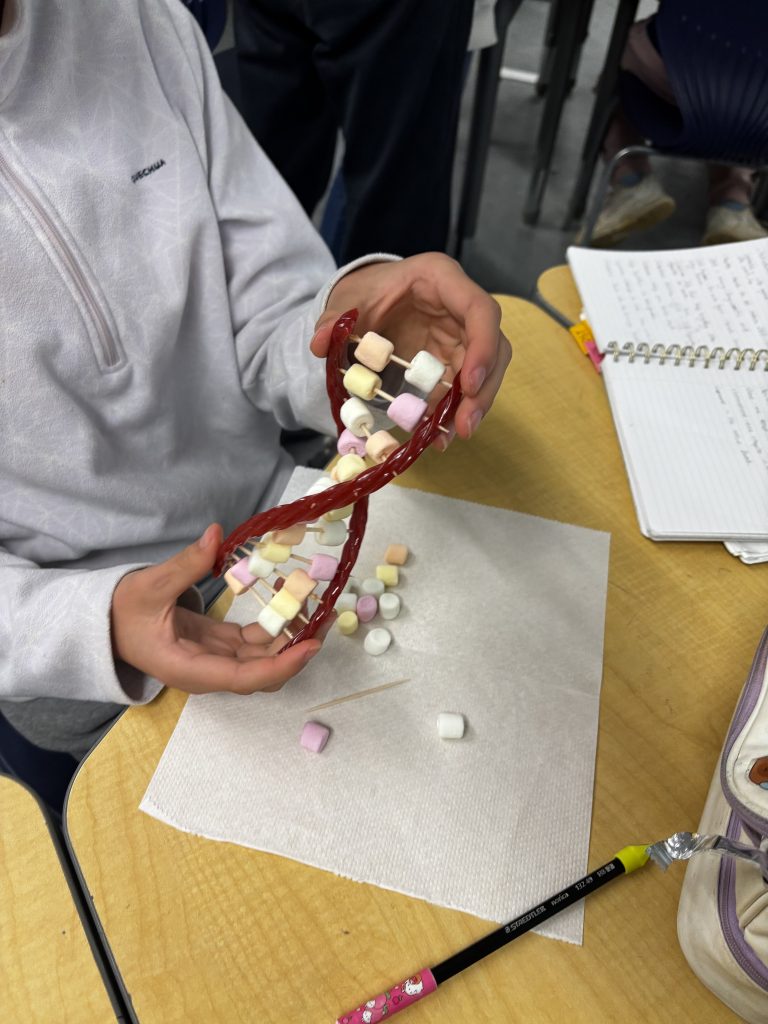
In the second session, students investigated the shape and purpose of DNA. They examined what a double helix looks like, discovered how base pairs work, and practiced sequencing. To bring the concept to life, students built edible DNA models using licorice and mini marshmallows—definitely a highlight, especially when they were allowed to eat their creations afterward!


The enthusiasm has been fantastic. Students are highly engaged, asking thoughtful questions, and truly enjoying the chance to learn science in such an interactive, supportive environment. Our high school mentors have been excellent role models, and the cross-school partnership has added an extra layer of excitement and connection for the students.

The students and I look forward to continuing the program this term and exploring more fascinating topics in biology with the group throughout the rest of the term. Stay tuned for more updates and don’t forget to ask your kids about what they are learning.

Ms. Smith

| Leave a comment

Dear Aubrey Families,

I’m writing to share some important information with you regarding the use of electric scooters in Burnaby. You may not be aware that there are strict limitations on their use, and especially so for children and youth.

Across the province, e-scooters may only be used on designated roads in communities participating in BC’s electric kick scooter pilot project. Burnaby is not a participating municipality, which means you cannot ride an e-scooter on public roads. For those communities that are part of the pilot, children must be at least 16 years old. As Burnaby is not part of the pilot, there are no designated roads and pathways for people of any age.

Please be aware that, given the above, your child should not be riding an e-scooter to school or storing their e-scooter at school.


More information about provincial rules and safety related to e-scooters can be found on ICBC’s website here and on the Government of BC’s website here.

Thank you for your help in keeping our school community safe. Should you have any questions, please do not hesitate to contact me.

Sincerely,

Liliane de Oliveira

Principal

École Aubrey Elementary School

1075 Stratford Ave, Burnaby, BC

604.296.9001 Ext. 616001

burnabyschools.ca | @burnabyschools


I acknowledge and am grateful to live, work and learn on the traditional, unceded territory of the xʷməθkʷəy̓əm (Musqueam), Sḵwx̱wú7mesh Úxwumixw (Squamish), and səl̓ilwətaɁɬ (Tsleil-Waututh) Nations.  

This transmission (including any attachments) may contain confidential information, privileged material (including material protected by the FOI act or other applicable privileges) or constitute non-public information. Any use of this information by anyone other than the intended recipient is prohibited. If you have received this transmission in error, please immediately reply to the sender and delete this information from your system. Use, dissemination, distribution, or reproduction of this transmission by unintended recipients is not authorized and may be unlawful.


Div 3 Class Blog ©2026. All Rights Reserved.
Powered by WordPress. Theme by Phoenix Web Solutions