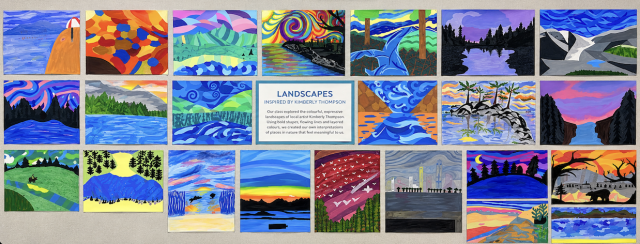
For this art we explored the vibrant landscapes of local artist Kimberly Thompson, experimenting with bold colour, flowing lines, layered shapes, and expressive patterns. Students used Thompson’s work as inspiration while developing their own interpretations of meaningful places and landscapes. The result is a colourful collection of individual perspectives on the natural world.
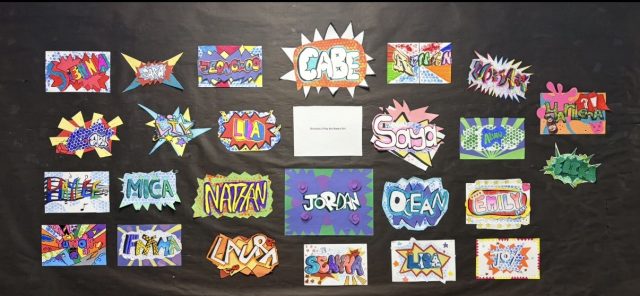
Inspired by the bold, colourful style of Pop Art, students transformed their names into eye-catching works of art. They experimented with Ben-Day dots, a technique famously associated with artist Roy Lichtenstein, to create patterns, texture, and visual impact.
Students explored colour, contrast, repetition, and composition while making design choices that reflected their individual personalities. The project challenged students to think about how simple elements—letters, lines, dots, and colour—can be combined to create something expressive and unique.
The result is a collection of vibrant Pop Art Name Designs that celebrate both creativity and identity!

Dear Division 3 Students and Families,
Welcome to a brand-new school year! I am so excited to welcome our new and returning Grade 6 and Grade 7 students to Division 3. Whether this is your first year in our classroom or you are returning for another year together, I am looking forward to all that the year ahead will bring.
We have an exciting year ahead filled with learning, creativity, connection, challenges, and plenty of opportunities to grow together.
Our classroom will be a place where everyone belongs, ideas are valued, curiosity is encouraged, and we learn from one another. I am looking forward to getting to know our new students and reconnecting with returning students, while discovering the unique strengths, interests, and perspectives each student brings to our classroom community.
A few important reminders…
Today, your child brought home a short family survey and our FAQ brochure with helpful information about the year ahead. The brochure also includes all of my contact information. Please don’t hesitate to reach out at any time! Whether you have a question, something you would like to share about your child, or simply want to connect, I truly value open communication and partnership with families.
I will also be scheduling our Meet the Teacher/Intake Meetings for October 6 and 7. More information about these meetings, including how to sign up, will be sent home soon. I am really looking forward to meeting our new families, reconnecting with returning families, learning more about each child, and beginning our partnership for the year.
My hope is that, together, we can create a classroom where your child feels known, supported, challenged, and excited to learn. I believe that the strongest school experiences happen when teachers, students, and families work together, and I look forward to partnering with you to ensure your child has a wonderful Grade 6 or Grade 7 year.
Here’s to an incredible year in Division 3! I can’t wait to see what we will learn, create, discover, and accomplish together.
Sincerely,
Ms. Smith
Screenshot
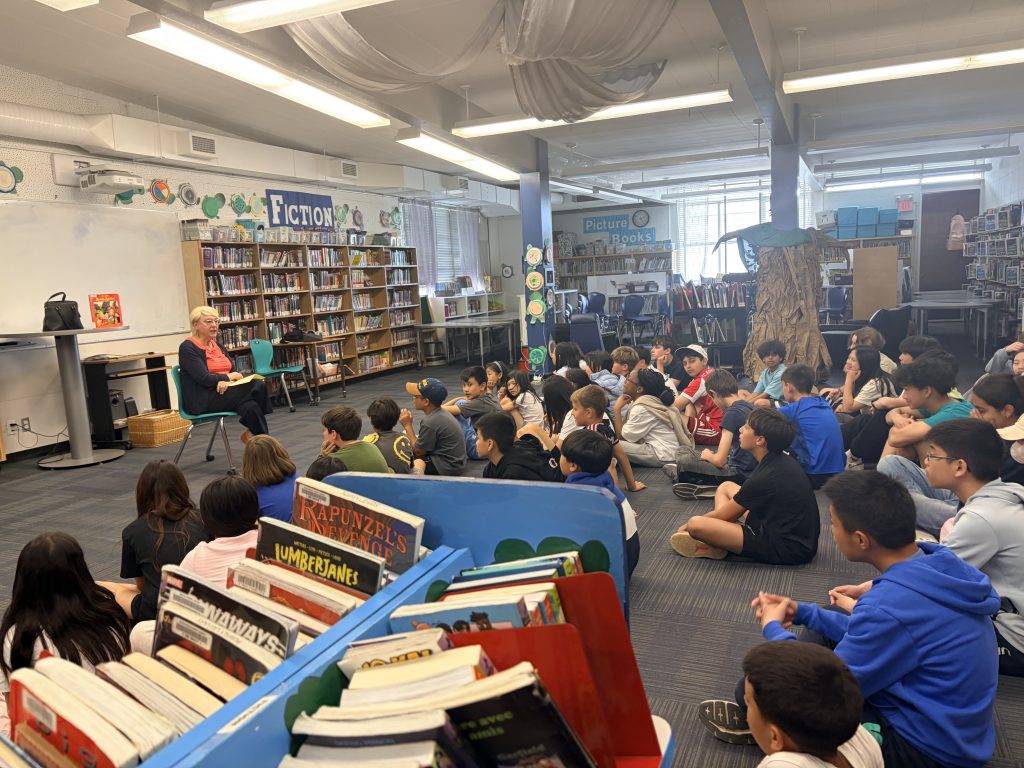
Today, students in Division 3 and Division 5 had the exciting opportunity to welcome MLA Janet Routledge to our school for a special presentation about government, democracy, and active citizenship.
Janet Routledge shared her journey into politics, explaining how she became involved in public service and what inspired her to make a difference in her community. Students learned about her important role as Whip for the Women’s Caucus and heard about ongoing efforts to improve equity and representation in politics, helping to ensure that more voices are heard and included in decision-making.
She also gave students an inside look at how Parliamentary debate works and discussed the importance of having a code of conduct to promote respectful discussion, even when people disagree. Students learned that strong democracies depend on people being able to share different perspectives thoughtfully and respectfully.
One of the most powerful messages Janet shared was that in a democracy, there should be no spectators—everyone has a role to play in helping their community and contributing to positive change. She encouraged students to think about how they can be active citizens, whether that means speaking up about issues they care about, helping others, or becoming involved in their community.
Students asked thoughtful questions and were highly engaged throughout the presentation. We are so grateful to Janet Routledge for taking the time to visit our school, share her experiences, and inspire our students to see themselves as future changemakers.
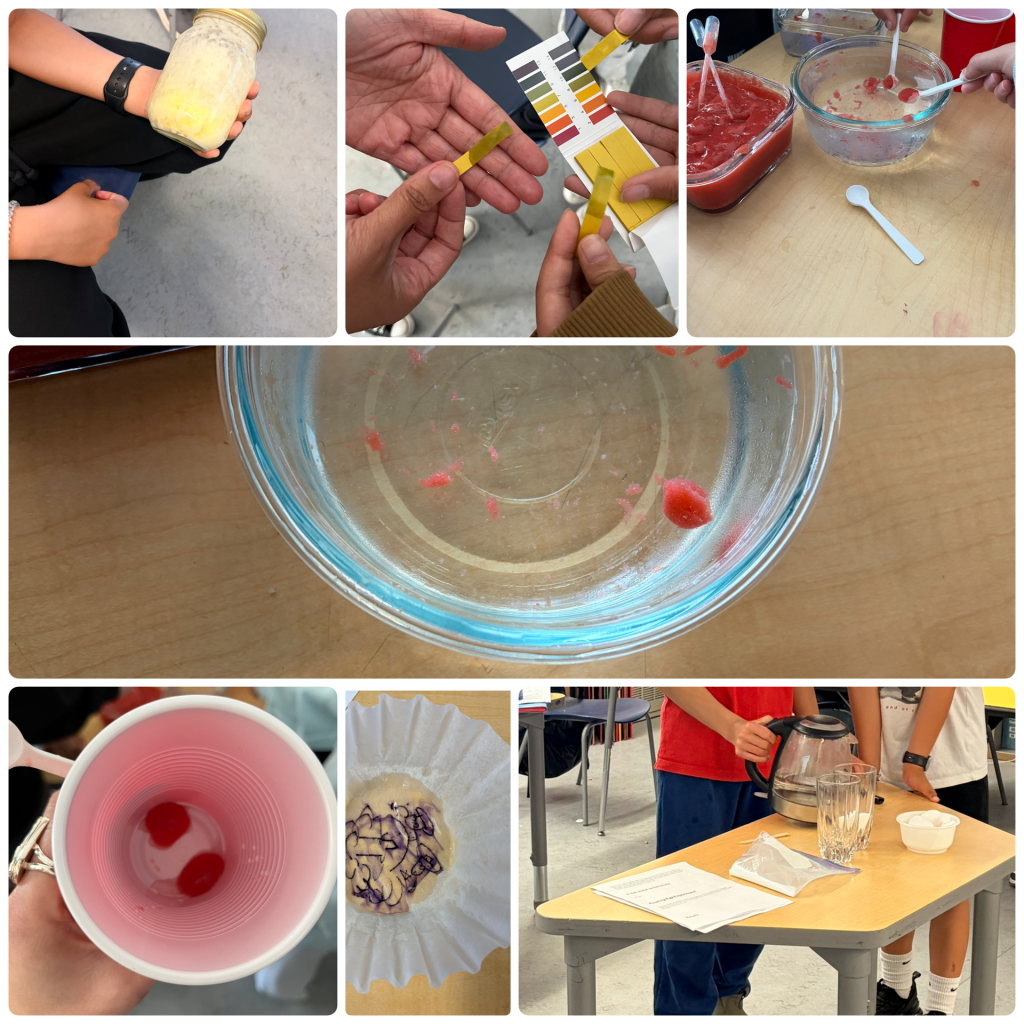
Division 3 has been having a fantastic time exploring the properties of matter through engaging, hands-on science investigations! Students have been learning about density, acids and bases (pH), chemical reactions, solutions and mixtures, chromatography, and emulsification by experimenting, observing, and thinking like real scientists.
Students explored density through floating and sinking investigations, including testing eggs in fresh water and salt water to discover how changing the concentration of a solution affects whether objects float or sink. During their pH investigations, they tested everyday substances to determine whether they were acidic, basic, or neutral.
One of the class favourites was making homemade boba pearls, where students observed the science of spherification—a chemical reaction that created a thin gel membrane around liquid, transforming it into chewy pearls! Another delicious highlight was making homemade butter, where students learned about emulsification by shaking cream until the fat molecules separated and re-formed into butter, which they enjoyed on warm toasted English muffins afterwards.
Students also used chromatography to separate ink pigments, discovering that a single colour is often made up of many hidden colours. To wrap up their chemistry learning, students had a blast reviewing key concepts through interactive Jeopardy games and Kahoot challenges, adding plenty of laughter, teamwork, and friendly competition to their learning.
Dear Aubrey Families,
Don’t forget to buy your tickets to the much-anticipated production of The Little Mermaid! Ticket sales are now open on School Cash Online.
Round 1 Ticket Sales: Families can purchase a maximum of 2 tickets per child, per show. Based on availability, more tickets may be released later—so don’t let this wave pass you by! Please make sure you purchase your tickets by Thursday, May 14.
Round 2 Ticket Sales: Remaining will be released (more information to come!)
To purchase: https://burnaby.schoolcashonline.com/
Please reach out Ms. Klarich is you need assistance with SchoolCashOnline – Carmela.Klarich@burnabyschools.ca or 604-296-9001.
Thanks for your support!
Sincerely,
Liliane de Oliveira
Principal
École Aubrey Elementary School
Dear Families,
Our school is proud to be participating in Heart & Stroke’s Jump Rope for Heart on May 15. Students will learn healthy habits and raise funds to support lifesaving heart and brain research.
Please check your child’s planner or backpack for a postcard that includes more information!
Help us reach our fundraising goal by donating or register to create your own fundraising page to share with family and friends.
Visit our school’s fundraising page to get started:
https://jumpropeforheart.crowdchange.ca/114144
Why we participate in Jump
While research may be hard to see, its impact is impossible to ignore. Thanks to generous donations through Jump Rope for Heart, Heart & Stroke is driving groundbreaking research led by Canada’s top medical minds, like Dr. Lori West. Her research has made it possible for infants to safely receive heart transplants from donors with different blood types—saving countless lives.
Watch this video (https://youtu.be/c-mc5fc1i-c) to see Dr. West meet the children and families whose lives have been changed by her discovery and what her work meant for their hopes for a healthier future.
Learn more at jumpropeforheart.ca and support our school’s fundraising efforts by donating or registering here:
https://jumpropeforheart.crowdchange.ca/114144
Thank you for your support!
Div 3 Class Blog ©2026. All Rights Reserved.
Powered by WordPress.
Theme by Phoenix Web Solutions