Div 3 Class Blog – Page 38
 

Students were shown a picture of Kandinsky’s concentric circles.  They were then asked to explore concepts of colour and how it relates to emotion. Examples were: What emotion do you associate with red? (anger, embarrassment etc.) What emotions do you associate with blue? (sadness, loneliness, calm) What emotions do you associate with yellow? (happiness, contentment, warmth) etc.  They were then given a sheet that had multiple hearts on it and asked to creatively express using colour how they were feeling. The results are quite stunning.

In celebration of National Literacy Day student from Div 9 along with their big buddies from Div 2 created their very own literacy equations after reading This Plus That written by Amy Krouse Rosenthal.  The book provided inspiration to help students come up with their own fanciful equations on literacy. Some examples they came up with were “book + quiet space = reading”, “writing + music = song writing,” and “reading + writing = literacy”.

After reading The Day the Crayons Quit written by Drew Daywalt and Oliver Jeffers students compiled their own letters to the main character from a crayons perspective.

In this story Poor Duncan just wants to colour. But when he opens his box of crayons, he only finds letters, all saying the same thing: We quit!  Beige is tired of playing second fiddle to Brown, Blue needs a break from colouring water, while Pink just wants to be used. Green has no complaints, but Orange and Yellow are no longer speaking to each other.

Students all came up with their own humorous conversations around why they quit as they expanded their knowledge of writing as a tool to communicate effectively for a variety of purposes and audiences.

[metaslider id=272]

This week Div 8 and 9 students removed the mulch from our garden of daffodils.  Many of them were surprised that the daffodil stems have already pushed through the soil and are preparing to bloom.  Over the coming weeks students will track and document the growth of the daffodils, review the life cycle of daffodils, and investigate factors that can enhance or hinder growth.

During this lesson students acknowledged that we reside on the traditional ancestral shared territory of the Coast Salish Nations of Musqueam, Tsleil-Waututh and Squamish.  Students also learned that there are three main groups of Indigenous people in Canada: First Nations, Inuit, and Métis.

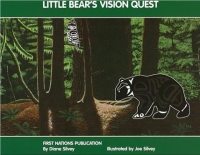
Before reading Little Bears Vision Quest written by Diane Silvey we also discussed the importance of stories and how they are an integral part of Indigenous culture. Students learned that stories are not just for entertainment but they are told to teach lessons and these lessons typically focus on ways to overcome a struggle, how to change attitude or behaviour and how to be the best person possible. In this particular story Little Bear learns to be kind, thoughtful and respectful toward others after being banished to a remote island.

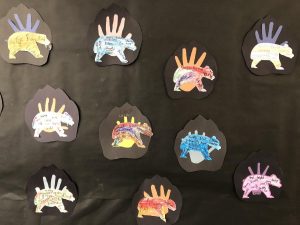
After listening to the story students then created these bear paws to represent the qualities that make a good friend.


At today’s community gathering Div 9 students performed their rewritten version of Flo Rida’s song My house to remind everyone of Twelfth Avenues behaviour expectations for inside days.  They did an incredible job and should be very proud of their performance.  Well done Div 9!

Click on the link below and take and listen to see for yourself how they did.

What:  Popsicle Stick Bridge Contest event is organized by Engineers & Geoscientist BC for the 18th time this year as part of the National Engineering & Geoscience Month (NEGM).

Why: to promote engineering and geoscience in our community, especially to the youth.

When: Sunday, March 4th, 2018 from 11 am to 2:00 pm.

Who: Kids from grade 1 to 12 will compete in their own grade category in building the strongest bridges.

How:

1- Get your Bridge Building Kit from me or “KidsBooks” bookstore at 3040 Edgemont Blvd, North Vancouver, BC V7R 2N4, Tel: 604-986- 6190

2- Register online: http://goo.gl/Fa6P1k

3- Read the rules

4- Attend a free Training Workshop organized by “COWI” on Tuesday, February 6th at 6:30 pm at 101-788 Harbourside Dr., North Vancouver, V7P 3R7. Register for the workshop here: http://goo.gl/wCnLsA

5- Build your bridge at home and bring it to the Event on Sunday, March 4th at 11 am at Capilano Mall Atrium in North Vancouver

How Much: Free!

For more information you can also check out the EGBC website:

https://www.egbc.ca/Events/Events/2018/SS1MAR18

It is said that before globalization, these instruments could only be found in Africa and where African descendants lived. Therefore, the thumb piano or kalimba as we know it in the West, is a modernized version of its African ancestors.  Just like the xylophone, it is deeply rooted in the continent’s culture.

Many tribes, all across the continent, have developed their own unique thumb pianos over the centuries. Because the languages and cultures of these tribes vary so much, so do the names and traditions of their instruments.

Using wood, bobby pins and craft supplies Div 9 students along with other students of Twelfth Avenue Elementary created their very own versions of the African thumb piano.  Check it out.


Have you ever blown up a balloon and let it go? The air rapidly escapes the balloon making it fly away.

Students were challenged to harness this energy and design their very own car that could be propelled forward using a single balloon.

Engineering Design Constraints

1. The car must be propelled forward by the air escaping the balloon.

2. The car must be sturdy and not fall apart when in use.

3. The car must travel at least five feet.

4. The car must travel in approximately a straight line.

Materials Suggested

Power: One latex balloon

Car body: Plastic bottle, plastic cup, or cardboard

Wheels: CDs, bottle caps, empty rolls of tape

Axles: Wooden dowels, wooden skewers, plastic straws

Other materials: plastic straws, hot glue, tape, paper clips, scissors, rubber bands

Math Connection

During the testing phase students were asked to calculate the average speed of their balloon cars. The equation they used to calculate the average speed of their car

was:

𝑎𝑣𝑒𝑟𝑎𝑔𝑒 𝑠𝑝𝑒𝑒𝑑 = 𝑡𝑜𝑡𝑎𝑙 𝑑𝑖𝑠𝑡𝑎𝑛𝑐𝑒/𝑡𝑜𝑡𝑎𝑙 𝑡𝑖𝑚𝑒


Div 3 Class Blog ©2026. All Rights Reserved.
Powered by WordPress. Theme by Phoenix Web Solutions