Inquiry Blog Post #2: Nurturing Your Professional Growth
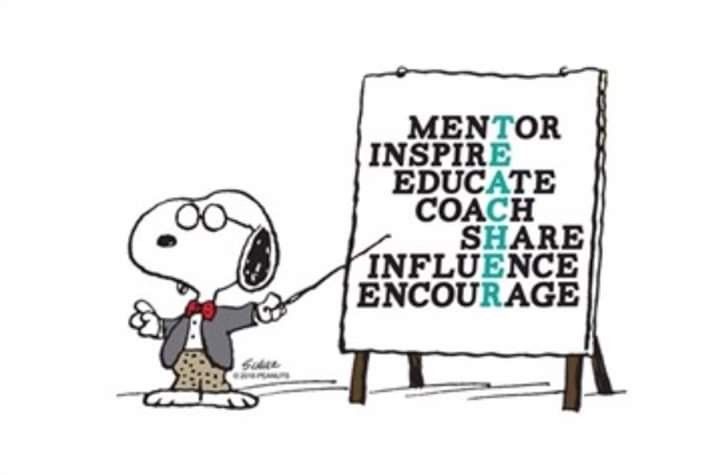 (Image by Charles M. Schulz)
In looking ahead to new beginnings of a teacher-librarianship journey, it can be easy to start to feel overwhelmed with the responsibility of the role. School librarians have “complex roles of instruction, reading and literacy development, school library management, collaboration with teaching staff, and engagement with the educational community” (IFLA 8). Therefore it is very important for any teacher-librarian new to the profession to have strategies, tools and resources as well as connections and personal learning networks ready-at-hand for referencing and helping develop one’s skills. This blog post will talk about strategies, tools and resources that would be advantageous to have readily available as a teacher-librarian.
Strategies, Tools, Resources
When considering strategies that will help me with my teacher-librarianship skills, naturally I first considered everything that I am learning in the UBC teacher-librarianship diploma program. What more valuable learning than these modules, teachings and readings. For me personally, being organized and detailed comes as an area of strength. Therefore, my approach to my coursework has involved taking a page of notes in word document format for each module lesson and journal article. These are concise notes, in bullet point form, that lay out main takeaway points from each article of professional learning with the bibliographic info. of the article at the top of the page and a link for re-referencing. These pages are stored in files labelled ‘Inquiry Based Learning’, ‘Role of TL’ ,’LLC Program’, ‘Reading Advocacy’, ‘Education Technology’, ‘Budget’, ‘Children’s Literature’ etc. I believe that having these files on my school computer will be significantly helpful in my teacher-librarianship career for returning to and referencing for guidance. An example can be found here.
I have also digitally stored some national, international and local guidelines and polices that will be necessary for guiding my practices. These documents include:
- Canadian Library Association Leading Learning: Standards of Practice for School Library Learning Commons in Canada document.
- Canadian School Libraries Foundation for School Library learning Commons in Canada: A Framework for Success
- International Federation of Library Associations and Institutions IFLA School Library Guidelines
- Burnaby School District School Libraries Policy, Selection of Resources Policy and Technology and Information Systems Policy.
- Burnaby School Board Educational Technology Plan.
Next, I have bookmarked the following international, national, provincial and local websites for easy guidance and reference:
- American Library Association
- Canadian School Libraries
- Ontario Library Association
- BC Teacher Librarians Association
- Burnaby District Elementary Web Resources
- Burnaby Public Libraries
For the more practical side of the library learning commons program development, I have also bookmarked lists of links that have been shared through LIBE 477 meetings and other UBC courses. These links lead directly to tools that can be used in teaching practices such as Code.org, Swift Playgrounds, Canva, Padlet, Powtoon and more. Realizing “the role of the teacher-librarian as technology coach is already well established” (Kirkland) gathering a list of Edtech resources in one place is helpful for easy access and also for showing and conversing about with colleagues during collaboration. I have also bookmarked links to current teacher-librarians blogs, filled with ideas, photographs, videos and advice for practical applications in the SLLC. For example, Ontarian Librarian, The Trapped Librarian and the Blue Skunk Blog. These blogs provide insights, strategies, tips and recommendations that can help foster my professional growth and refine my teaching practices.
Two areas that I think I could grow in professionally would be in reading professional library journals or listening to teacher-librarian podcasts. Pressed for time in this busy season of teaching and pursing higher education, I admittedly do not get to reading my own chosen journal articles. Reputable journals such as the Canadian School Libraries Journal and School Library Journal are excellent resources for outlining evidence-based practices that could improve my decision-making and implementation of effective practices in the library. On my daily walk, I could choose to listen to a podcast such as School Librarians United which could provide inspiration, knowledge and diverse perspectives that might broaden my own. The ISTE consistently encourages “educators going beyond their typical pedagogical approaches to explore new approaches that can further enhance learning gains” (Crompton). I believe that both of these platforms could expose me to new and current research and trends in pedagogy as I am keenly aware that “new strategies must be embraced to encourage creativity and transformative teaching” (Crompton).
This blog post focuses on resources and tools that will help provide the teacher-librarian with sound library learning commons strategies and practices, in an effort to continually pursue professional development. This compilation of digital documents, policies, websites, tech. tools, blogs, journals and podcasts are repositories that can be added to and built upon, with the goal of aiding in creating a thriving library learning commons. Although not the focus of this blog, it is very important to note that the need for collaboration, connections and personal networks is imperative. In order to foster dynamic learning environments, research shows that “teacher collaboration; educator collaborative activities were more effective in improving student achievement than learning activities not involving teacher collaboration” (Crompton). The aforementioned strategies, tools and resources are only effective when deconstructed within the context of collaborative connections, where rich conversation about their application flourishes and professional growth surges.
Works Cited:
Crompton, H. “Evidence of the ISTE standards for educators leading to learning gains.” Journal of Digital Learning in Teacher Education, vol. 39, no. 4, 2023 pp. 201–219.
International Federation of Library Associations and Institutions (IFLA). School Library Guidelines. IFLA, 2015 pp. 1-69.
Kirkland, A. “Models for Technology Integration in the Learning Commons”. Canadian School Libraries, vol. 32, no.1, 2013.
Shulz, C. M. “National Teacher Appreciation Day.” Pinterest, uploaded by Kathy Smith, https://www.pinterest.com/pin/szkoa–525795325245094263/.
3 Comments
Melanie
I have bookmarked this post. You have put together a comprehensive list of guidelines and references that we have been using frequently. I expect to see and read these again in other LIBE courses as I continue my program and in the future, as I move into a TL role within my district.
I find that my morning walk is the perfect time for me to listen to a podcast. I am relaxed and know that I have time to listen and take in the information. If I try to listen at other times I feel distracted by tasks that come with teaching and taking courses. I am currently going back and forth between The AI Education (AI in education) and Chalk & Talk (math education). Some mornings I go to work with a new strategy to try out with my students.
Dan M
Hi,
I agree that university courses are some of the most relevant ways to grow as professionals. Individual courses will typically cover topics in more depth, and will assess learning to a greater amount, than many other professional development options. A program, just by the nature of the amount of work needed for completion, will offer greater breadth than most other options.
Other, smaller, gaps in learning can be covered with other options like micro courses and inhouse professional development.
Darcy
As I was reading and recording comments from last week I didn’t see my feedback. It must not have posted properly. Adding that now for you:
You leave your reader with many strong ideas and resources to explore. There are so many good takeaways for your reader. The embedded hyperlinks are a goldmine! I also appreciate the link to your example notes page. What excellent modelling for others on how to consolidate your learning while building a personal reference library.