
Afrikaans
Albanian
Amharic
Arabic
Armenian
Azerbaijani
Basque
Belarusian
Bengali
Bosnian
Bulgarian
Catalan
Cebuano
Chichewa
Chinese (Simplified)
Chinese (Traditional)
Corsican
Croatian
Czech
Danish
Dutch
English
Esperanto
Estonian
Filipino
Finnish
French
Frisian
Galician
Georgian
German
Greek
Gujarati
Haitian Creole
Hausa
Hawaiian
Hebrew
Hindi
Hmong
Hungarian
Icelandic
Igbo
Indonesian
Irish
Italian
Japanese
Javanese
Kannada
Kazakh
Khmer
Korean
Kurdish (Kurmanji)
Kyrgyz
Lao
Latin
Latvian
Lithuanian
Luxembourgish
Macedonian
Malagasy
Malay
Malayalam
Maltese
Maori
Marathi
Mongolian
Myanmar (Burmese)
Nepali
Norwegian
Pashto
Persian
Polish
Portuguese
Punjabi
Romanian
Russian
Samoan
Scottish Gaelic
Serbian
Sesotho
Shona
Sindhi
Sinhala
Slovak
Slovenian
Somali
Spanish
Sudanese
Swahili
Swedish
Tajik
Tamil
Telugu
Thai
Turkish
Ukrainian
Urdu
Uzbek
Vietnamese
Welsh
Xhosa
Yiddish
Yoruba
Zulu
 English
 Afrikaans
 Albanian
 Amharic
 Arabic
 Armenian
 Azerbaijani
 Basque
 Belarusian
 Bengali
 Bosnian
 Bulgarian
 Catalan
 Cebuano
 Chichewa
 Chinese (Simplified)
 Chinese (Traditional)
 Corsican
 Croatian
 Czech
Czech Danish
 Dutch
Dutch Esperanto
 Estonian
 Filipino
 Finnish
 French
 Frisian
 Galician
 Georgian
 German
 Greek
Greek Gujarati
 Haitian Creole
 Hausa
Hausa Hawaiian
 Hebrew
 Hindi
Hindi Hmong
Hmong Hungarian
 Icelandic
 Igbo
Igbo Indonesian
 Irish
Irish Italian
 Japanese
 Javanese
 Kannada
 Kazakh
 Khmer
Khmer Korean
 Kurdish (Kurmanji)
 Kyrgyz
 Lao
Lao Latin
Latin Latvian
 Lithuanian
 Luxembourgish
 Macedonian
 Malagasy
 Malay
Malay Malayalam
 Maltese
 Maori
Maori Marathi
 Mongolian
 Myanmar (Burmese)
 Nepali
 Norwegian
 Pashto
 Persian
 Polish
 Portuguese
 Punjabi
 Romanian
 Russian
 Samoan
 Scottish Gaelic
 Serbian
 Sesotho
 Shona
Shona Sindhi
 Sinhala
 Slovak
 Slovenian
 Somali
 Spanish
 Sudanese
 Swahili
 Swedish
 Tajik
Tajik Tamil
Tamil Telugu
 Thai
Thai Turkish
 Ukrainian
 Urdu
Urdu Uzbek
Uzbek Vietnamese
 Welsh
Welsh Xhosa
Xhosa Yiddish
 Yoruba
 Zulu
ZuluThe school year may be winding down, but Division 7 has been as busy as ever!
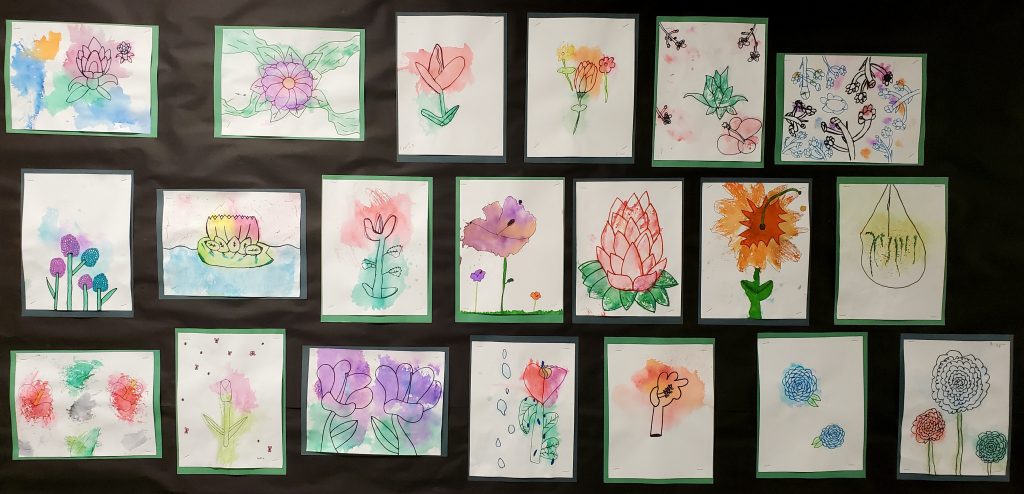
Last week we finished our flower prints that were inspired by Canadian artist Jan Corcoran. To make this art we coloured with markers on sheets of plastic. Then we used a spray bottle to turn the marker ink into watercolours. As the colours started to blend with the water and each other, we pressed thick paper onto the plastic to make a watercolour print. After they dried, we added the details of the flowers with marker. It was challenging to adjust our flowers to match what the ink did on the paper.
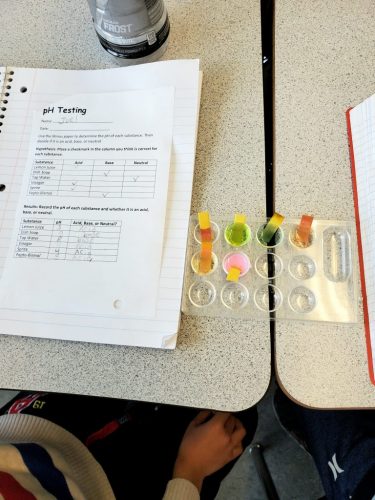
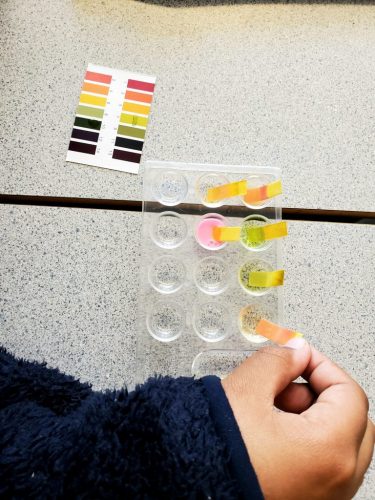
In science, we learned about a new property of mixtures and solutions. We discovered that the amount of pH that a substance has determines whether it is an acid or base. If something has a pH of 0-6, it is an acid. If something has a pH of 8-14, it is a base. If something has a pH of 7, it is neutral. If a substance has a very low or very high pH, it can burn your skin and should be handled with caution. We used litmus paper to test the pH of different household subtances. We discovered that most of the substances were on the acidic side of the pH scale. Check out our results below:
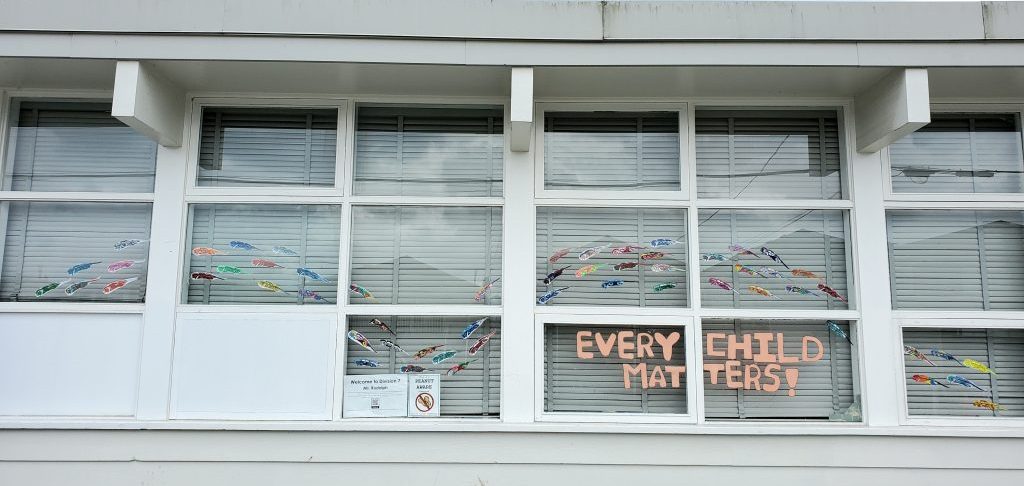
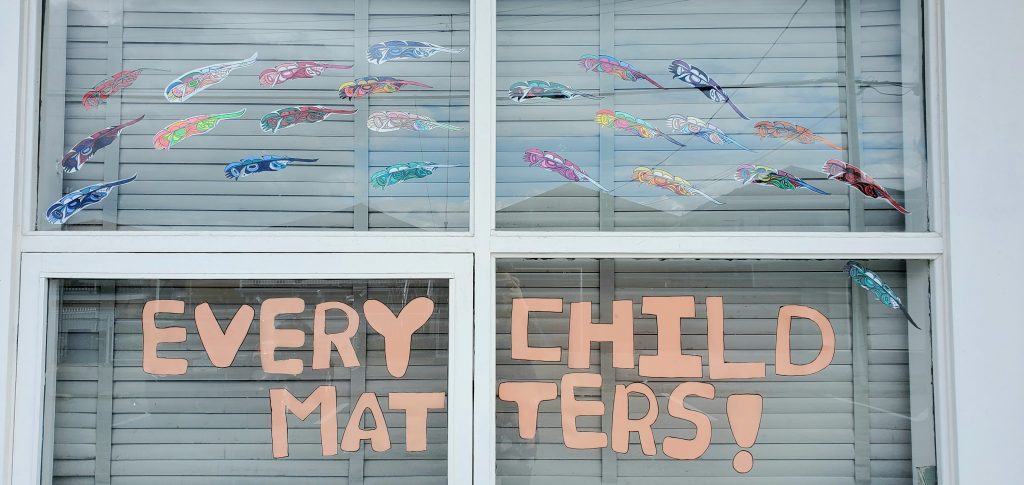
Finally, it was with heavy hearts that Division 7 learned about the recent tragedy that occurred in BC. Residential schools were a horrific chapter of Canada’s story and they continue to have lasting effects on Indigenous communities today. If you have visited our classroom since last week you will have seen the window display that we made to honour the 215 children that were found at the site of the former Kamloops Residential School. The feather art that you see in the display was designed by Gitxsan artist, Michelle Stoney. The following is a quote from her:
- “…the feather represents so much to our culture. Maybe too much to even explain so I’ll just say what it means to me…To me it means strength and healing…we use it for smudging, and to me that represents cleansing. Inside the feather is the spirit of the 215 children. The face at the bottom…has long flowing hair that they were forced to cut. The hand at the top is also important. But really this can mean something to someone else. I don’t want to force people what to think. I just like it when people connect in their own way. I’d love to hear stories of what this means to you.”
In Division 7, every child matters and we feel grateful that we have a classroom where we can feel happy, safe and included.
Prev
Next
There was some serious critical thinking and collaboration going on in Division 7 today!
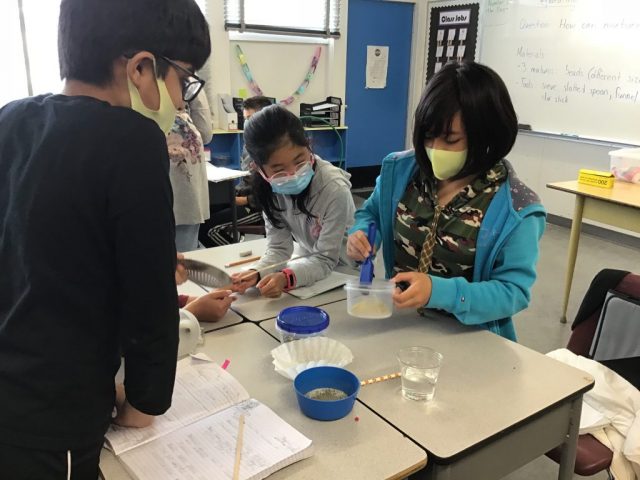
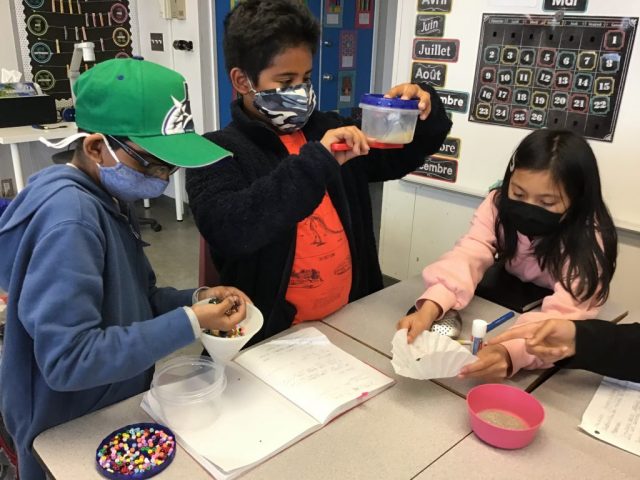
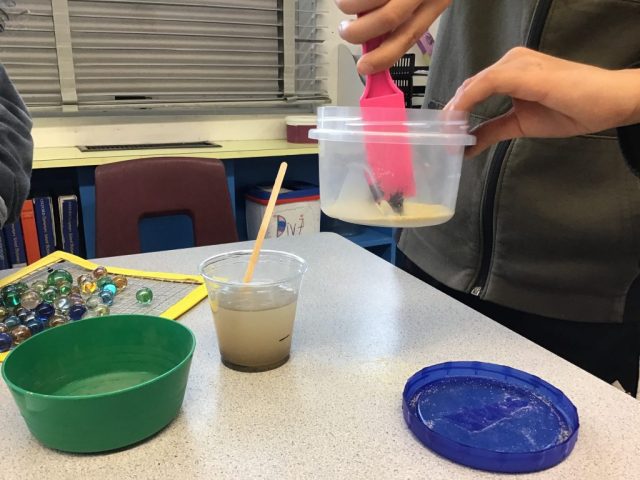
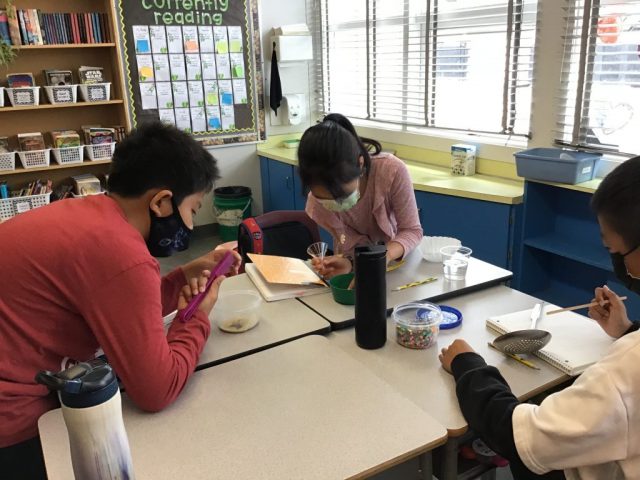
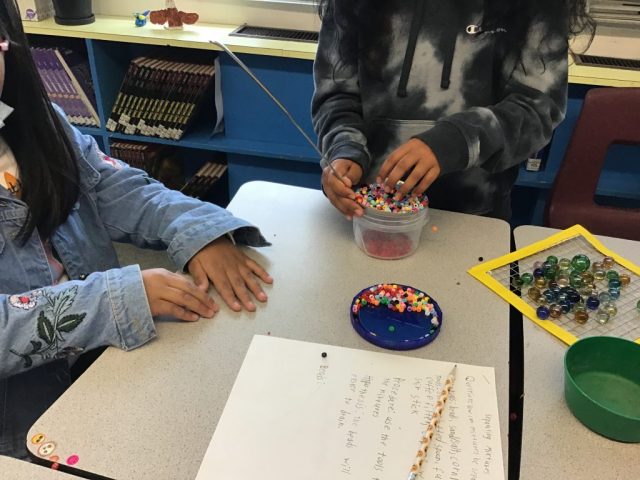
In science, we have been learning about solutions and mixtures. Mixing two substances together is a physical change. Even though the appearance may change, the two substances do not form a new substance and can be separated. Today we looked at methods of separating mixtures.
I gave each group of students three different mixtures:
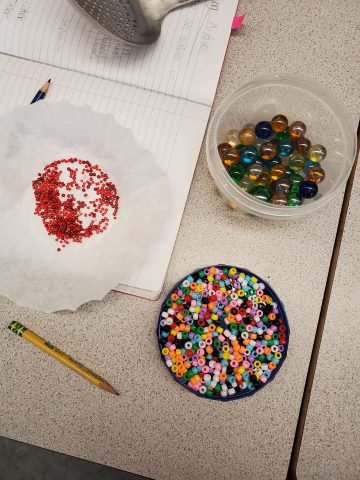
- marbles and beads in two sizes
- sand and salt
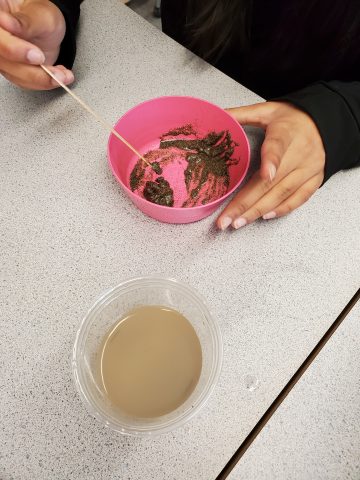
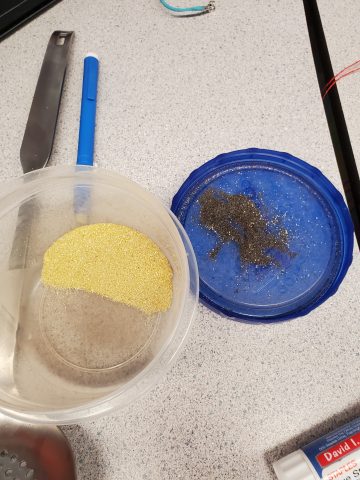
- cornmeal and iron filings
and challenged them to try to figure out how to separate them using any combination of the following tools:
- a sieve
- a slotted spoon
- a coffee filter
- a magnet
- a funnel
- a cup of water
- a stir stick
It was interesting to observe the ideas each group came up with and how they worked together to revise their plan when something did not work out.
Prev
Next
Do you have any ideas? Ask your scientist what they tried. What worked? What didn’t?
Here are some photos of their success:
Prev
Next
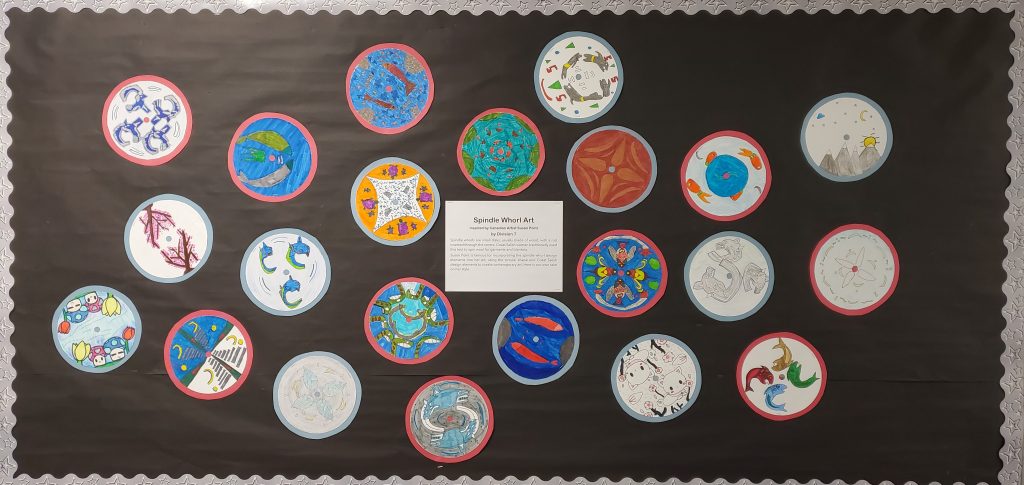
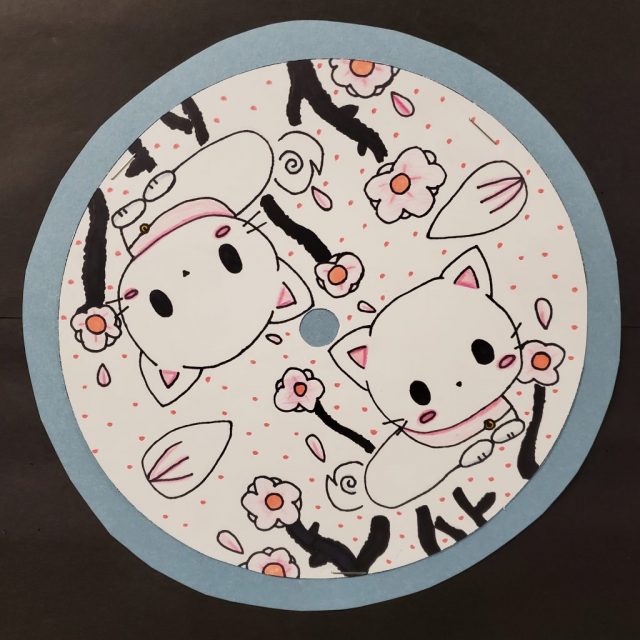
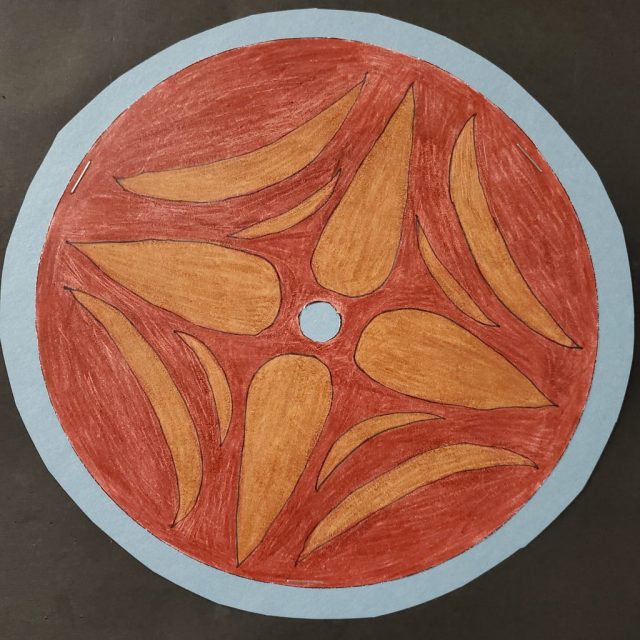
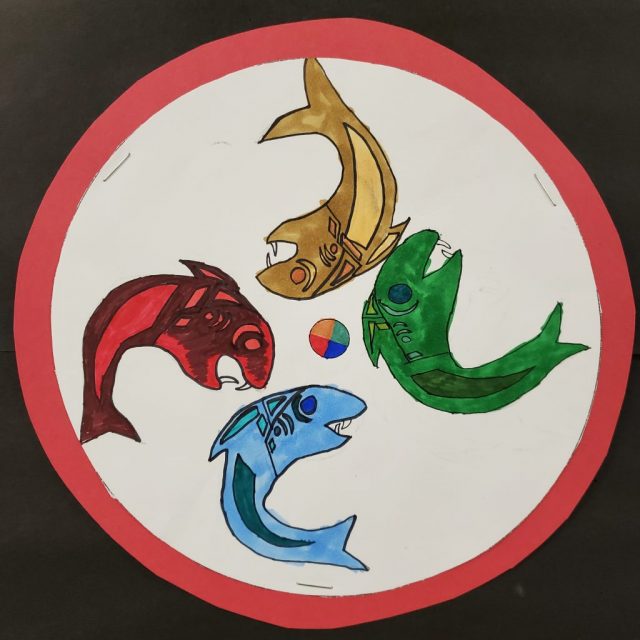
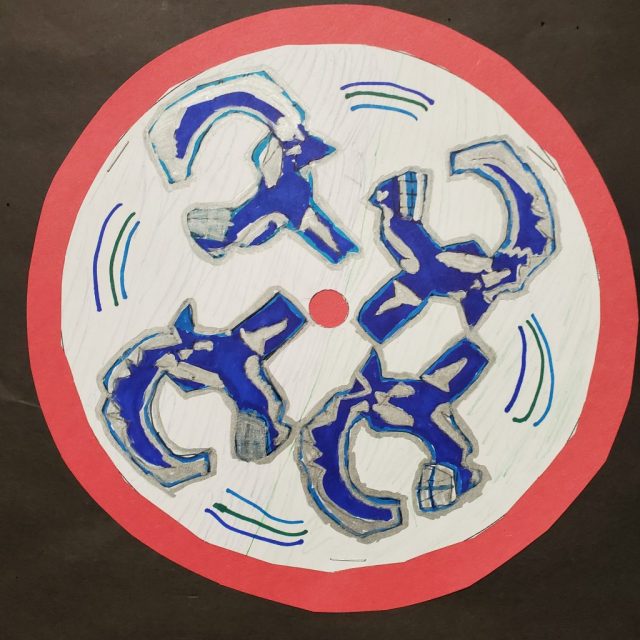
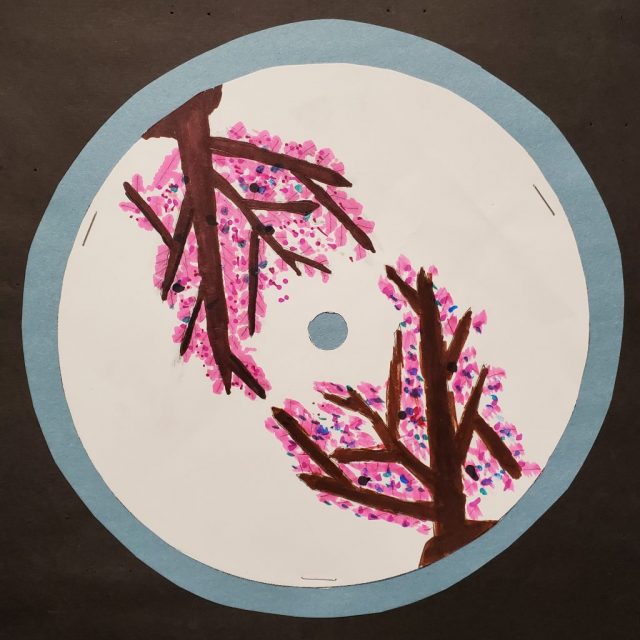
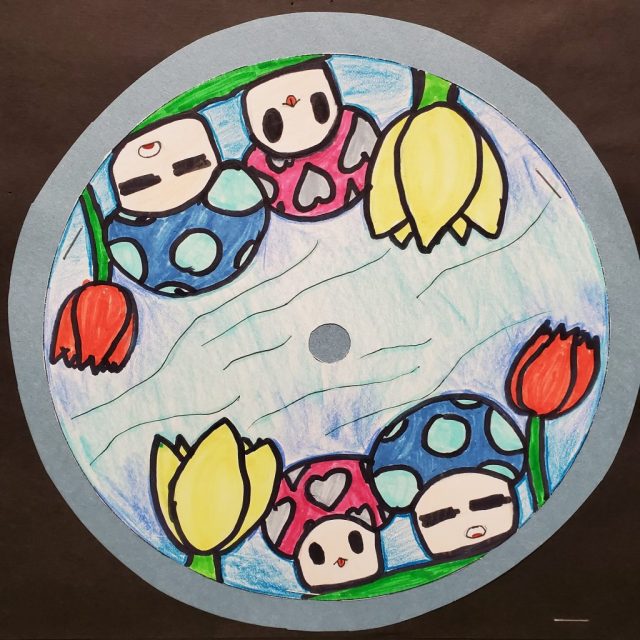
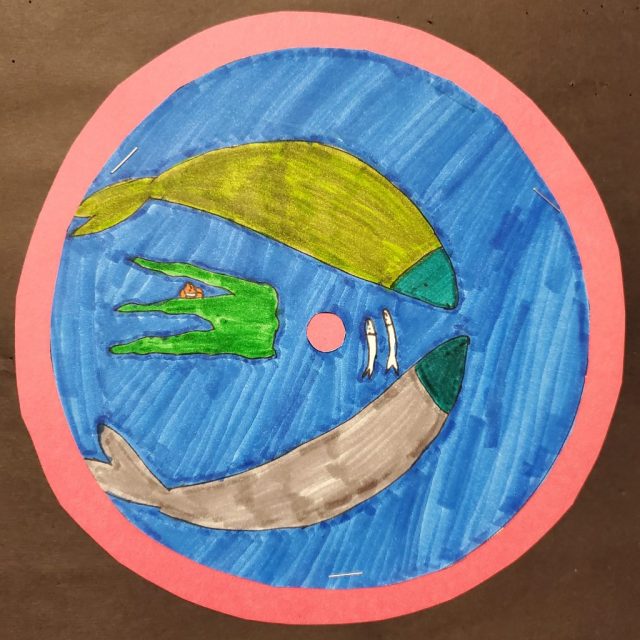
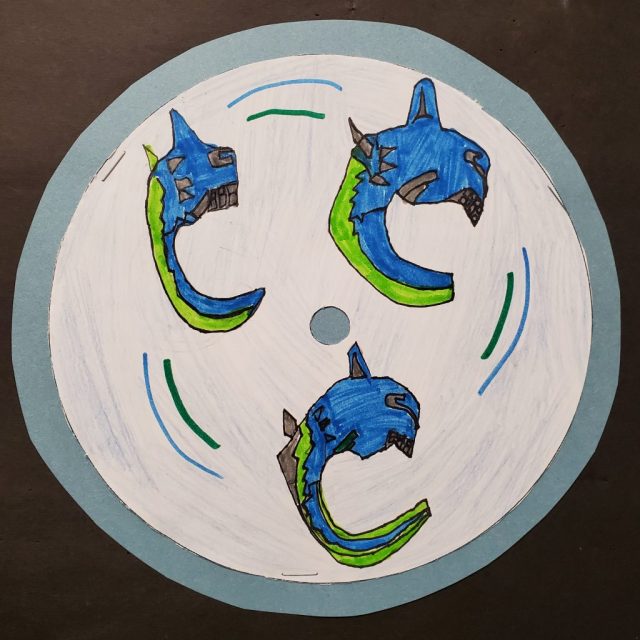
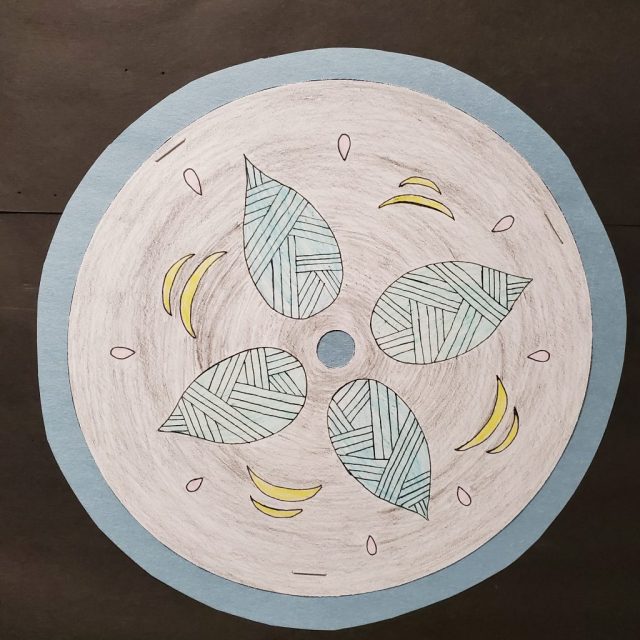
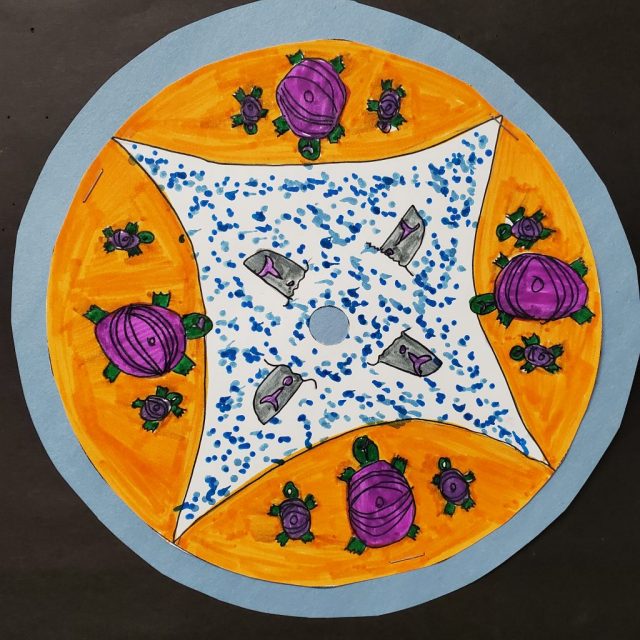
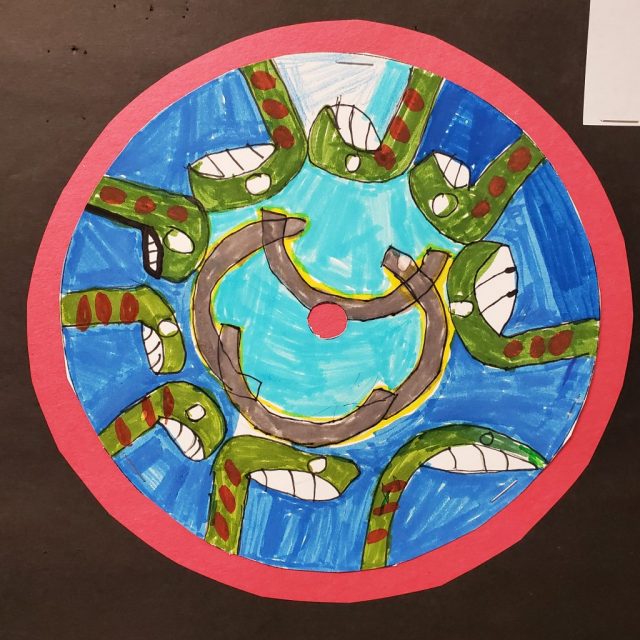
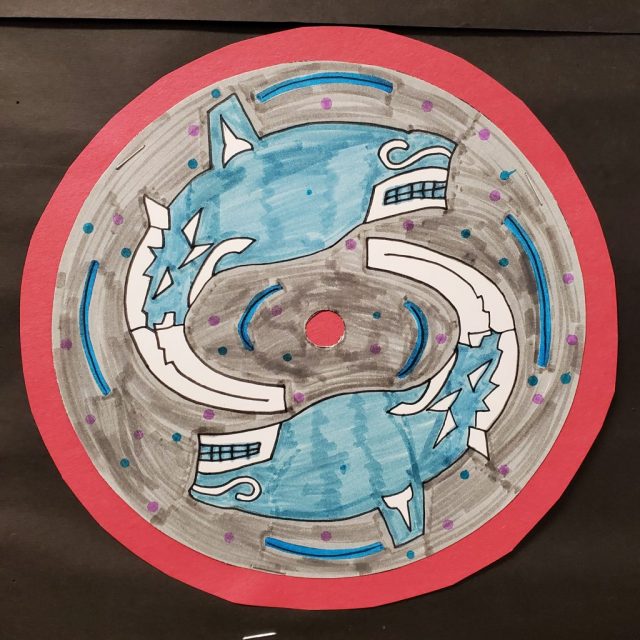
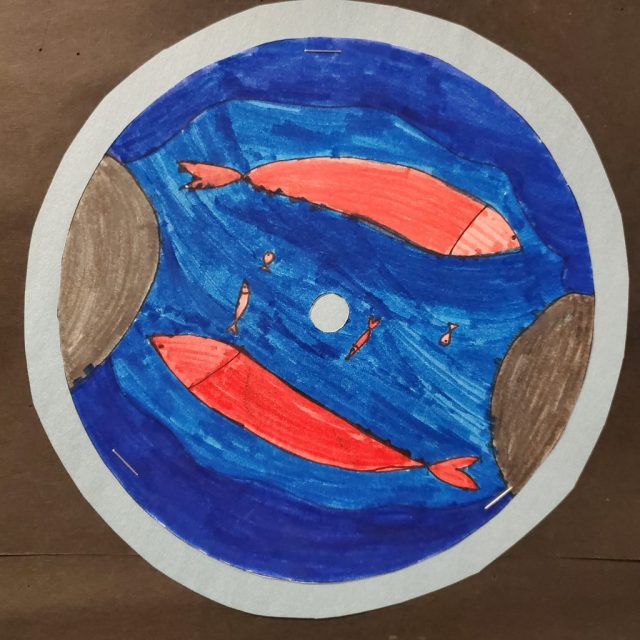
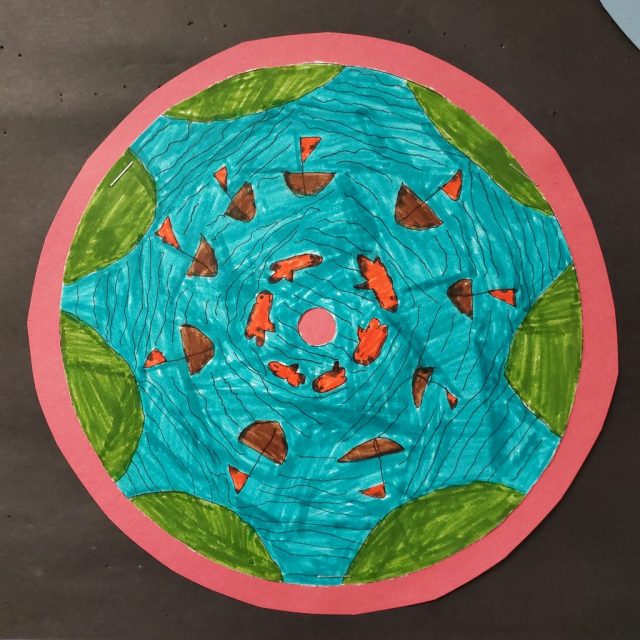
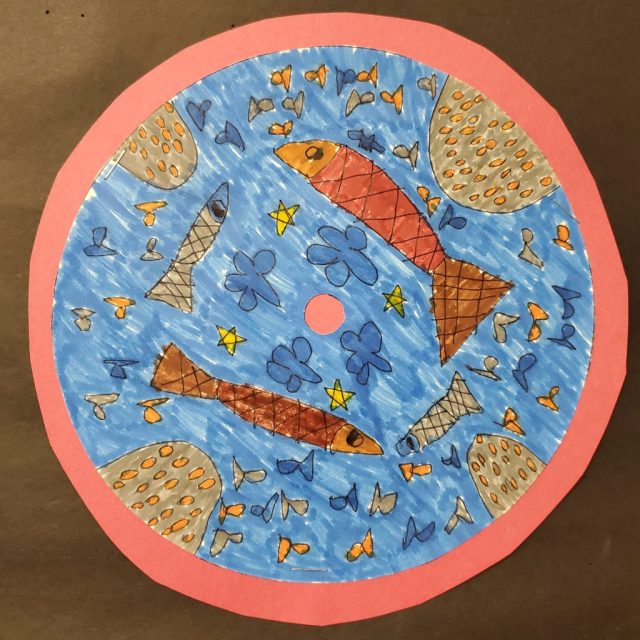
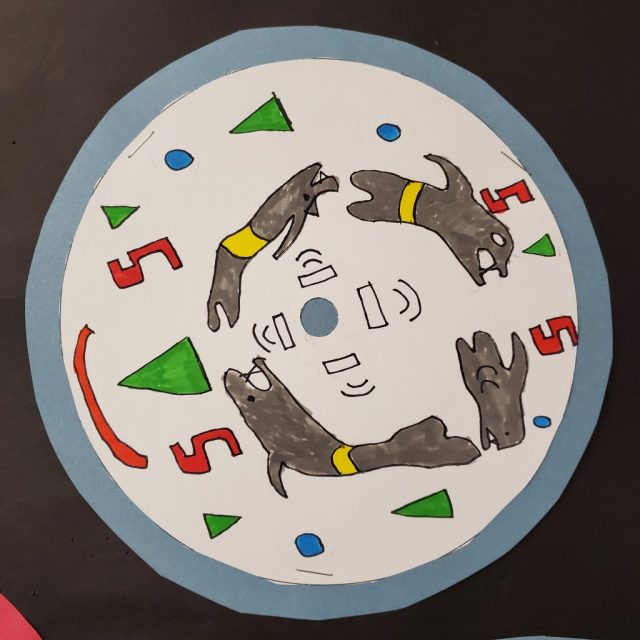
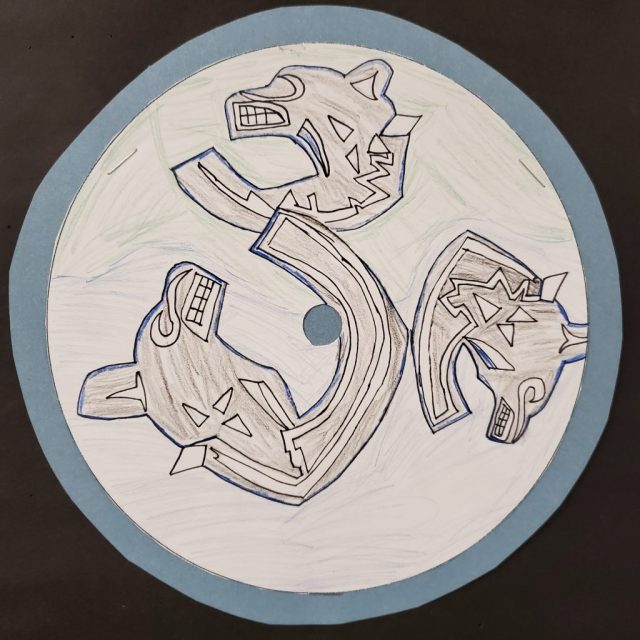
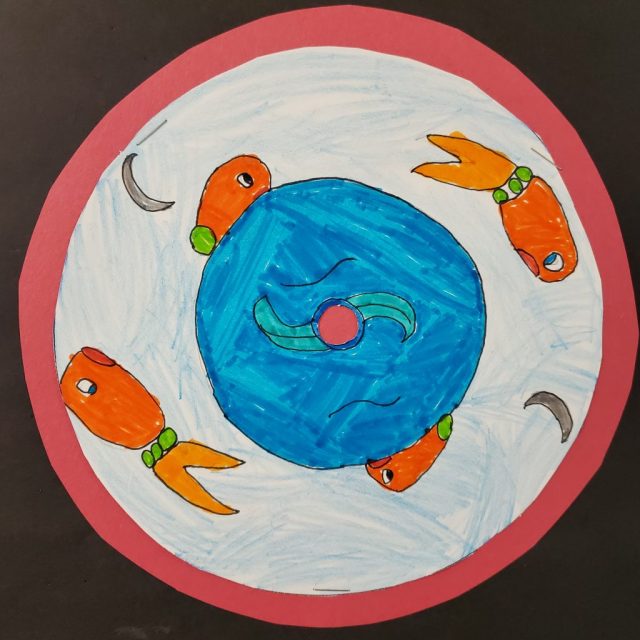
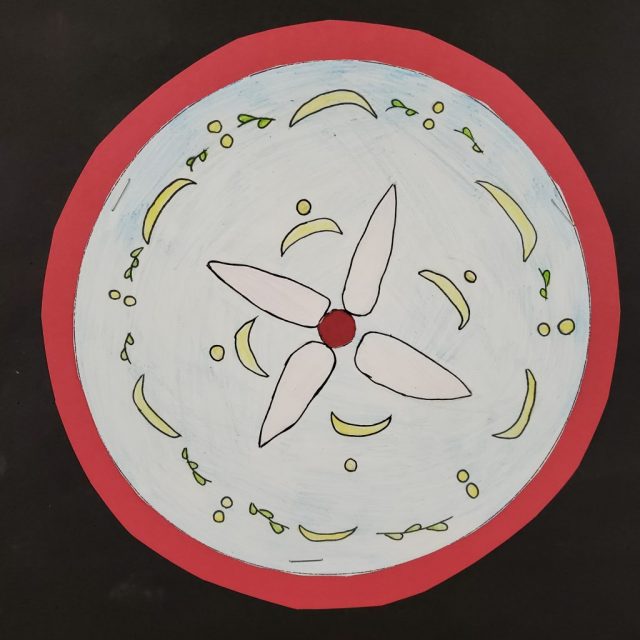
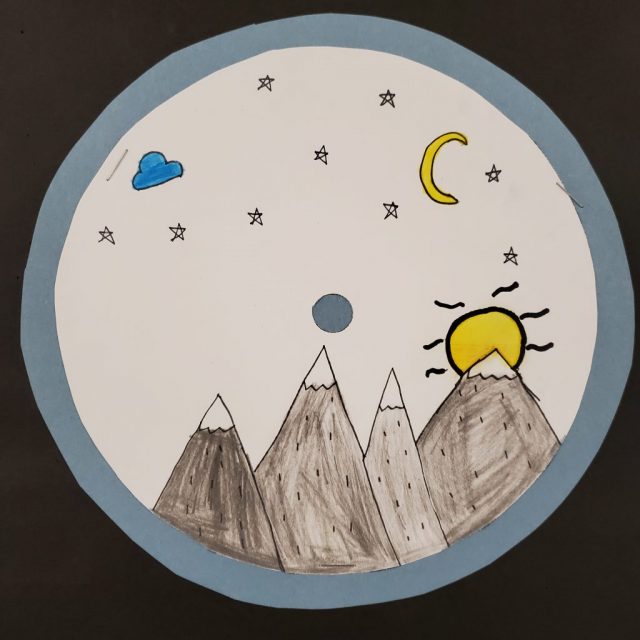
We have continued our study of Canadian artists by looking at the work of Musqueam Coast Salish artist Susan Point. Much of Susan Point’s work is inspired by spindle whorls. A spindle whorl is a tool that Coast Salish women traditionally used to prepare wool for garments and blankets. It is a disk made of wood or other material with a rod in the middle so the disk can spin.
Susan Point uses the shape of a spindle whorl as inspiration and incorporates Coast Salish design elements to create contemporary art. You may have seen her art around Vancouver, including in the Vancouver International Airport where “Flight (Spindle Whorl)”, the largest spindle whorl in the world, is displayed on a stone waterfall.
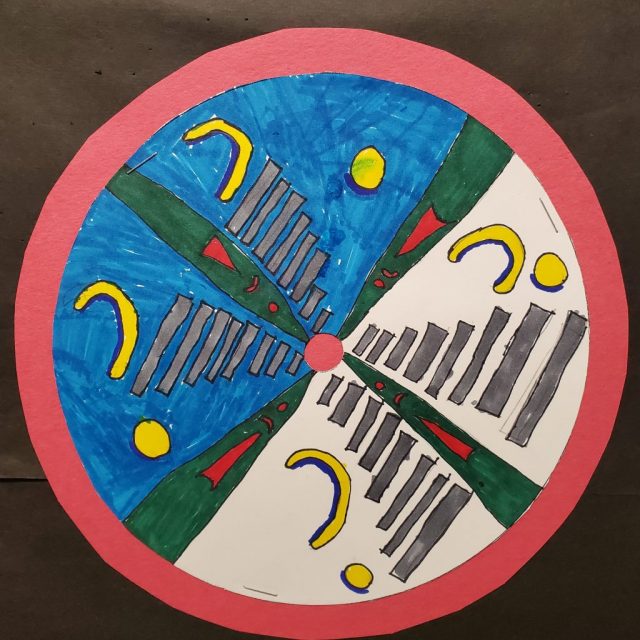
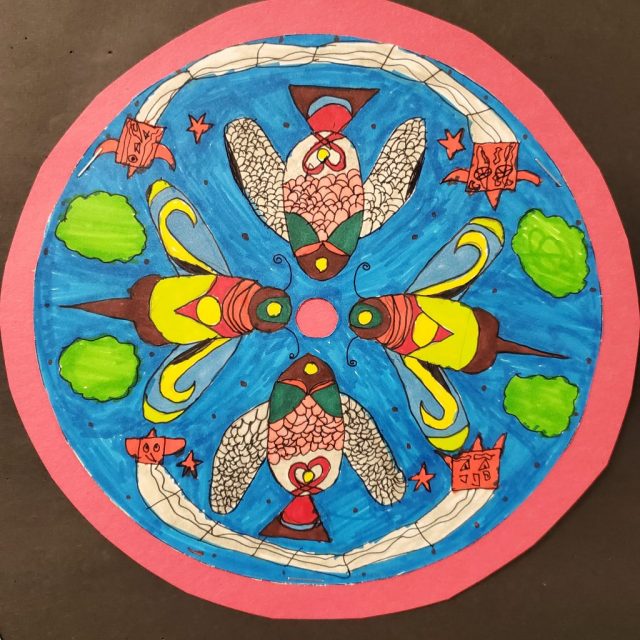
For our own take on spindle whorl art, I asked the students to focus on using “repetition in the round”, a technique where one image or design is repeated in a circular shape. I also invited them to choose an element of nature that they connect with to inspire their art. Using Coast Salish design elements was optional.
We hope you enjoy our spindle whorl masterpieces!
Prev
Next
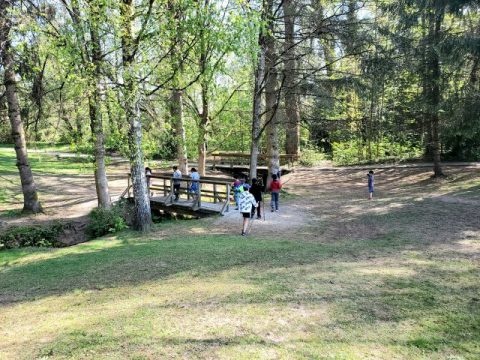
We celebrated by walking to Wesburn Park to enjoy nature and do some math in the great outdoors! Both math groups are learning about fractions right now so students worked in groups to represent fractions found in nature. See some of their ideas below:

Ninths, sixths, halves, and thirds.
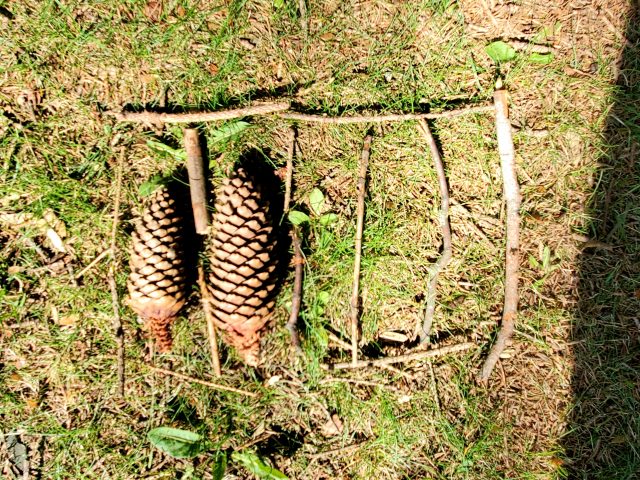
Two-fifths
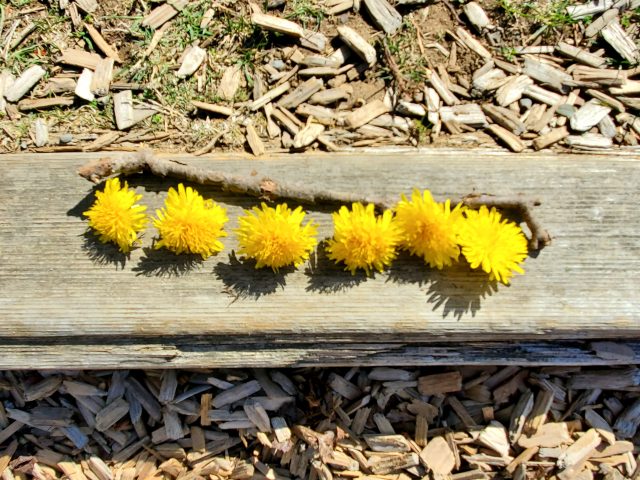
Sixths
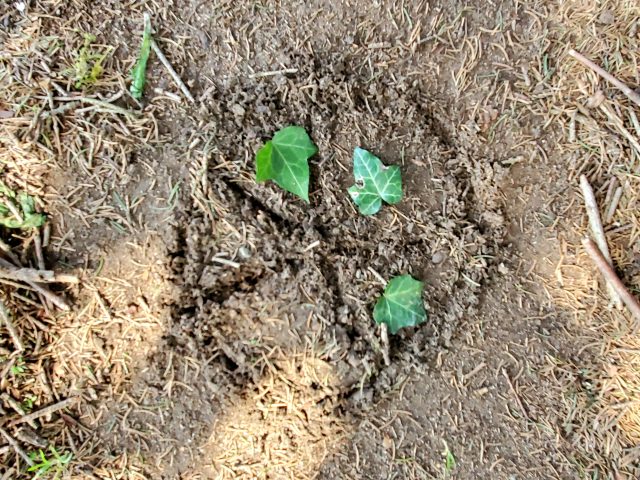
Three-fifths
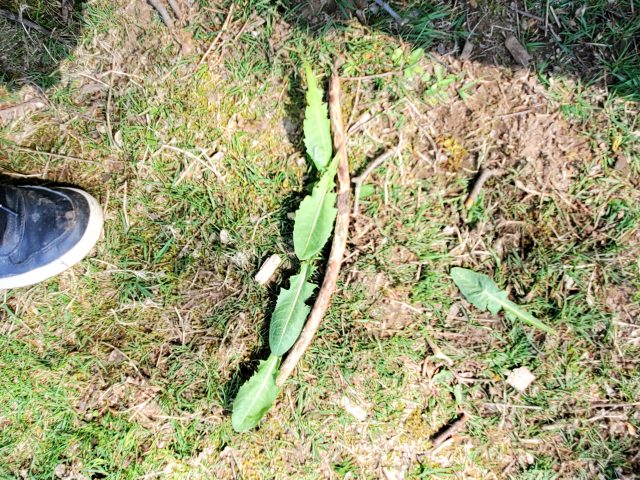
Fourths
Prev
Next
I hope you were able to get out in the sunshine today and enjoy this beautiful Earth of ours!
Today was a day full of energy and rich learning! (Is that why I feel so exhausted?)
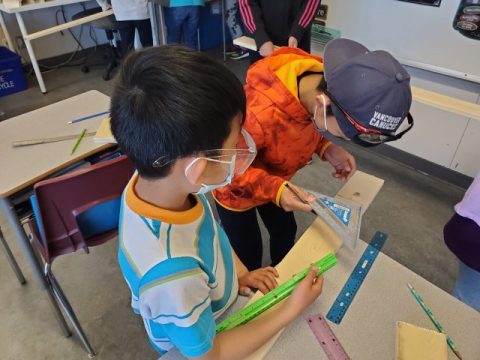
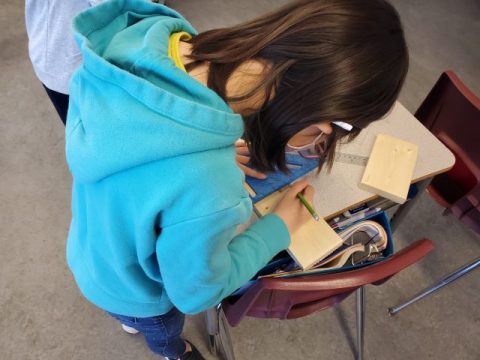
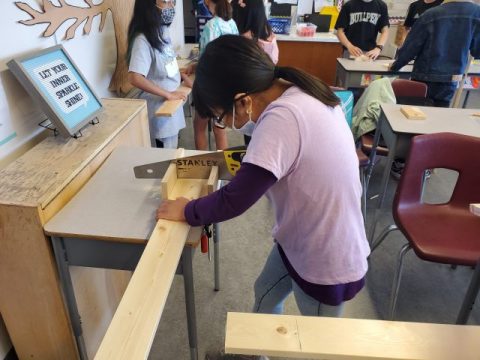
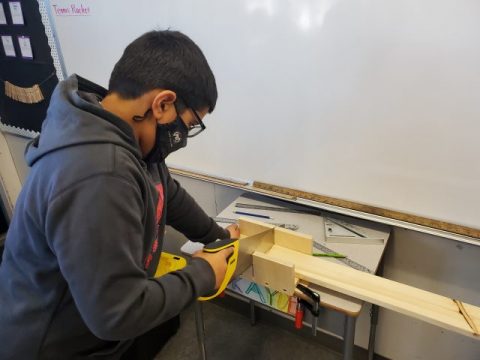
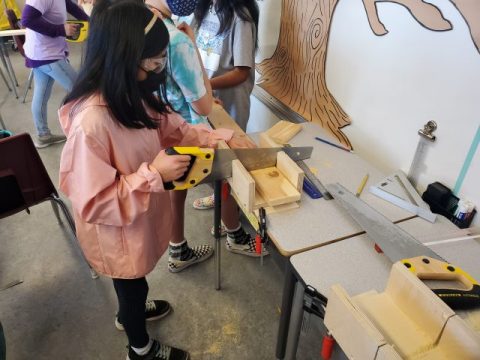
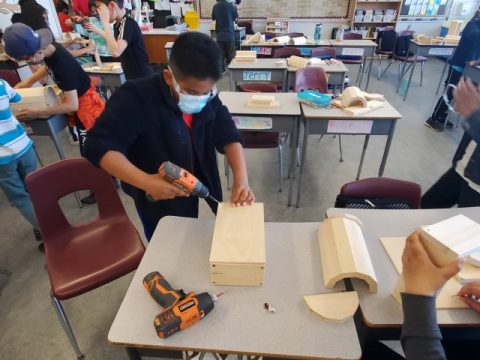
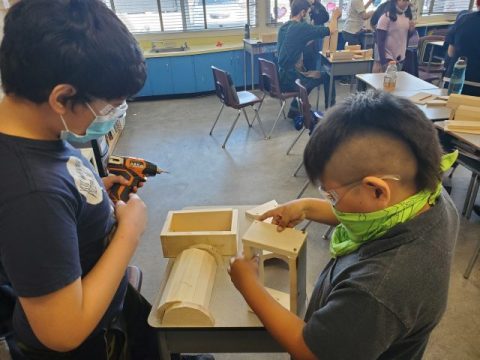
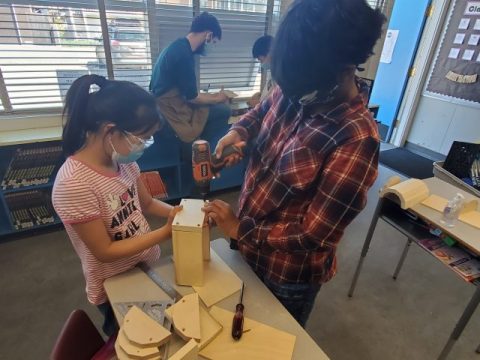
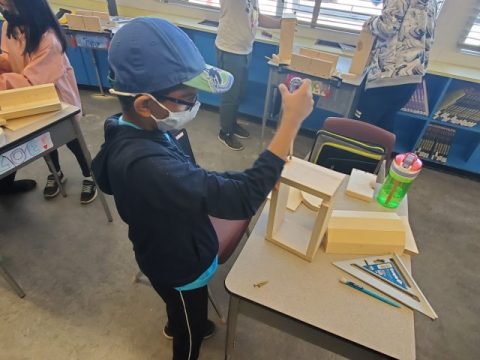
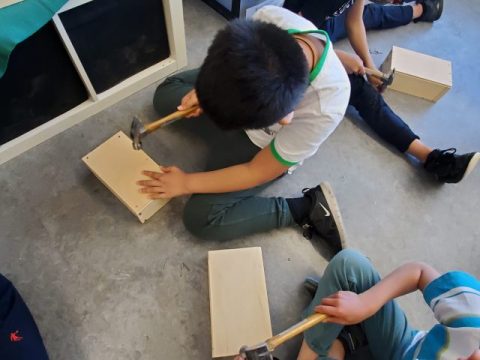
We were very fortunate to have Mr. McKillop, the district’s ADST teacher, come to our classroom for the full day to teach us how to make treasure chests out of wood. Apart from the many practical woodworking skills we learned, this also helped us understand that all skills are developed through practice, effort, and action. It was hard work, but I saw a lot of proud faces at the end of the day!
Students started by carefully measuring the pieces we needed to cut. This required using a ruler and a square. The advice was to measure twice and cut once! That did not stop a few pieces from ending up in the scrap pile…
Prev
Next
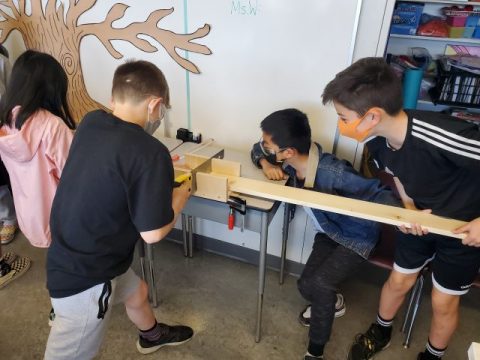
Next, students used a mitre box and saw to cut the pieces for the base of their chest. This was hard work and took most of the morning! I am happy to report that all fingers survived this step.
Prev
Next
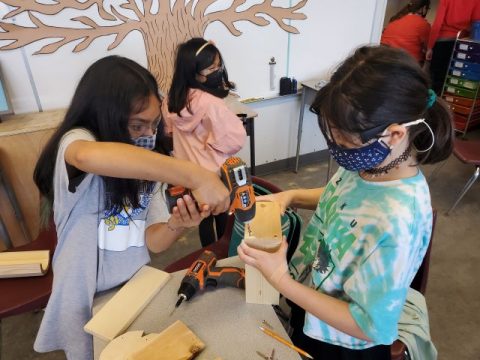
Mr. McKillop then taught the students how to use an electric drill and driver to screw their pieces together. We found that you had to be quite precise to make sure the base ended up straight. It was also easy to split the wood if the screws were tightened too much. Some students preferred to use a screwdriver instead!
Prev
Next
After that, it was time to attach the bottom of the chest using a hammer and nails. This was more challenging than it looked! The nails had to go in perfectly straight or they would end up poking out the sides. We ended up cleaning many bent nails off the floor at the end of the day…

Prev
Next
Finally, it was time to attach the lid and sand the chest to perfect smoothness. I had many students coming to me to showcase how soft their treasure chest ended up! We will be painting our treasure chests later in the week and students will be bringing them home once they have dried.
Way to go, Division 7! I would say you demonstrated every core competency in the book today as well as some next-level crafting skills!
Here are a few things we have been up to in Division 7 lately:
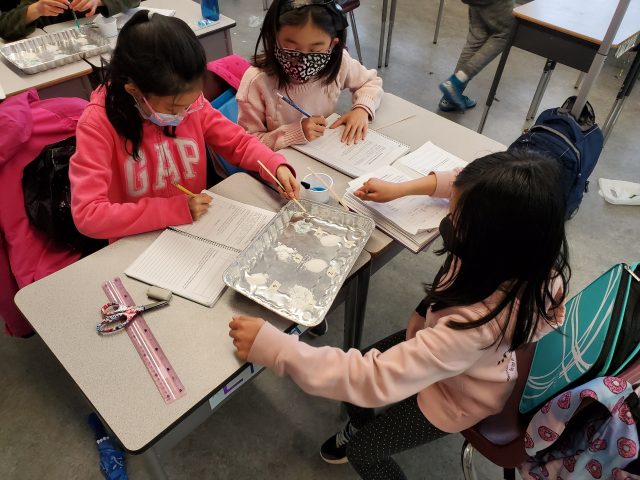
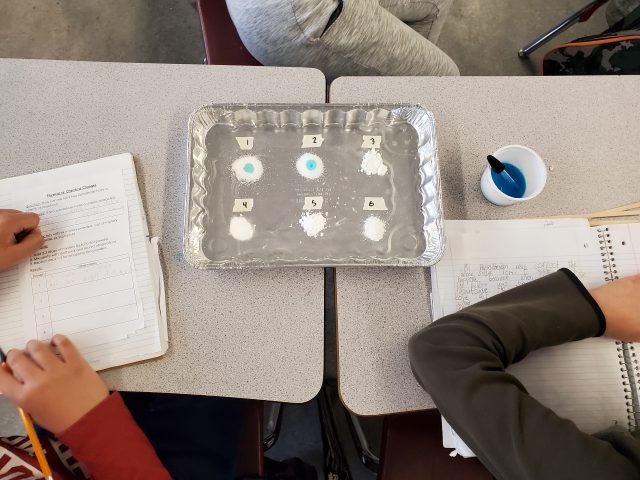
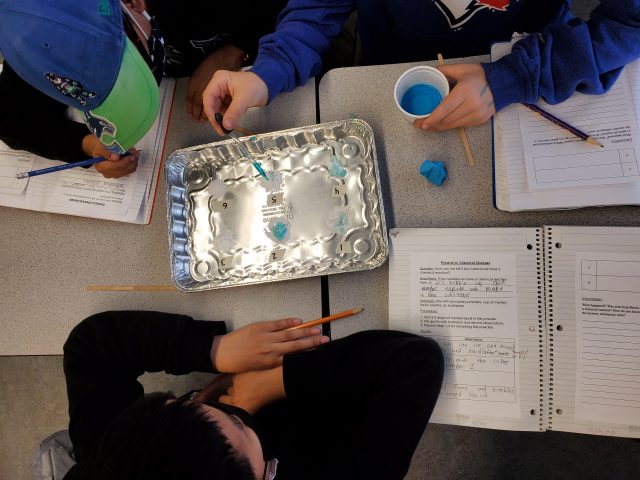
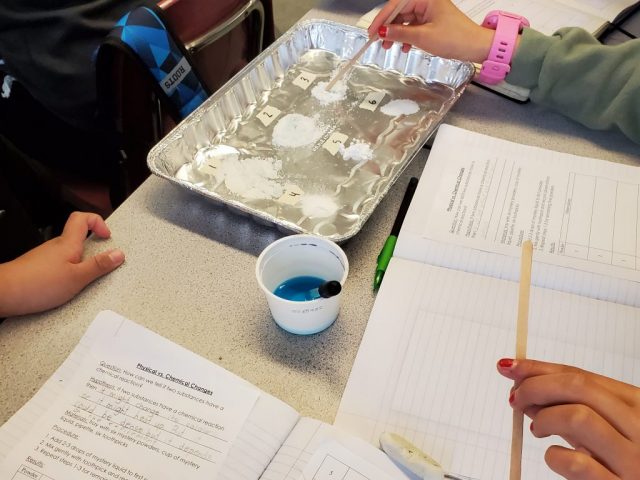
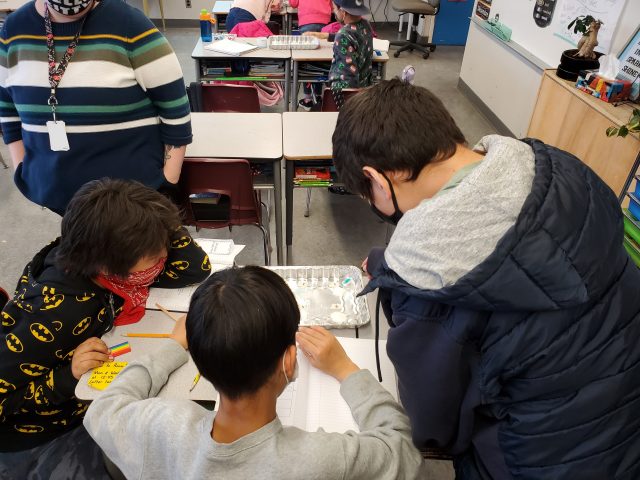
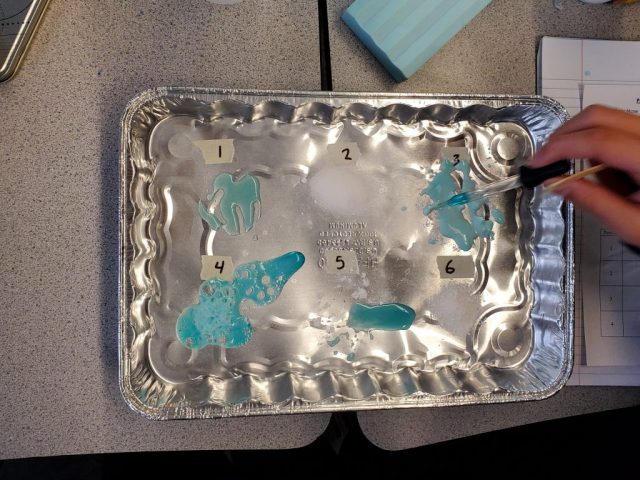
Yesterday, we reviewed the difference between a physical and a chemical change. Students used the scientific method to answer the question “How can we tell if two substances have a chemical reaction?” After reviewing safety procedures when dealing with unknown substances in science, groups tested six mystery powders with a mystery liquid and looked for signs of a chemical change.

Prev
Next
Here is the grand reveal of what the mystery powders were:
- Sugar
- Salt
- Cornstarch
- Baking Soda
- Icing Sugar
- Powdered Eggshell (I bet you didn’t guess that one, Division 7!)
And the mystery liquid was… vinegar with blue food colouring! The vinegar reacted with the baking soda and the powdered eggshell. You could tell because bubbles were produced when they were mixed together! Ask your child to tell you what the difference is between a physical and chemical change.
Today, students started a group research project on a European explorer. As we continue to examine Canada’s story, we are beginning to understand that interactions between First Peoples and Europeans lead to conflict and cooperation, which continues to shape Canada’s identity. Each group is responsible for learning about an explorer’s interactions with a particular Indigenous group.

We have accumulated a small library in our classroom to assist with research.
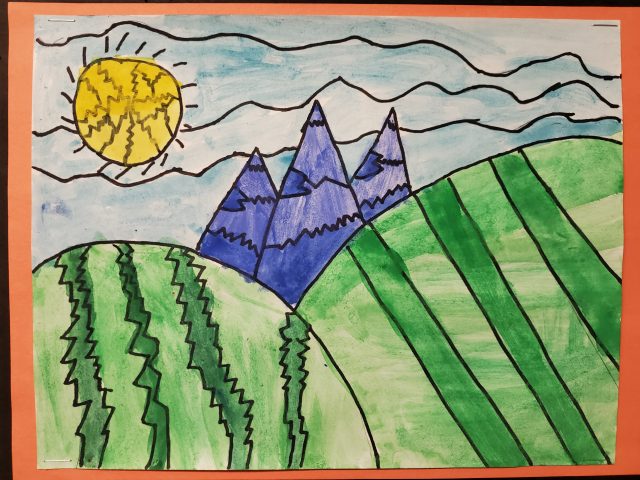
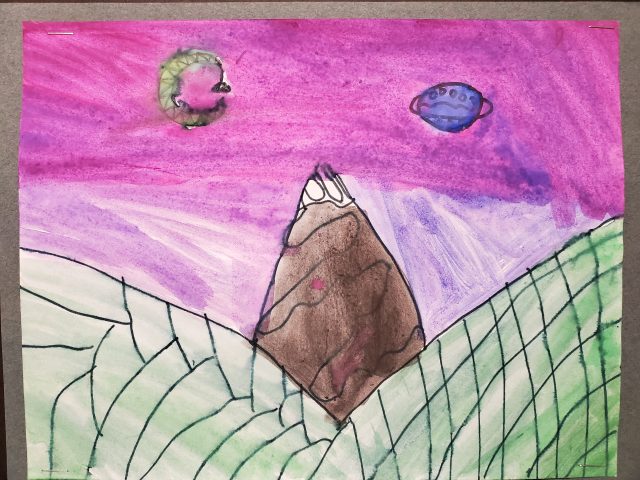
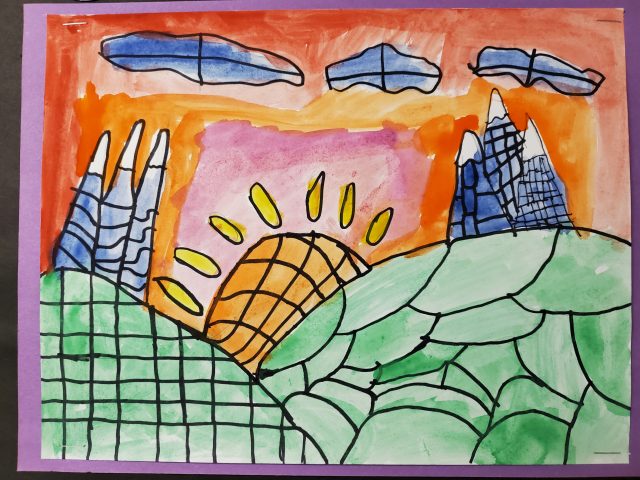
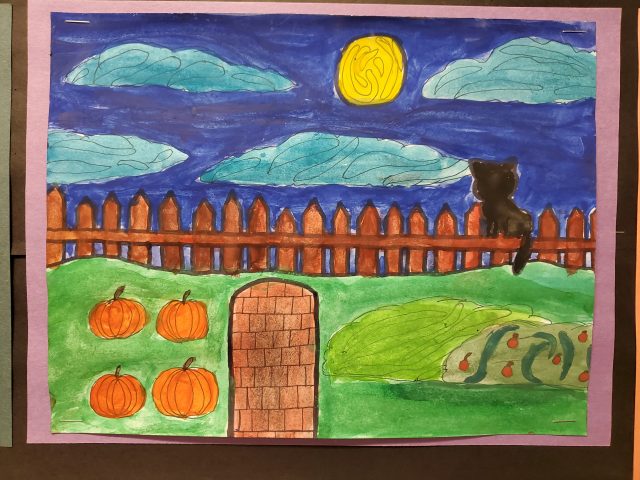
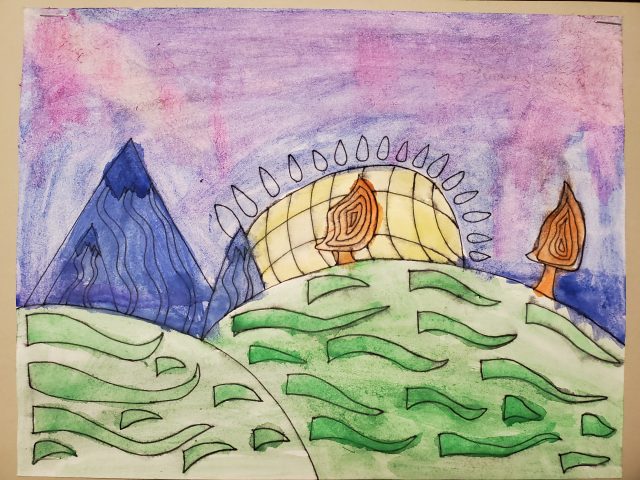
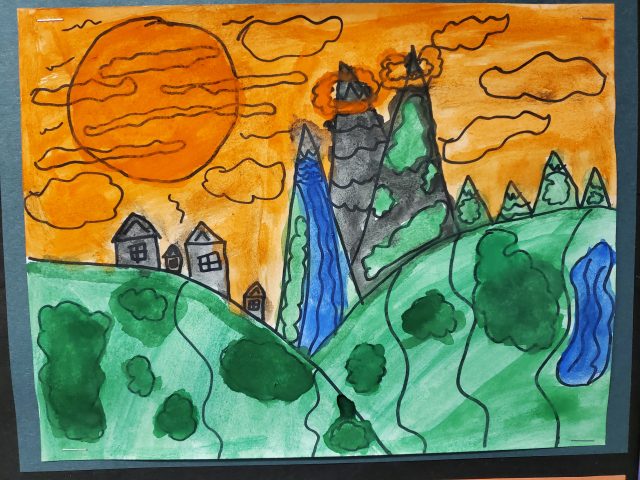
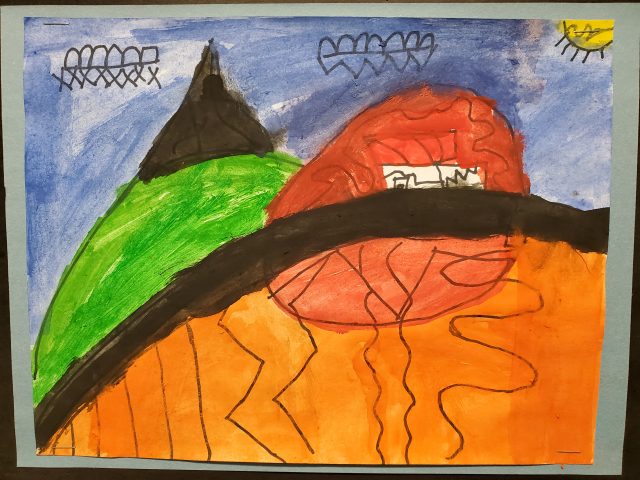
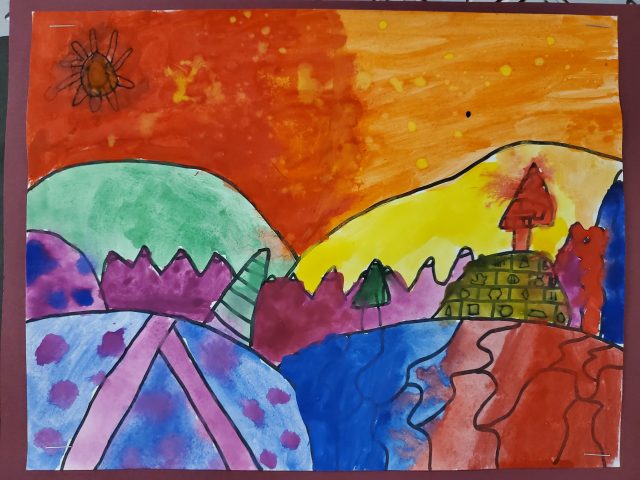
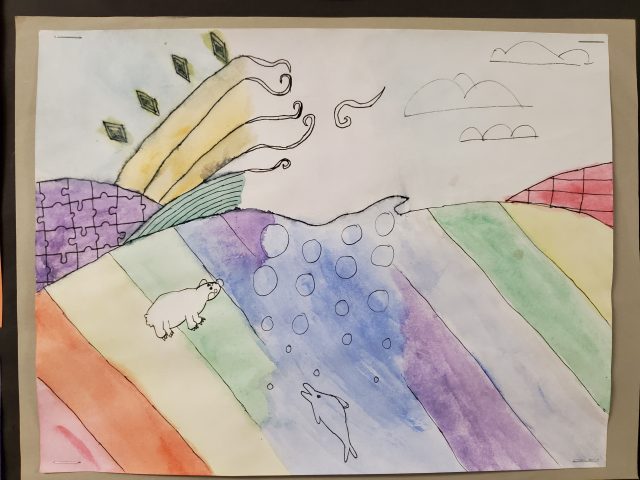
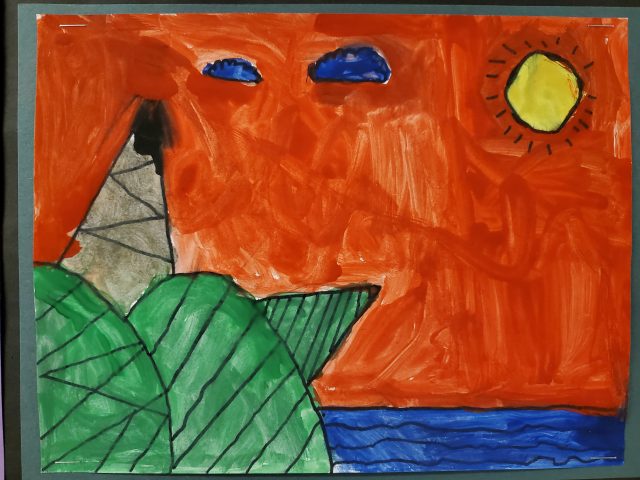
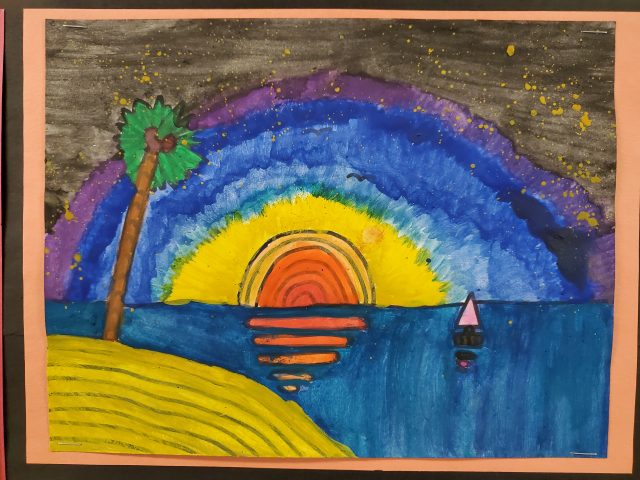
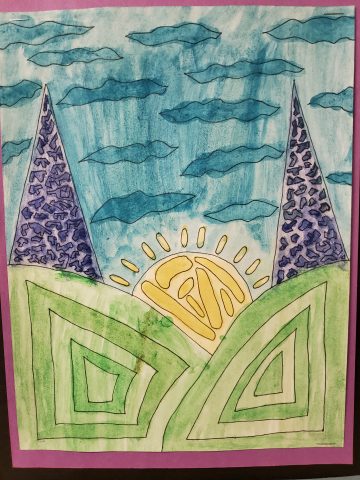
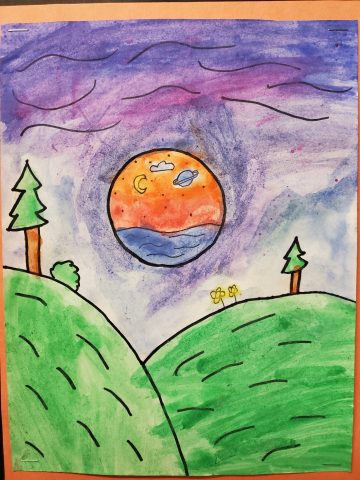
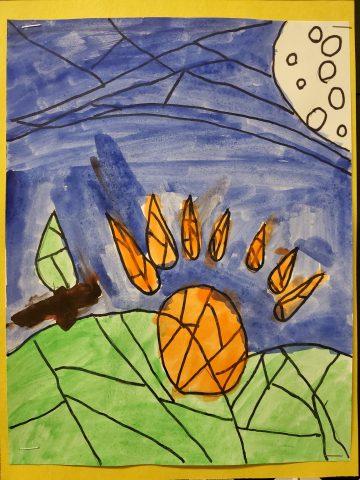
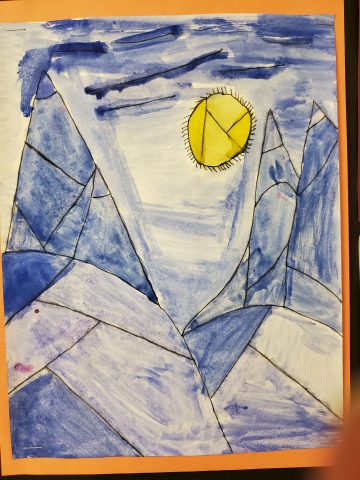
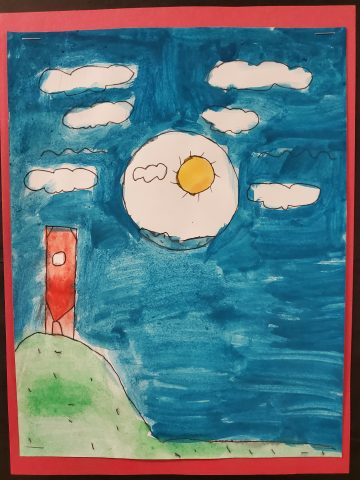
Finally, I would like to share our artwork that we started before spring break and has finally made it up on our bulletin board. We were inspired by the work of Canadian artist Bernadette McCormack who uses shapes and layers of watercolour to create nature scenes.
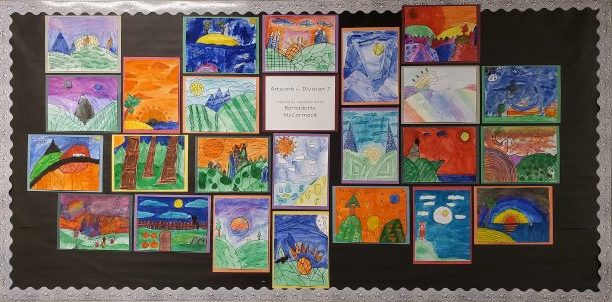
Take a closer look below:






Prev
Next


Prev
Next
Thank you for tuning in!
One of the things that Division 7 has been focusing on is adding interesting, descriptive words to our writing. We want to use language in creative and playful ways to develop style. One of our strategies for doing this is our “juicy” words list. Each student has a list of words in their reference duotang that they can use whenever they are searching for a new word to use.
Another way we expand our word knowledge is through our weekly mentor sentence activity. Each Tuesday a sentence is chosen from one of our read-alouds. The sentence is one that we can look up to (a mentor!) as aspiring writers. Students work in their morning routine books and write what they “notice” about their sentence (interesting words, punctuation, structure). Then they copy out the sentence (double-spaced!) and label as many parts of speech (nouns, verbs, adjectives, etc.) as they can. Students that want a challenge can try to rewrite the sentence to make it boring or write their own sentence that imitates the style of the sentence. Here are some examples of our past mentor sentences:
- “When the tall, thin lady behind the counter asked me what I wanted, I pointed to a gold-tipped pen as blue as the winter sky.” – The Gift by Aliana Brodmann
- “At lunchtime, we walked around the school yard, our fingers laced together, whispering secrets into each other’s ears.” – Each Kindness by Jacqueline Woodson
- Dust came in waves, getting in their eyes and in their noses, until they could hardly breathe. – Shin-chi’s Canoe by Nicola Campbell
Last week I asked the students to write about snow. When I read what they wrote, I was incredibly proud of the interesting sentences that I saw! I picked out one excellent sentence from each student’s writing. We read them as a class and I want to share them with the rest of our community (you!). Click here to read Division 7’s mentor sentences about snow.
I also noticed that something we need to work on as a class is the structure of our writing. We are going to start focusing on paragraph structure and sequencing our ideas logically to make sure our writing stays focused and on-topic.
Tomorrow is Pink Shirt Day! Please remember to wear a pink shirt to stand up to bullies!
Pink Shirt Day originated in Canada when a boy wore a pink shirt to school and got teased for it. Two of his classmates saw what was going on and the next day they showed up to school with pink shirts to hand out to everyone in the school to show support for the bullied boy. If you see someone getting teased or bullied, be the one to stand up and do something about it!
This week we read Angus All Aglow by Heather Smith. Not only is it a wonderful story about the effect that kindness can have on someone who is hurting, it is also filled with wonderful language that leaps off the page. Click here to listen to the story.
In order to inspire kindness, Division 7 worked together to create this agamograph art. An agamograph is a series of images that change at different angles. It gets its name from the Israeli artist Yaacov Agam. This project was a true demonstration of the collaboration core competency. Each student coloured a section of the poster. As a group, we had to decide how we would colour it and what materials and shades we would use so that all the pieces would look the same. It was important for each member of the group to do their part to make it work.

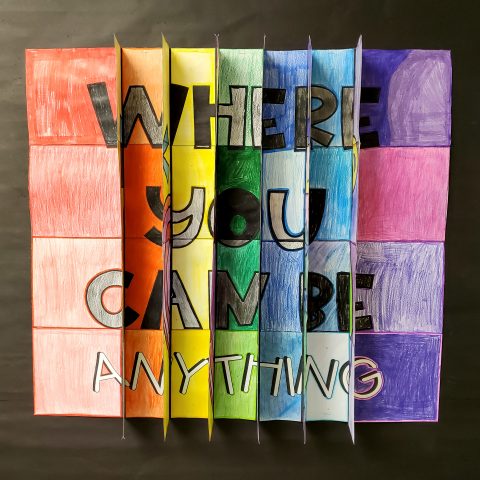
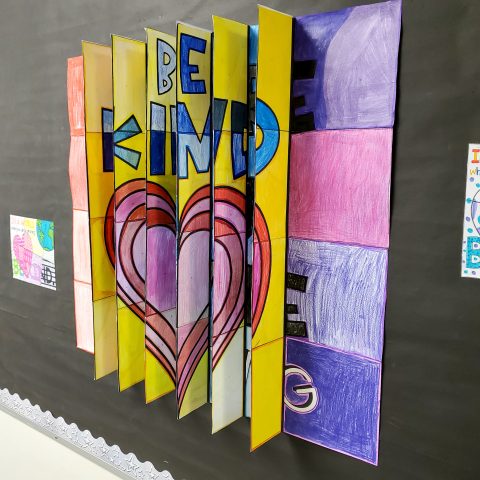
We hope our project inspires kindness in the Cascade Heights community. Stay tuned for another upcoming Division 7 kindness initiative that we hope you will participate in…
Journeys of Division 7 ©2026. All Rights Reserved.
Powered by WordPress.
Theme by Phoenix Web Solutions