 As students progress in their school experience, they are challenged to take on greater responsibility in a variety of areas: with their academics, their work-habits and responsibilities, and with their social-emotional regulation. As we build community in our classroom, it’s important that students are a part of deciding the tone and expectations of our shared learning space. Some of the questions we’ve explored in the first month of school have been:
- How should a classroom space feel?
- What kinds of things can make it a productive space? A caring space? A safe space?
- How can we all contribute to building community in our classroom?
- What are your roles as a student? What are the teachers’ roles?
These questions grounded our next steps in crafting our class agreements.
Our Process:
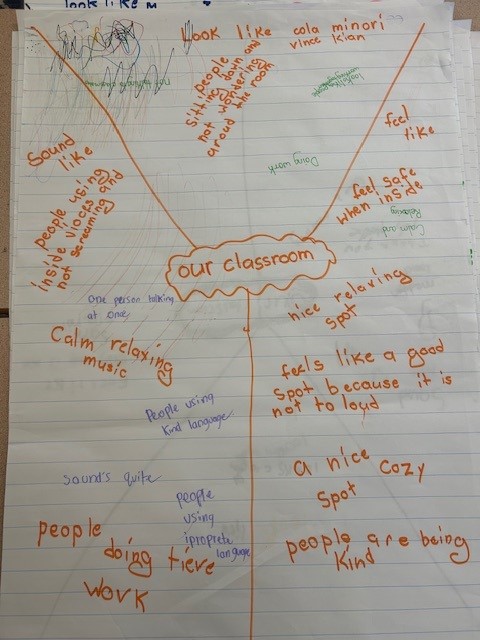
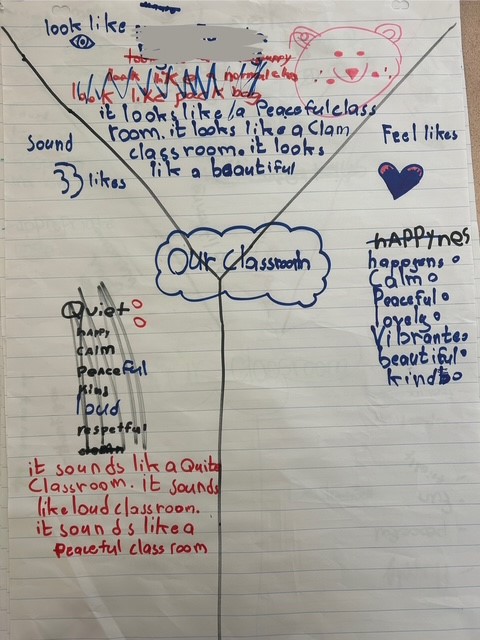
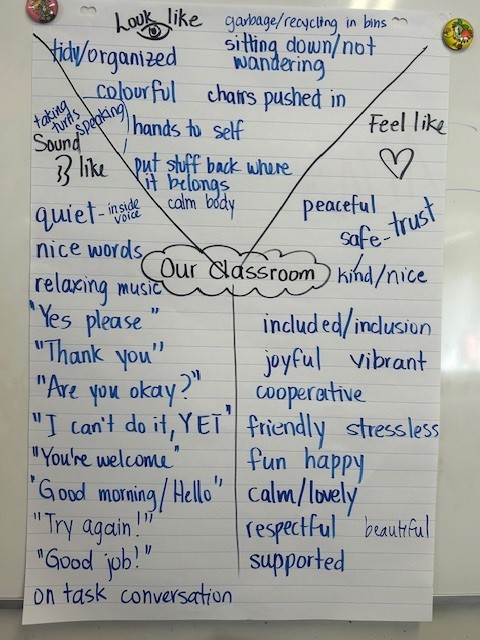
First we brainstormed various roles and responsibilities expected from students and teachers. Then we brainstormed, in groups, how we want a classroom to look like, sound like, and feel like. Several themes emerged from this discussion, and these themes are our Class Agreements. The agreements are:
- Mutual Respect
- Safety
- Right to Participate/Right to Pass
- Attentive Listening
- Appreciations/No Put-Downs
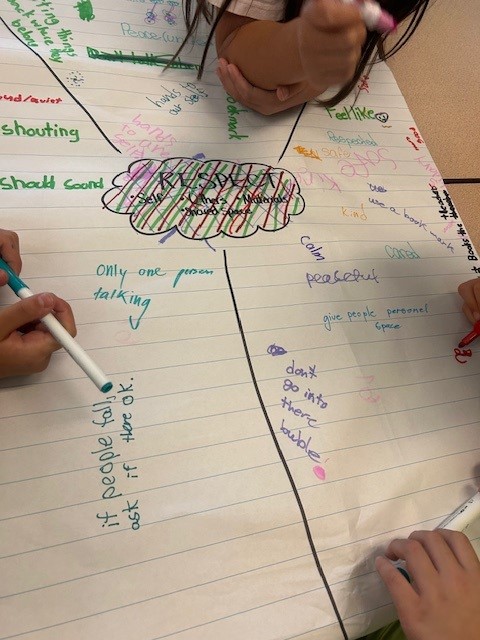
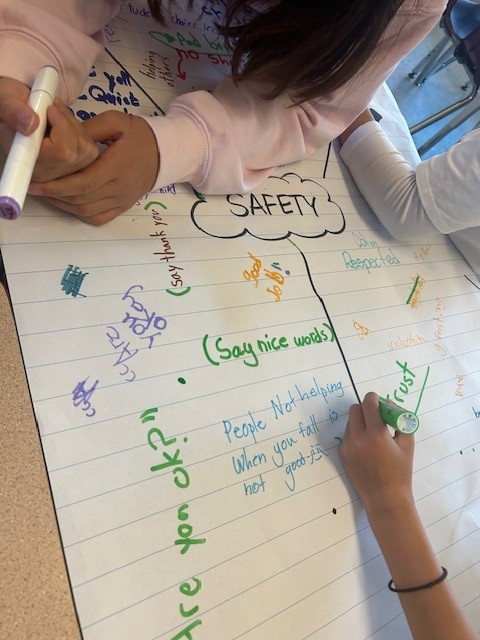
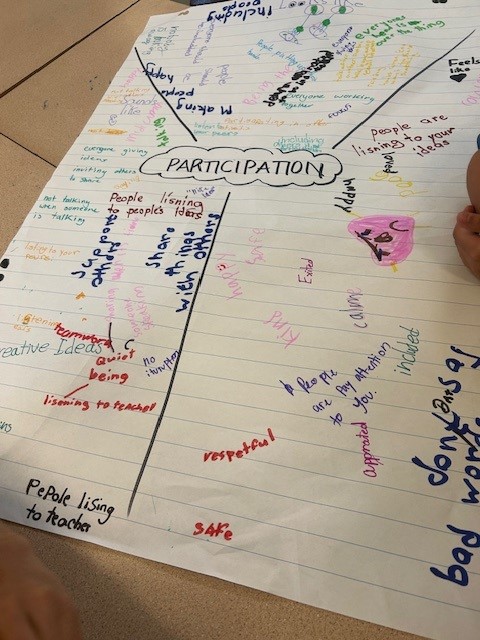
These agreements don’t happen automatically–they take work and collaboration on the part of each individual student and teacher. Because these themes can be quite broad, students worked in small groups to create Y-charts to describe what each of these agreements would “Look like,” “Sound like,” and “Feel like.” After the first round, we reflected on what each agreement meant, and what each group wrote–we discussed how we could be more specific with our descriptions. Then groups worked on adding ideas to the rest of the Y-charts.
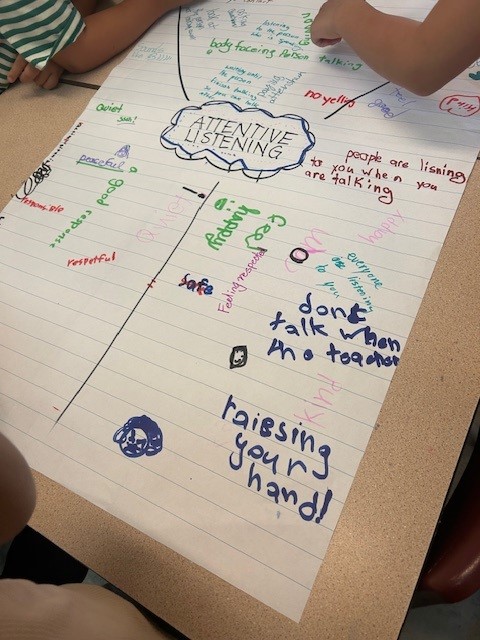
Observations:
- At first, students had a tough time naming specific actions, phrases, etc. to describe each of these categories. There were lots of notes about “Sounds respectful,” and so we really had to dig into what you would actually hear if you walked into a space where people were treating each other with mutual respect, for example. A great way to support your child in developing their communication skills is to have these discussions with them, also–encourage them to give specific examples to back up their thinking.
- Another thing I noticed during this activity was that students were quick to add what NOT to do (i.e., don’t run in the classroom), but needed prompts to phrase their idea in a proactive way that suggests what TO do (i.e., walk in the classroom). Often we tell children what NOT to do, instead of being explicit with what they SHOULD be doing. Front-loading children with clear expectations about how we safely and respectfully share a space sets them up for success.
Leave a Reply