Boredom Equals Opportunities
What thoughts come to mind when we hear the words, “I’m bored”? If we look at the definition of the word ‘bored’, it means “lacking interest in one’s current activity” (Oxford Languages, 2024). Looking more closely at the word and from a different perspective, it ultimately comes down to a person’s choice of being in that particular state. This sense of “boredom” often stems from a misconception that your child is not occupied with something to do. When your child’s time is habitually occupied with various activities (e.g. endless extracurricular activities), they have not had opportunities to use their creativity in finding things to do. Allowing your child to explore and ‘find’ things to do helps nurture their creativity and imagination. If we do not allow our children to practice these skills, how do we expect them to become better at using their creativity and imagination, which are similar to other skills such as riding a bike, swimming, or playing a musical instrument? ‘Being bored’ presents opportunities to try new things and use one’s creativity and imagination by finding things to do on their own. With the ever present digital influences that have already stifled our ability to use our imagination, let’s not take away anymore of our children’s creativity and imagination by occupying every minute of their day with things to do. Allow your child some free time so that they can practice finding things to do using their own imagination and creativity. This does not mean that parents have to “play” and interact with their children. Setting time aside to spend with your child is important, but rectifying the boredom is not one of these times. According to writer Dorothy Parker, “The cure for boredom is curiosity. There is no cure for curiosity.”
Before having to grow up and become an adult where the responsibilities become greater, being a child is an opportune time to explore and nurture creativity. It is also the time when we gain skills and knowledge not only from school, but from play that is unstructured. This does not mean spending endless free time on an digital device. Many skills, that we as adults continue to use on a daily basis, are developed and strengthened through unstructured play. Examples are doing a puzzle, making things from the recycling bag, making up games, or pretend play. The skills we develop and use daily as adults are communication, problem solving, creative and critical thinking, interpersonal and intrapersonal skills, and self and body awareness through physical literacy. Allowing your child to have unscheduled free time is an important way to nurture creativity and imagination. These skills have to be nurtured and encouraged by allowing your child to play freely using Lego, playdough, colouring, or toys that encourage building structures without instructions. These activities not only strengthen hand muscles and help with fine motor skills and dexterity but also strengthen creativity and imagination. By overscheduling your child, your child will become dependent on having something scheduled for them rather than having “free choice” to pick what they want to do. This can include practicing and strengthening skills such as reading, writing, math, a musical instrument, or a sport they are involved in. If children are not given the opportunity to think of what they can and want to do, they will not learn how to do so when the time comes. This can lead to individuals becoming influenced by others who may not have the best intentions in mind.
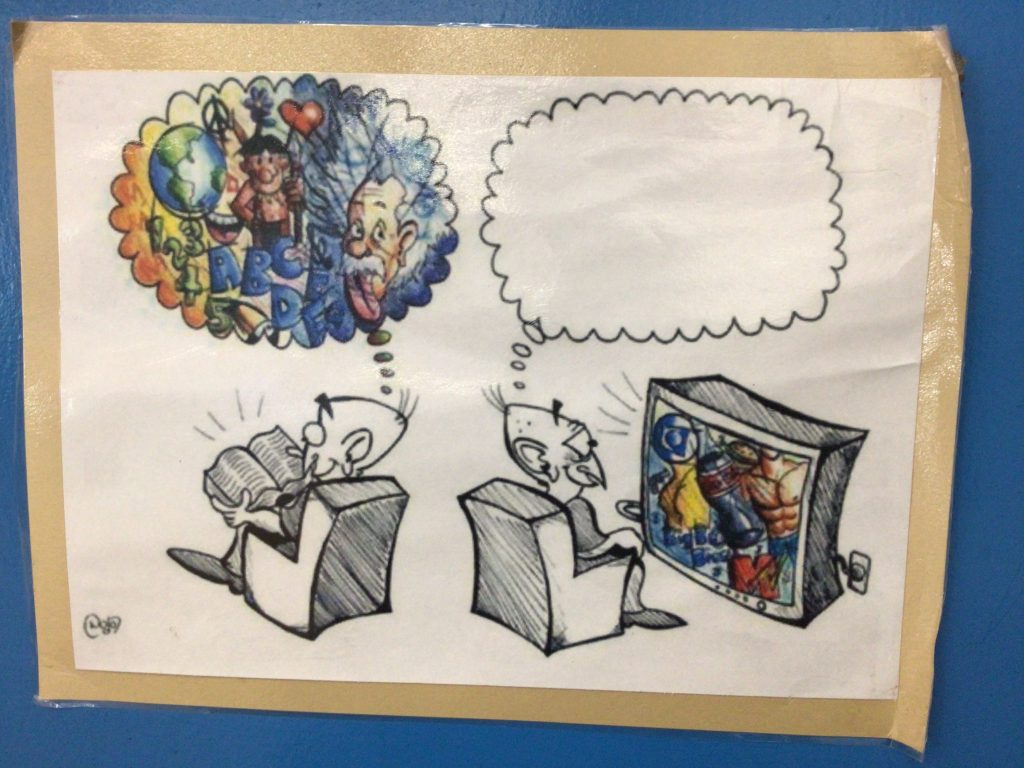
This picture is posted on my door. It is how reading uses our imagination, but television and other technology stifles creativity and imagination where everything is presented.