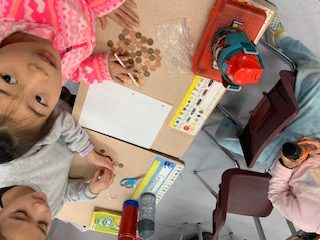
Div. 6 Parents,
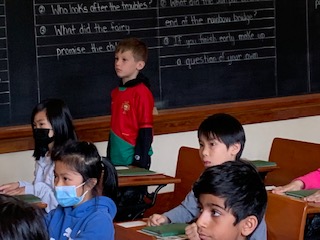
In the second term overview that is about to go home with the recent report card, I mentioned that this term, the students had been involved in dialogical learning/Philosophical Discussions to enhance Critical and Reflective thinking (Core Competencies). I used this approach in our Friendship Unit, using three anchor picture books as a jumping-off point to reflective discussions. Below you will find some links to videos and some information about this approach that, as an educator, I found compelling and grounded. I ‘listened to learn’ and found the students’ perspectives, as they discussed their opinions and thoughts, engaging.
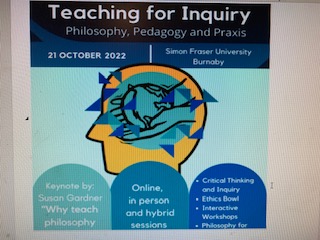
For me, the journey started on the October pro-d day this year:
Presenter:
“Why Teach Philosophy for Children”, Dr. Susan T. Gardner (Capilano University)
And, just in case you’re thinking what I was thinking, “this all seems a bit high brow for young kids”, I came across a video (link below) that captured my imagination and made the teaching approach and reason for it, relatable. The magic in the video isn’t in the adult speakers-it’s in watching the clips of the young children, in class, as they discussed the picture books presented to them.
click here
I also found this Ted Talk: Dr. Sara Goering: Philosophy for Kids: “Sparking a Love of Learning” very helpful in understanding the importance of discussion, dialogue, and philosophy in the development of critical thinking skills.
click here
Goals of Philosophy with kids:
- Enhance Cognitive Skills, critical thinking,
- Learn to Build an argument
- Evaluate an argument using logic
- How to Respond to objections to their positions
- Think Creatively
- Behavioural Skills: converse with peers, listen to them carefully, take them seriously, and disagree with them without fighting or feeling hurt
- Philosophical Skills: think for themselves, realize that questions matter, language and literacy Dr. Sara Goering
“Dialogic teaching harnesses the power of talk to stimulate and extend pupils’ thinking and advance their learning and understanding. Robin Alexander
There it is in a nutshell. The three books we used had endless possibilities for perspective-taking, questioning, inferencing, and overall wonderful discussions. The simplicity of the titles can be deceiving. These books were layered with the complexity of human nature. “Norman Didn’t Do It! (Yes, He Did)” by Ryan T. Higgins, “How to Apologize” by David LaRochelle, and “I Can Help” by Reem Faruqi.
 English
 Afrikaans
 Albanian
 Amharic
 Arabic
 Armenian
 Azerbaijani
 Basque
 Belarusian
 Bengali
 Bosnian
 Bulgarian
 Catalan
 Cebuano
 Chichewa
 Chinese (Simplified)
 Chinese (Traditional)
 Corsican
 Croatian
 Czech
Czech Danish
 Dutch
Dutch Esperanto
 Estonian
 Filipino
 Finnish
 French
 Frisian
 Galician
 Georgian
 German
 Greek
Greek Gujarati
 Haitian Creole
 Hausa
Hausa Hawaiian
 Hebrew
 Hindi
Hindi Hmong
Hmong Hungarian
 Icelandic
 Igbo
Igbo Indonesian
 Irish
Irish Italian
 Japanese
 Javanese
 Kannada
 Kazakh
 Khmer
Khmer Korean
 Kurdish (Kurmanji)
 Kyrgyz
 Lao
Lao Latin
Latin Latvian
 Lithuanian
 Luxembourgish
 Macedonian
 Malagasy
 Malay
Malay Malayalam
 Maltese
 Maori
Maori Marathi
 Mongolian
 Myanmar (Burmese)
 Nepali
 Norwegian
 Pashto
 Persian
 Polish
 Portuguese
 Punjabi
 Romanian
 Russian
 Samoan
 Scottish Gaelic
 Serbian
 Sesotho
 Shona
Shona Sindhi
 Sinhala
 Slovak
 Slovenian
 Somali
 Spanish
 Sudanese
 Swahili
 Swedish
 Tajik
Tajik Tamil
Tamil Telugu
 Thai
Thai Turkish
 Ukrainian
 Urdu
Urdu Uzbek
Uzbek Vietnamese
 Welsh
Welsh Xhosa
Xhosa Yiddish
 Yoruba
 Zulu
Zulu