Learning how to learn: what role does visual distraction play in learning

Research conducted by Pomper and Chain (2017) shows that it takes longer to learn when you are distracted by irrelevant visual information.

We are able to eavesdrop on other information while learning; however, this extra stimulation slows learning. (July 5, 2017)

Abstract:

“Subjective experience suggests that we are able to direct our auditory attention independent of our visual gaze, e.g when shadowing a nearby conversation at a cocktail party. But what are the consequences at the behavioural and neural level? While numerous studies have investigated both auditory attention and visual gaze independently, little is known about their interaction during selective listening. In the present EEG study, we manipulated visual gaze independently of auditory attention while participants detected targets presented from one of three loudspeakers. We observed increased response times when gaze was directed away from the locus of auditory attention. Further, we found an increase in occipital alpha-band power contralateral to the direction of gaze, indicative of a suppression of distracting input. Finally, this condition also led to stronger central theta-band power, which correlated with the observed effect in response times, indicative of differences in top-down processing. Our data suggest that a misalignment between gaze and auditory attention both reduce behavioural performance and modulate underlying neural processes. The involvement of central theta-band and occipital alpha-band effects are in line with compensatory neural mechanisms such as increased cognitive control and the suppression of task irrelevant inputs.”


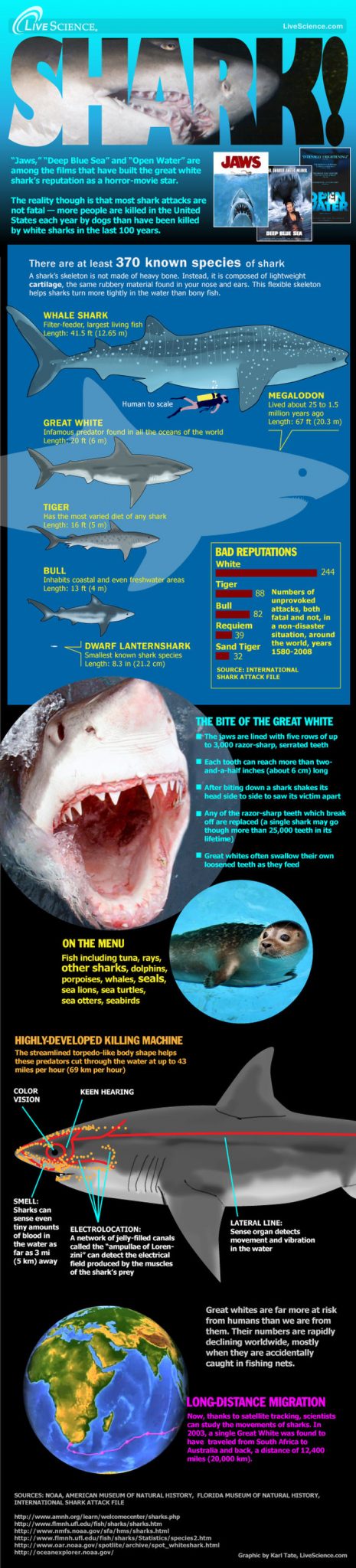
Great white sharks – friend or foe? Learn more about the amazing marine ecosystem off of the BC Coast!

Shark Science – how can science help you have the best summer ever!

Get your shark on!

Learn more about shark science!

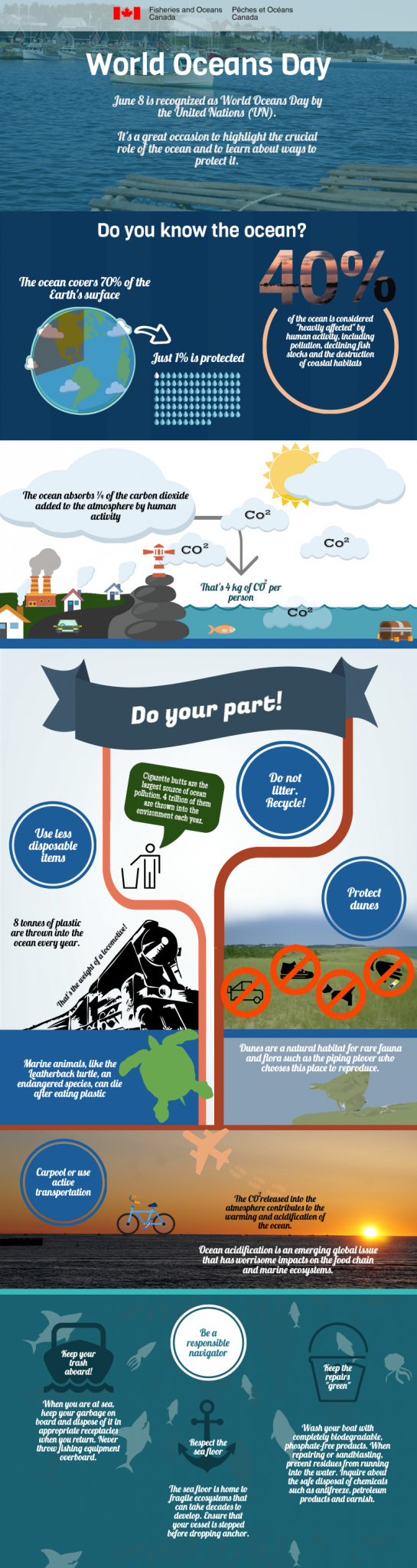
World Oceans Day – The world’s ocean bring us joy and sustain us

cuttercouture

Join in on the fun and help make your ocean feel special by celebrating World Ocean Day

10 ways to get involved

You and your community can make an impact on Oceans Day no matter where you live!

  1. Learn: Learn all you can. Read, surf the web and experience the ocean directly.

  2. Conserve: Be mindful of your water consumption, especially when washing your car or watering your lawn.

  3. Reduce:  Cut down household pollutants and properly dispose of herbicides, pesticides, paints, and cleaning products.

  4. Recycle: Reduce waste. Dispose of trash properly. Where possible, recycle, reuse, and compost.

  5. Commute Consciously: Use fuel efficient vehicles, bicycles, or carpool to reduce automobile pollution. Recycle motor oil and repair oil and air conditioning leaks.

  6. Don’t Dump: Protect ocean wildlife. Don’t dispose of fishing lines, nets, or plastic items in or near the water.

  7. Care:  Be considerate of sea life habitats. Don’t bother sea birds, mammals, and turtles or their nesting grounds. Support marine protected areas.

  8. Take Action: Get involved. Take part in a beach cleanup or other ocean-oriented activities.

  9. Host: Plan an Oceans Day event in your community.

  10. Share: Spread the word on the importance of ocean health, on community events, and on World Oceans Day.

Never Judge A Book By It’s Cover

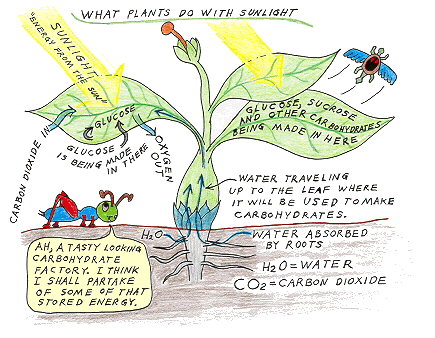
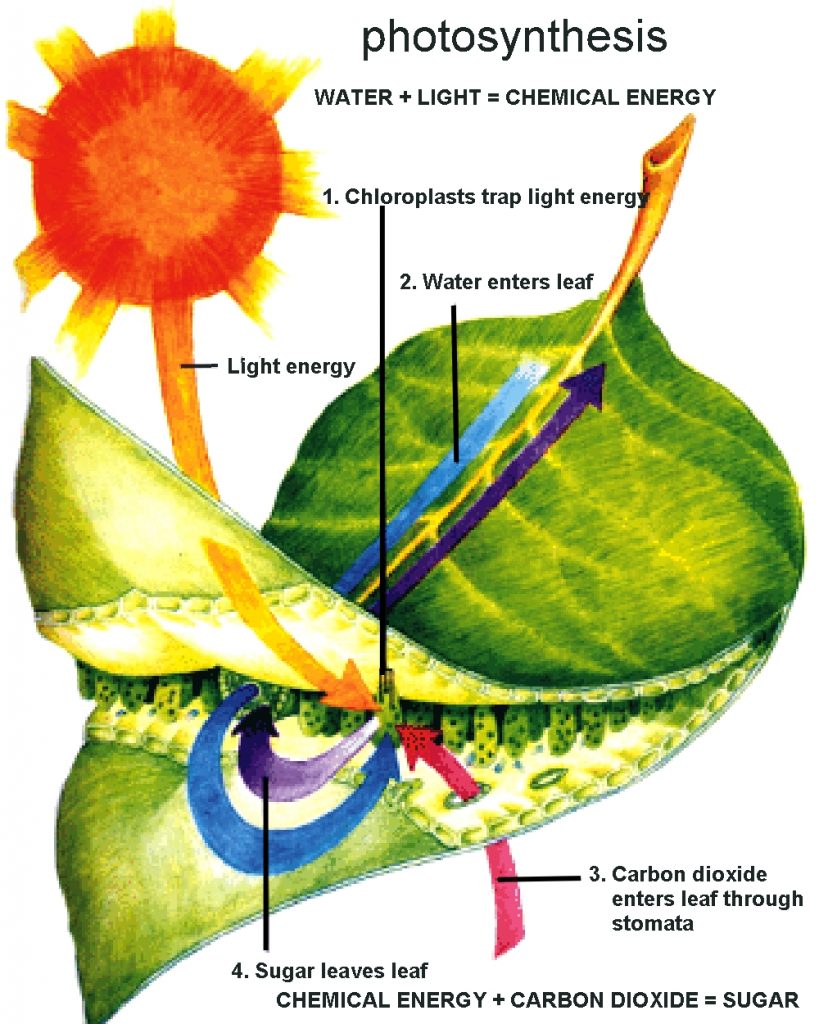
Photosynthesis – how plants eat light!

Lady bugs, folding design and origami – learn more from the world of science

Origami has long been studied and used as an important technique to learn how to fold complicated objects such as solar sails and insect wings.


Get Ready to Catch More Ideas – Welcome to Originality

Were do original ideas come from? Are ideas culturally contingent? What does that mean?

Where can we find the secrets of the universe?

If you have questions – we have the method (that is scientific methodology)!

Born to Die – how trophy game hunters are creating mutant animals!


In South African Trophy Hunters are willing to pay top prices to kill mutant coloured animals.  Learn more

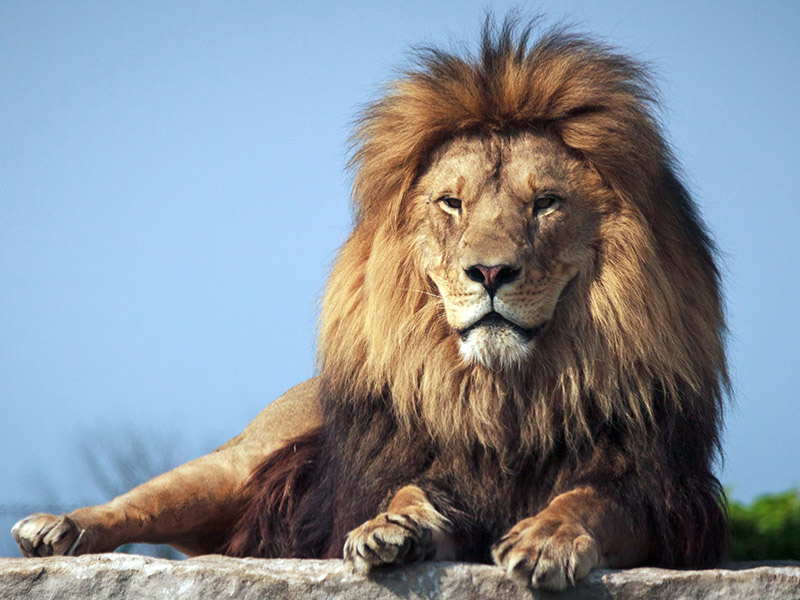
Orignal standard fur on an African lion

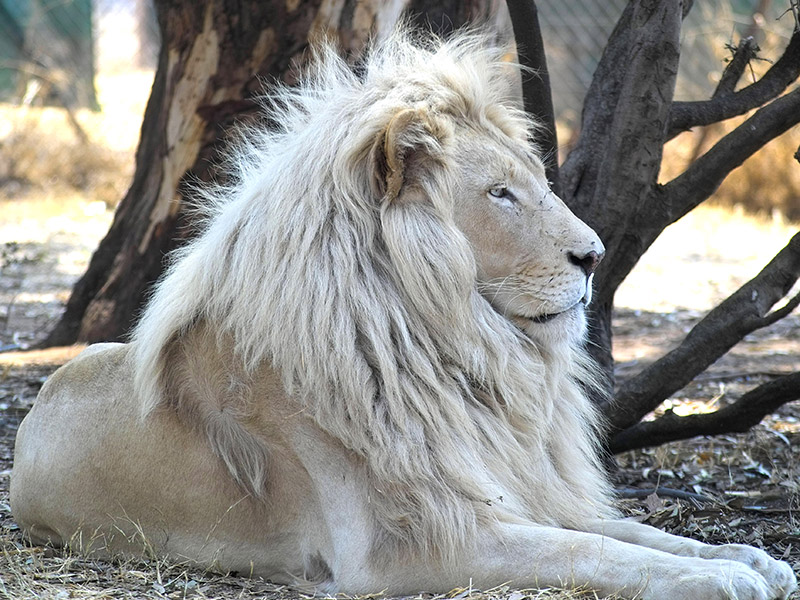
Non-standard, genetically selected albino white fur on an African Lion.

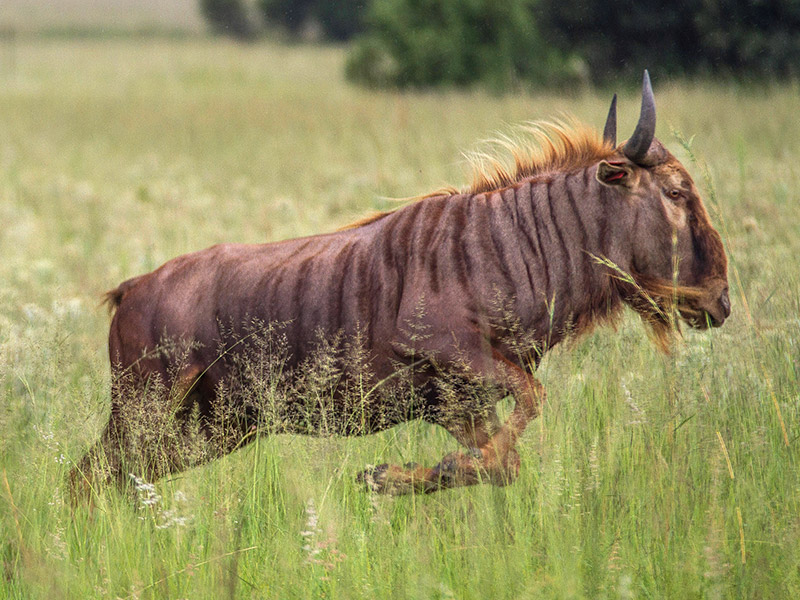
The golden variant of many African grazing animals are particularly popular with big game hunters.

Listen to a description of how local game farmers are breeding rare and unusual coloured game animals.

Bill Nye needs editing to make it into the year 2017!

Bill Nye Episode has been edited to reflect a clearer understanding between sex and gender.