
PFAS Chemicals are making us sick

Is your makeup poisoning you?

Science says yes, capitalism says no – you decide!

pfas-makeup-results

Link to Study Results

Exposure through the skin to the toxic fluorinated chemical once used to make Teflon could pose the same health hazards as ingesting the compound in water or food, according to a new animal study from the National Institute for Occupational Safety and Health, or NIOSH.

The study, which will appear in next month’s issue of the peer-reviewed journal Food and Chemical Toxicology, examined the effects of the chemical PFOA on the immune systems of mice exposed to high levels of the compound through the skin. The chemical is one of thousands in the family of fluorinated compounds known as PFAS.

NIOSH found that after four days of heavy exposure to PFOS through their skin, rodents’ spleens showed significantly reduced levels of antibodies. The researchers also noted a significant decrease in the weight of the spleen and thymus, indicating PFOA was absorbed through the skin and caused immunosuppressive effects. Studies in humans have shown that exposure to low levels of PFOA, and other PFAS, can harm the immune system of children and adults.

PFOA is one of the most studied compounds of the PFAS family. The chemicals are used to make water-, grease- and stain-repellent coatings for a vast array of consumer goods and industrial applications. 

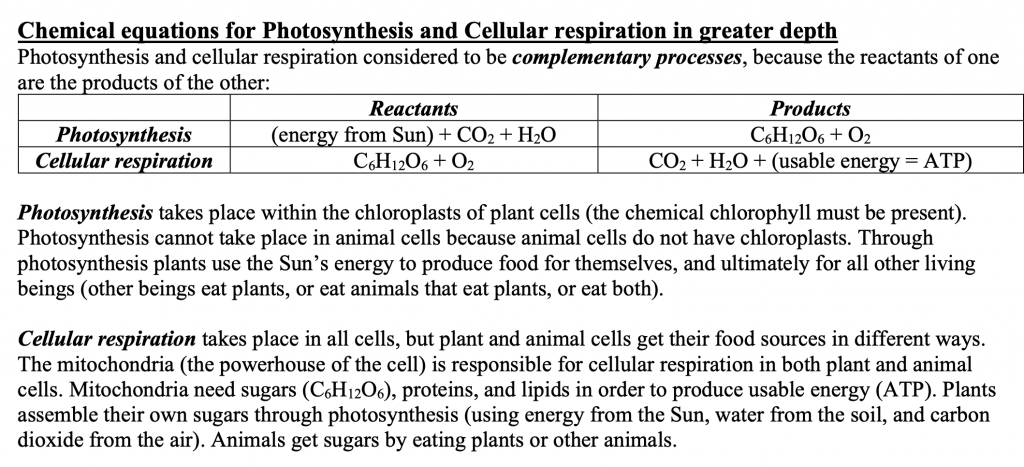
How do cells get their energy?

BC Science Connections 8:  How Cells get their energy (Slide player)

Student reading:  How do cells get energy?

Loader Loading...
EAD Logo Taking too long?

Reload Reload document
| Open Open in new tab

Student Question Sheet How do cells get energy?

Loader Loading...
EAD Logo Taking too long?

Reload Reload document
| Open Open in new tab

Science + Fantasy = sweet tooth

Unit 3: Homework Help Page 167 – 169

Use the following learning links to answer the homework questions on Page 166-169

Loader Loading...
EAD Logo Taking too long?

Reload Reload document
| Open Open in new tab

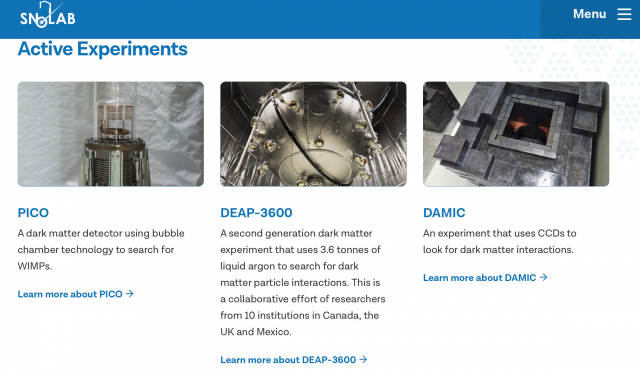
SNOLAB

Learn more about Neutrino research in Canada’s Snolab

SNOLAB is Canada’s deep underground research laboratory, located in Vale’s Creighton mine near Sudbury, Ontario Canada.

It provides an ideal low background environment for the study of extremely rare physical interactions. SNOLAB’s science program focuses on astroparticle physics, specifically neutrino and dark matter studies, though its unique location is also well-suited to biology and geology experiments. SNOLAB facilitates world-class research, trains highly qualified personnel, and inspires the next generation of scientists.

At 2km, SNOLAB is the deepest cleanest lab in the world. It is an expansion of the facilities constructed for the Sudbury Neutrino Observatory (SNO) solar neutrino experiment and has 5,000 m2 of clean space underground for experiments and supporting infrastructure. A staff of over 100 support the science, providing business processes, engineering design, construction, installation, technical support, and operations. SNOLAB research scientists provide expert and local support to the experiments and undertake research in their own right as members of experimental collaborations.

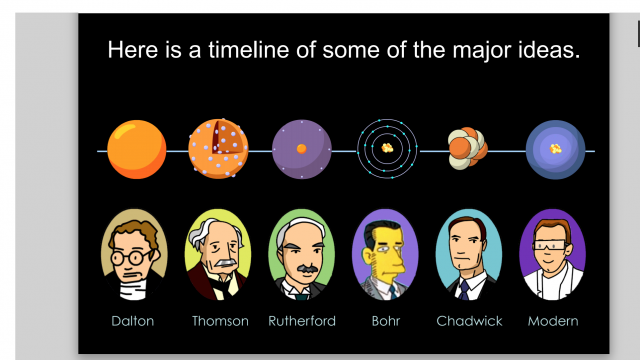
Unit 3: Chemistry Atomic Theory Project “Modelling the Atom”

Unit 3:  Chem Modelling the Atom

Loader Loading...
EAD Logo Taking too long?

Reload Reload document
| Open Open in new tab

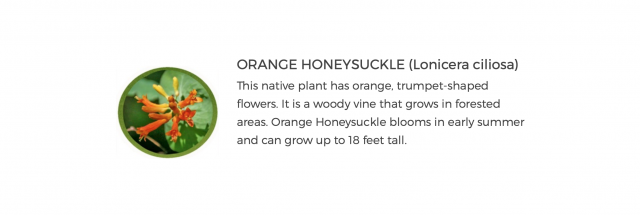
Plant of the Week: Lonicera ciliosa_Western Trumpet Honeysuckle

Lonicera ciliosa – Western Trumpet Honeysuckle

Plant of the week – The Western Trumpet Honeysuckle is native to the West coast of BC

States of Matter Mini Lab: How does salt alter the freezing point of Water?

Objectives:

Part 1:  

Investigate the interactions of liquids and solids. Investigate changes of state.

Materials

Per Student or Group:

4-5 ice cubes
salt in a salt shaker
plate or tray to work on (not paper!)

Key Questions

Why do the ice cubes stop slipping off when you add salt?

What To Do

1. Try to stack ice cubes into a tower.
2. Try again—but this time let the ice cubes sit out on a plate for 2–3 minutes. Then

sprinkle lots of salt on the top of each cube before putting the next one on top of it.

Extensions

Put a piece of string on an ice cube, then sprinkle it with salt. Wait a few moments, then lift the string. The water should melt then re-freeze, sticking the string to the ice cube.

page1image44445504 page1image38240464 page1image44554624page1image44554240page1image44554048page1image44553280page1image44553088page1image44552512

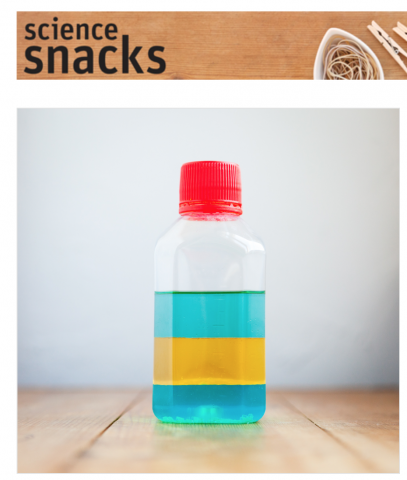
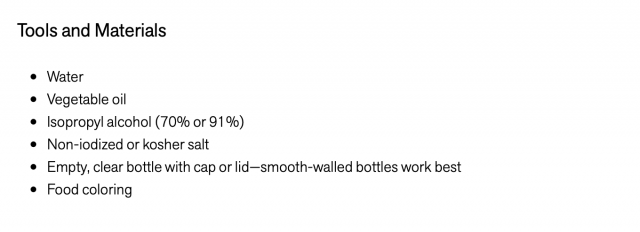
Part 2:  Make your own Klutz Proof Density Column


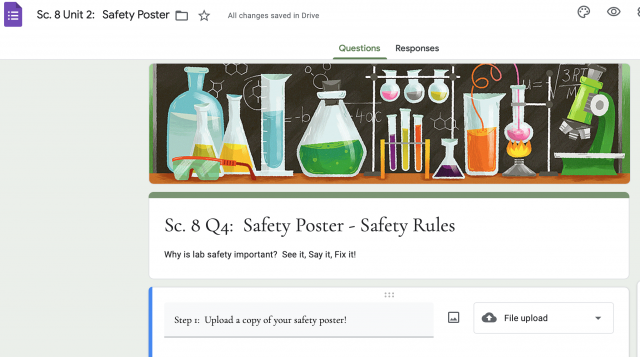
See it, say it fix it – lab safety time

Learn how to manage lab safety hazards:

Click here to upload your safety poster

Celebrate Biodiversity


View this post on Instagram


A post shared by IFCC KSK (@ifcc.ksk)


View this post on Instagram


A post shared by IFCC KSK (@ifcc.ksk)