Reload document
  Open in new tab
 LOG IN
Categories
Links we Love
Lab Work
-
Sc. 10 Tests & Assignments
March 2026 M T W T F S S 1 2 3 4 5 6 7 8 9 10 11 12 13 14 15 16 17 18 19 20 21 22 23 24 25 26 27 28 29 30 31 Science in the news
March 2026 M T W T F S S 1 2 3 4 5 6 7 8 9 10 11 12 13 14 15 16 17 18 19 20 21 22 23 24 25 26 27 28 29 30 31 March 2026 M T W T F S S 1 2 3 4 5 6 7 8 9 10 11 12 13 14 15 16 17 18 19 20 21 22 23 24 25 26 27 28 29 30 31
How quickly can you fill a room with hundreds of thousands of dominos – the future will be automated
Comments Off on How quickly can you fill a room with hundreds of thousands of dominos – the future will be automated
Posted in Uncategorized
What is the Jet Stream and how does it contribute to the formation of heat zones?
Sci Link = Jet Stream
What are clouds? What can we learn about the weather by watching clouds?
Cloud Types:
High Clouds (16,500-45,000 feet)

Cirrus clouds are delicate, feathery clouds that are made mostly of ice crystals. Their wispy shape comes from wind currents which twist and spread the ice crystals into strands.
Low Clouds (less than 6,500 feet
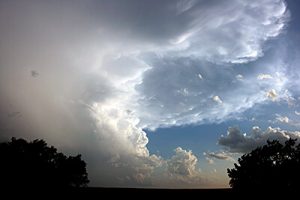
Cumulonimbus clouds grow on hot days when warm, wet air rises very high into the sky. From far away, they look like huge mountains or towers.
Comments Off on What is the Jet Stream and how does it contribute to the formation of heat zones?
Posted in Uncategorized
Organic Chemistry: The Problem with Plastic
How is plastic recycled?
THE DYSFUNCTION OF PLASTICS RECYCLING
Plastics recycling, as it exists today, is a mess. In 2015, the US recycled only 9.1% of the 31 million t of plastics that consumers threw out, according to the Environmental Protection Agency. The vast majority ended up in either landfills or incinerators. In contrast, two-thirds of paper, a third of metals, and a quarter of glass were recycled that year. In the European Union, about 14.8% of the roughly 27 million t of plastic waste was recycled in 2016, according to the European Commission.
Plastics recycling is a battle against entropy. Consumers throw plastics of all sorts into curbside bins, where they get mixed with metal and glass. From this assorted waste, recycling facilities use optical sorters to pluck out only the most valuable plastics for reuse.
Recycling facilities are most interested in PET beverage bottles and high-density polyethylene containers like milk jugs—plastics numbers 1 and 2, respectively. They are relatively clean and homogeneous materials, and recyclers handle enough of them to make extraction worthwhile. Secondary processors wash, melt, and repelletize them for reuse.
Some of the other residual plastics—polypropylene yogurt cups and multilayer plastic pouches, for example—are baled and carted off to processors that attempt to extract additional plastics of some value. But most go to landfills.
Even desirable number 1s and 2s that are sorted out of curbside streams are difficult to recycle. They are contaminated with food and grime. Not all plastics with the same name and number are actually the same: the PET used in a takeout container is different from that used in a water bottle.
For all these reasons, plastics are usually downcycled into applications with less-exacting specifications than what the virgin materials were designed for. A soda bottle doesn’t become a soda bottle again; it is made into a carpet or a fleece vest. In its next incarnation, the milk jug becomes the inner layer of a detergent bottle.
Agilyx: Link to Company
How is plastic recycled at your school?
How are plastics made? Link to American Chemical council
Comments Off on Organic Chemistry: The Problem with Plastic
Posted in Uncategorized
Make your own Litmus Paper
Litmus: A special test paper that is able to show if a solution is acidic or basic
Learn more about the pH scale
Learn what makes something have acidic properties
Comments Off on Make your own Litmus Paper
Posted in Uncategorized
Daily 5: Learn more about the biodiversity of BC spiders
Comments Off on Daily 5: Learn more about the biodiversity of BC spiders
Posted in Uncategorized
Genetics Research Inquiry Project
Library Top Research Choices (Prepared by D. Gladwin): The link has been sent to you via teams 🙂
Student Question sheet for Genetics Inquiry Project
Student Copy of Library Research Notes
Comments Off on Genetics Research Inquiry Project
Posted in Uncategorized
Learning Skills: Dual Coding Examples
Frayer Model Template for Vocabulary
 Loading...
Comments Off on Learning Skills: Dual Coding Examples
Posted in Uncategorized
Science 10: Summer School 2021
Loading...
Loading...
Scientific Argumentation: Student Edition
Loading...
Comments Off on Science 10: Summer School 2021
Posted in Uncategorized
School is out for Summer – avoid the summer slump
Congratulations – you did it
Your first year of high school in a pandemic
Excellent work Well done!
Avoid the summer slump – keep your skills sharp and keep on learning
Biology: Cells and Immune Function
Learn Genetics from U. of Utah Virtual Labs
Earth Science: Tectonic Plates
Chemistry: KMT/Periodic Table
PhET SIMS – all subjects
University of Nottingham – Chemistry Videos
Comments Off on School is out for Summer – avoid the summer slump
Posted in Uncategorized
Ethnobotany: E-Flora Atlas of British Columbia
Student Handouts:
Loading...
Loading...
NATIVE PLANTS ON THE SOUTH COAST
The following links are provided by the Royal BC museum
-
E-Flora BC (Electronic Atlas of the Flora of British Columbia)
This is an excellent native plant database with images, identification guides and distribution maps, hosted by the University of British Columbia. It includes data from specimens at the Royal BC Museum herbarium—a place where dried research specimens are stored and filed according to a system of classification that makes it easy to search for a particular species.
These are terrific guides to help you nurture and grow native plants at home or in a schoolyard.
Rich resources related to Garry Oaks and associated species of native plants.
Explore this database hosted by the Conservation Data Centre (CDC) of the BC Ministry of Environment. It is the CDC’s mandate to report on the status of rare species.
HAT works to conserve nature on southern Vancouver Island. See this page for resources on gardening with native plants!
Practical article about plant identification from the American Museum of Natural History.
Comments Off on Ethnobotany: E-Flora Atlas of British Columbia
Posted in Uncategorized