
Overview of Term Two, Spring 2020
Here is a review of the many things we did during term two!
To tie the big ideas from our curriculum together into a larger, enduring understanding,
we studied all subjects through the lens of universal, conceptual themes.
First, we focused on the concepts of CREATIVITY and CHANGE
in our unit Human Creations
Unit Focus Statement:
We use creativity and knowledge together to make innovations that change our world.
What is creativity? (Core Competency Creative Thinking, Career Education, Socials)
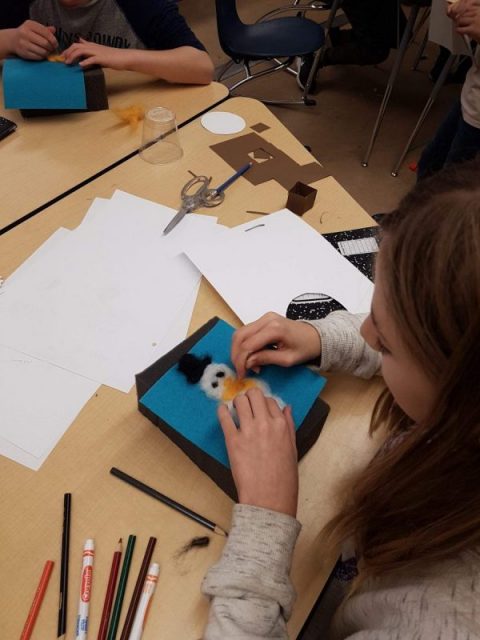
 We used this unit to better understand the nature of creativity. What is it? Who has it and why? Can we cultivate it? Can it be taught? We did a variety of activities to explore creativity, such as reading a collection of picture books about imagination and ideas; doing theatre improvisation; creating Scratch programming and games as part of the Hour of Code week in December; and constructing maker art for the holidays out of mixed media such as wool and found objects.
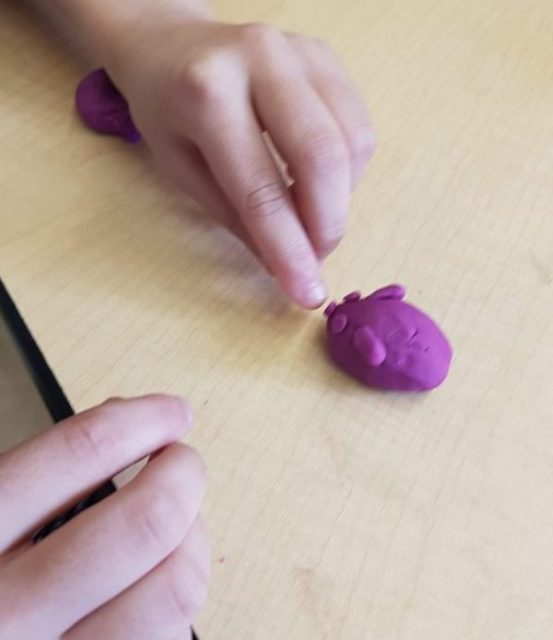
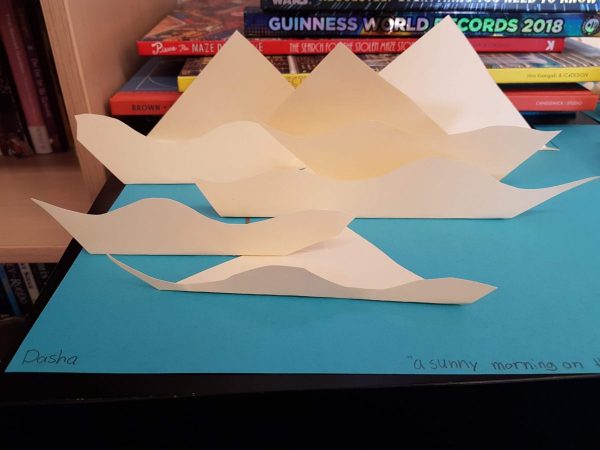 Some activities were designed as “alternative uses” tests, which are often employed by researchers to test creativity. How many things can you make out of a small can of play doh in a short time period? We read the book The Perfect Square, then everyone took a plain, boring piece of paper, and with only five cuts and folding, constructed new 3D creations from our imaginations.
We watched several TED talks about creativity, and Ms. D shared research from the book Wired to Create about how creativity can be nurtured. We did shared, non-fiction readings from the Time Magazine: Creativity Issue to better understand the brain science behind creativity, and how people think creativity can be cultivated in our learning and daily lives.

Later this year, we will do independent inquiry projects, so each unit allows time to learn and apply specific research skills. This time, the focus was collecting and documenting primary research such as an experiment, interview, or observation.
We did playground observations to look at how students of all ages play, followed by rich discussions about how much play we have in our own lives, why play is important for creativity, and how play differs depending on your age.
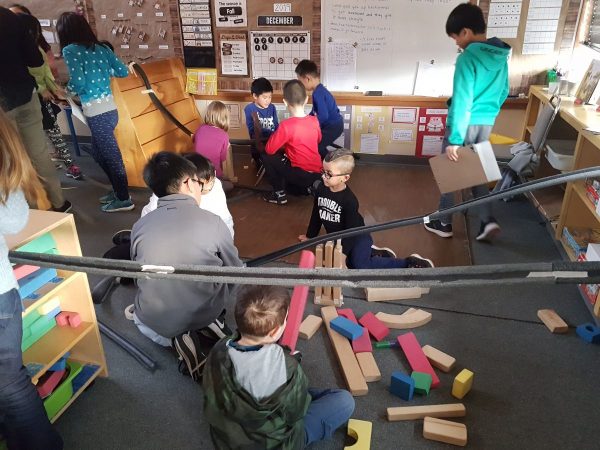 We also did a creativity study, teaching younger classes how to make marble roller coasters. Some students helped with construction, while others recorded primary research observations. Afterwards, we had discussions to analyze results! Why was it a different experience for younger kids than for us? How do younger children feel and touch materials as they explore their potential uses? Why do younger children have a different attention span? Why does the way we play change as we get older?
Simple Machines! (Science, Math, & Applied Design)
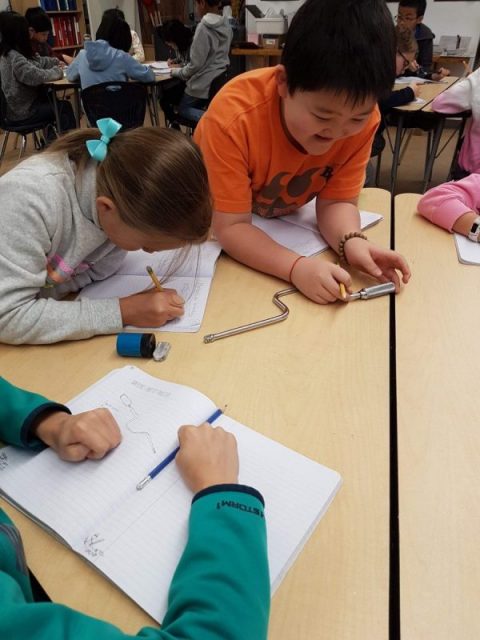
Creativity is important to solve problems! We explored how humans have used experimentation and scientific knowledge to create simple machines that make work easier. To begin our discussion, a pile of weird tools from Ms. D’s and Mr. L’s eclectic collection, including some antiques, were put out on tables for students to explore and draw. Everyone had to guess what the tools are used for and how they work!
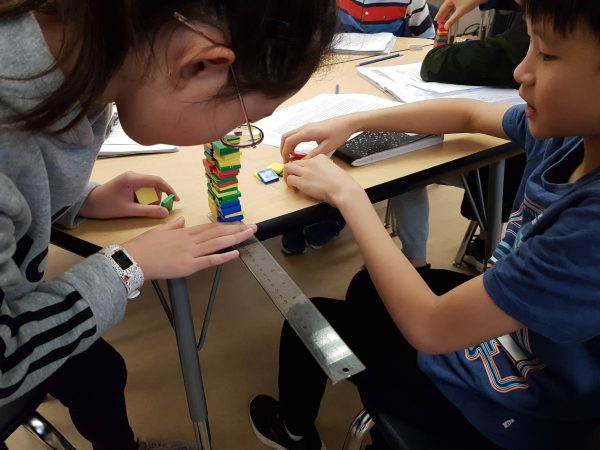
Then, we identified the main simple machines and did hands-on activities to experiment with them. Let’s lift Ms. D up with one student using a giant wood lever and fulcrum!
 We had car races down inclined planes, doing math involving distance/time/rate, and discovering how speed is related to the height of the plane. We lifted books up a plane using a Newton gauge, to show how less force is required when we add more distance. Using rulers and blocks we made cantilevers, taking into mind lever math developed by Archimedes involving balanced equations, measurement of distance from the fulcrum, and multiplication! That’s how cranes can lift so much weight!
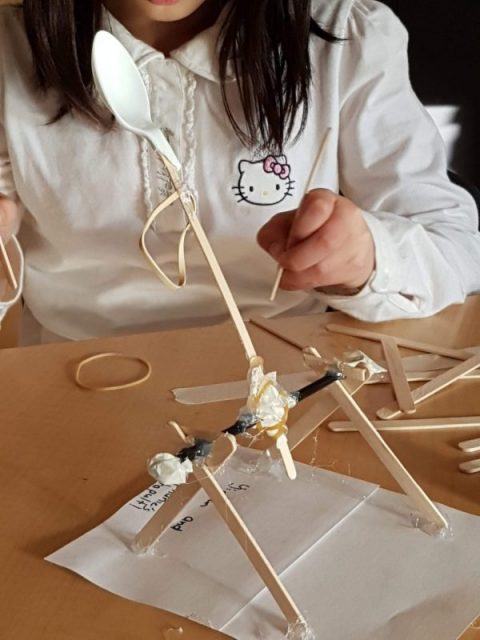 We identified the steps of the design process, then created several devices using creative thinking and simple machines. First, we made marshmallow catapults, seeing who, with limited time and materials, could build a device that would successfully launch marshmallows the furthest across the classroom.
 Then, we researched Rube Goldberg, who designed machines that were very complicated, but completed very easy tasks! We created Rube Goldberg devices all over the classroom, using a variety of found materials, objects, and the design process.
 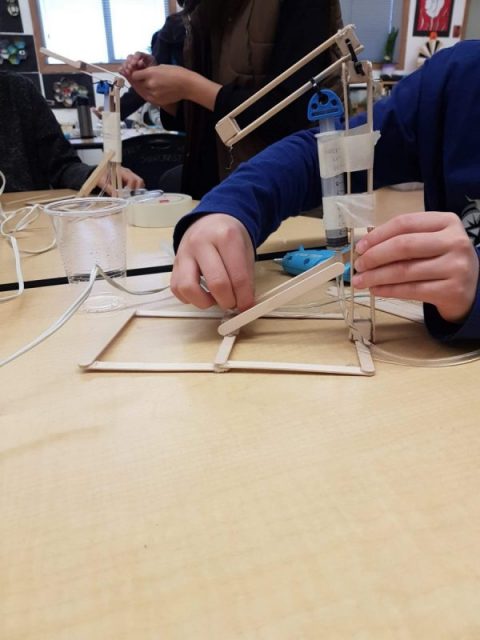 We also learned about hydraulics, discovering how liquids, unlike other states of matter, can’t be compressed! Working collaboratively, we made cranes and other unique devices.
Human Innovations over Time — Change (Socials, Language Arts)
Our creativity has led to many innovations that have changed our lives over time. What are those innovations? When did we start using simple machines? Has our use of technology been positive or negative?
We researched early indigenous innovations, such as snow goggles, inukshuks, umiaks, burins, and ulus. We learned what early tools were used for, which groups in Coastal B.C. created them, and how the tools addressed people’s basic needs. We also read about spindle whorls, which would be the inspiration for artwork in our next unit.
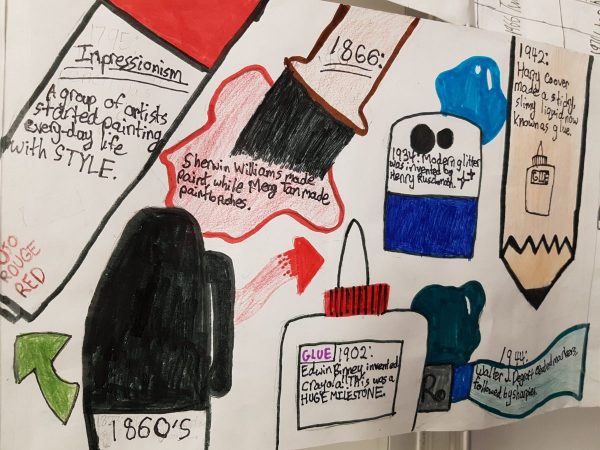
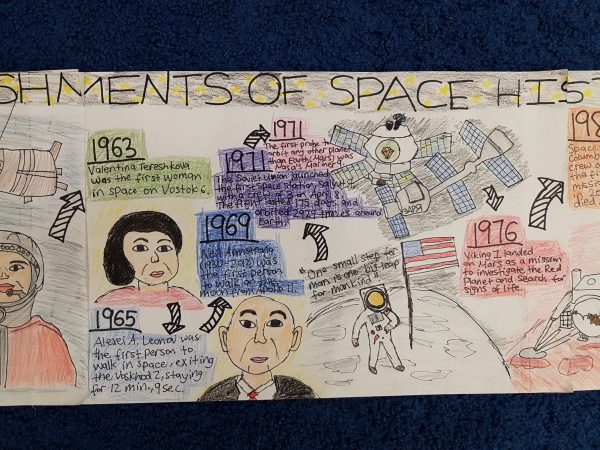 We read the book Ingenious and were surprised how many important innovations originated in Canada! We identified technologies used in different areas of our lives, such as communication, health, transportation, and entertainment; then we evaluated each one for its positive and negative impacts on humans. Each student chose to research one area further, creating a timeline to illustrate how technologies have changed over time.
 We read the books Goodnight iPad and Nerdy Birdy Tweets to discuss how technology such as smartphones and social media can distract from other activities or relationships. What impact is technology having on children? Using a shared Padlet, we did a group inquiry to find reliable websites on this topic. We used our research to debate issues such as e-readers v.s. real books, technology use guidelines, and the impact of video games on children.
Idea Generation and Descriptive Detail in Creative Writing (Language Arts)
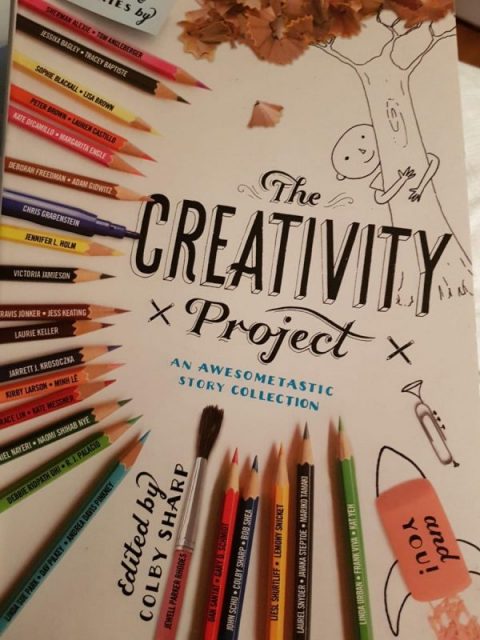 As a whole school, we are focusing on writing goals in the areas of idea generation and adding descriptive detail. There were many opportunities to practice, such as a persuasive debate speech, e-portfolio reflections, and creative stories. We did many daily quick writes, which involve a mini lesson followed by a short period of independent writing. At the end of term, we had writing conferences to set individual writing goals for the rest of the year. Sometimes we used creative prompts to get ideas flowing, such as those in the book The Creativity Project. We also discussed literary devices, like personification, simile, and metaphor, and practiced using a thesaurus to find higher-level vocabulary.
Math is a Creative Tool for Innovation! (Math and Critical-Thinking Strategies)
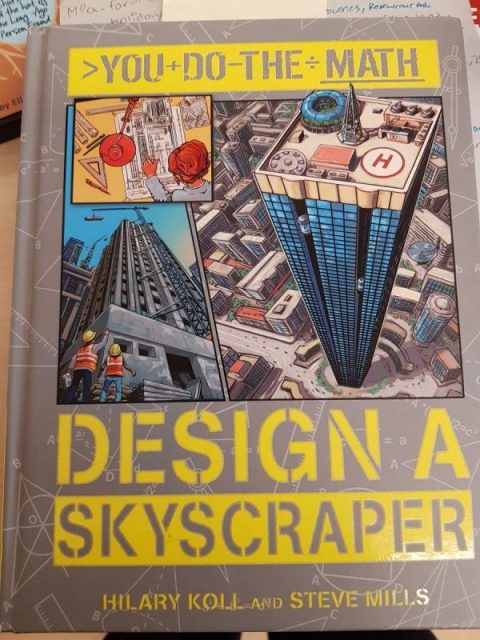 Using You Do the Math: Skyscrapers, we looked at the combination of math knowledge needed to build new things such as skyscrapers! This included understanding geometric solids, measurement, reading tables, plotting coordinates, area, and perimeter. We did problem solving involving basic fractions and decimals, and some students did surface area or algebraic challenges.
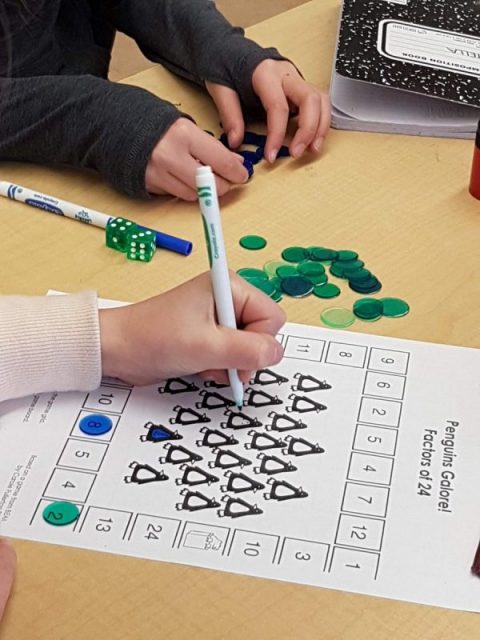
How can we approach multi-digit multiplication with creative thinking? Using Carole Fullerton’s Multiplicative Thinking, we played games to learn about multiples, factors, prime factor trees, squared numbers, exponents, and math properties (distributive, associative, and commutative.) We experimented with many different ways of solving 2 by 2 multiplication problems, such as the window, the FOIL method, mental math, and the traditional column approach.
Creativity in the Arts, PHE, and Languages! (Fine Arts, Music, PHE, French)
 We couldn’t have the arts without creativity. Our creativity plus knowledge of arts elements and principles equals an amazing product! We discussed the colour wheel; primary, secondary, and tertiary colours; analogous and complementary colours; and how this information helps us in our presentations.
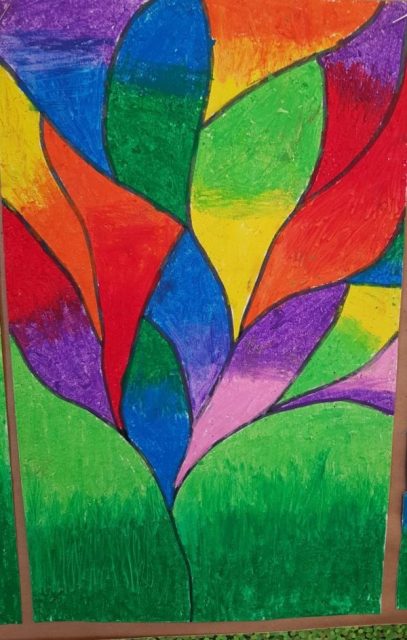 With this knowledge, we made amazing abstract colour trees blending oil pastels together!
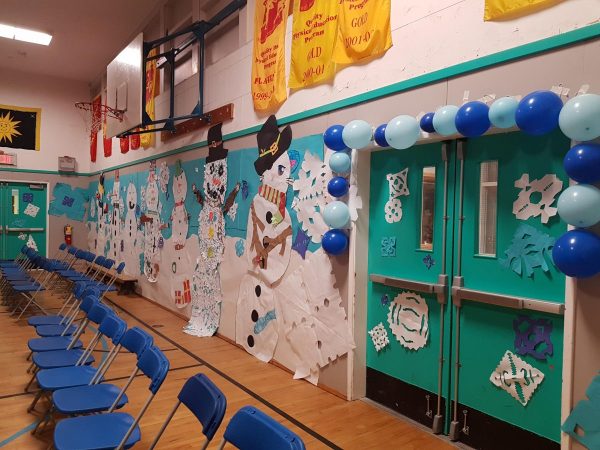
Division 5 was heavily involved in the musical production of Snow Biz, whether making decorations and props, singing in the choir, setting up the stage, or playing a main part! It was an amazing performance!!
 Our creativity played a role during physical education and health! We focused on getting our heart rate up by learning new dance moves and doing Just Dance challenges!
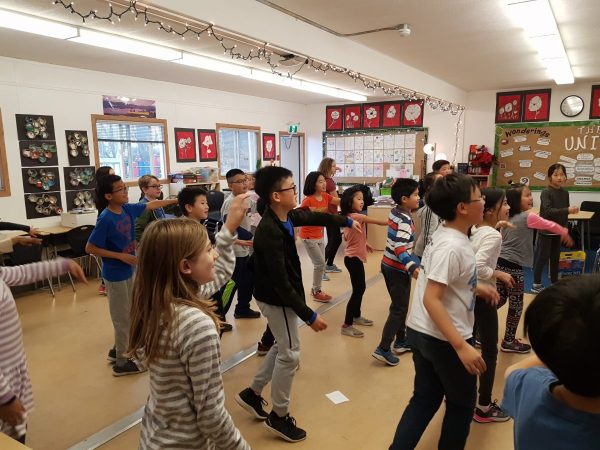 Before break, everyone will share dance moves they created, so we can do our own aerobic routine together.
Finally, for French, we have been using technology as a creative tool to do independently paced learning of French vocabulary. Lessons involve games, pronunciation and listening, as well as assessment to see what has been learned. We plan to use this vocabulary on a French country mini project.
Second, we focused on the concepts of EXPLORATION and IDENTITY
in our unit On the Move!
Unit focus statement:
Migration is a response to challenges, risks, survival, and a natural need to explore.
How am I an explorer? (Core Competency of Positive Personal and Cultural Identity)
 What does it mean to be an explorer? What would you feel and do? We unpacked the meaning of exploration and realized it does not only apply to ancient explorers who crossed the seas. It can apply to us and involve risk-taking, or careful, methodical observation for art, science, and research. It can also mean making an effort to explore one’s identity and culture.
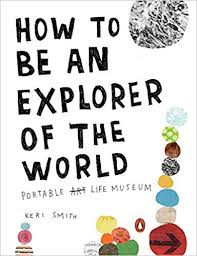
Through exercises in the book How to be An Explorer of the World, we will continue to hone our observation and noticing skills, particularly through explorations outside. We are also reading many picture books to facilitate discussions about our own identity, culture, and acceptance of others’ identities.
Migration — Humans (Socials, Language Arts)
Why do people move from place to place? What is your own migration story? Students asked their parents for information about their family tree and charted the migration path of past generations coming to Canada.
Using the book Human Migration and Why We Live Where We Live, among other book and online resources, we discussed the many push and pull factors that cause people to move as they seek a better quality of life. We talked about how some people move all the time because of a “restless gene” that just makes them seek novelty and something new!
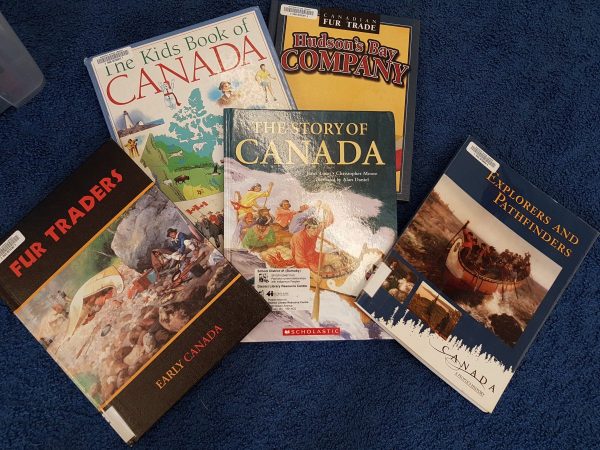
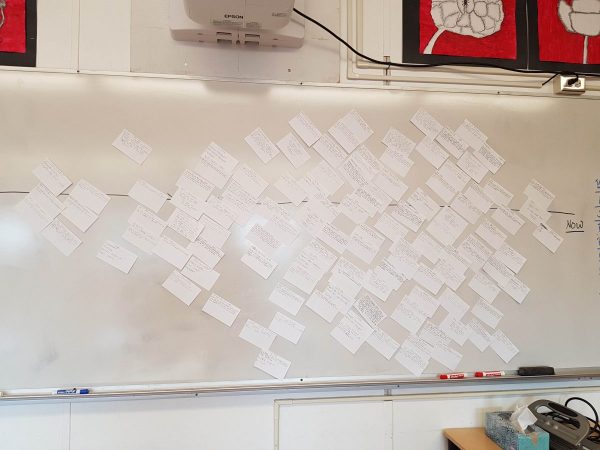 Using a TON of great books from the District Library, we did a group inquiry about “How did we get here?” How did we all come to be in Canada? What were the reasons people came here? Who was here first? We made a timeline on the board and listed the many reasons people came, such as trade, land, gold, and escaping war. Each student chose a historical figure to represent from this timeline, and before Spring Break, they will create a monologue to present about the person for our “Wax Museum of History.”
Students also looked at 10 different case studies of people trying to come into Canada and made decisions about which 5 would get to come in. This is part of an ongoing conversation about immigration policy in Canada and how the government makes decisions about who it lets in to the country. How do people become a citizen? Please check student e-portfolios as we continue to talk about these issues before break.
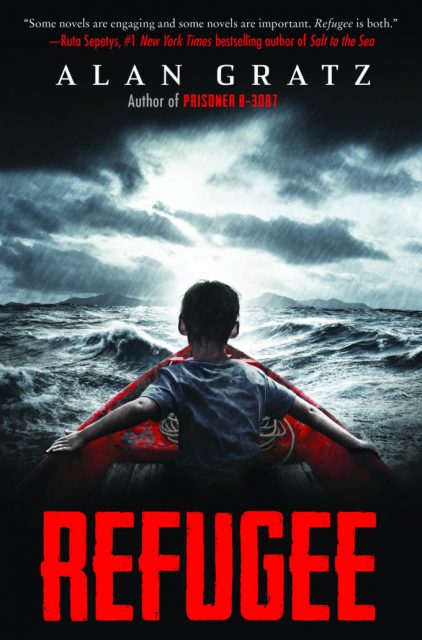 To better understand what it is like to be a refugee or immigrant, each student read a different historical fiction novel, such as Escape from Aleppo, Refugee, and Homes. We are using the Reading Power model to help us add depth and complexity to our reading. What connections are we making as we read? What are we visualizing in our heads while reading? What questions are we asking?
Migration – Animals (Science and Language Arts)
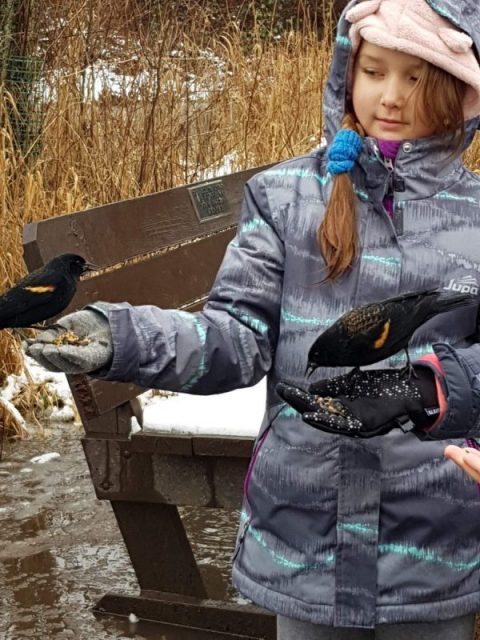 We began our unit with an amazing trip to Reifel Bird Sanctuary, one of the local, protected estuaries where you can find migratory animals this time of year. We learned about local bird species, the essential things animals need to survive, and why the estuary is a popular stop on migration routes. Many of us fed birds for the first time, and we saw sandhill cranes, saw whet owls, and red-wing blackbirds, among other species. Dan, the biologist, also helped us find tracks of beavers and other animals in the snow!
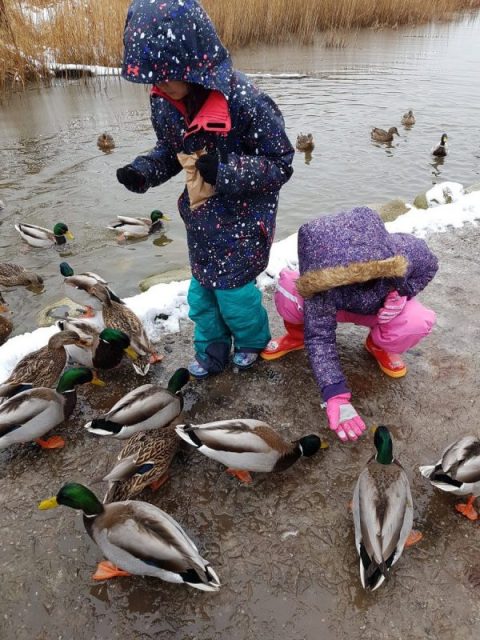
The trip, along with the movie Winged Migration, helped us understand why and how animals migrate over long distances, between different biomes of the world, as well as their migratory triggers and cues. Each student chose a migratory animal to research further and created a Puppet Pal presentation about their findings using the iPad. We hope you can come see it when we have Student Led Conferences!
We also conducted a Citizen Science activity, participating in the Feb. 14-18 Backyard Bird Count! Everyone was surprised how many different species we could see right around the school, such as red-wing blackbirds, chickadees, a bald eagle, song sparrows, starlings, crows, gulls, and robins!
Art, Identity, and Spindle Whorls (Socials, Fine Arts, Math)
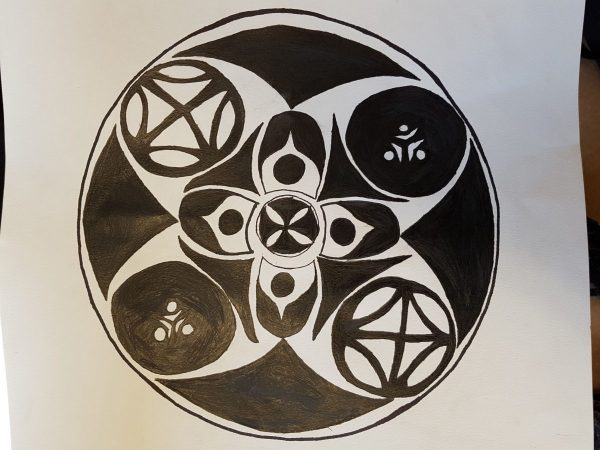 We looked at a variety of indigenous art from across Canada and North America, trying to guess each piece’s origin according to the colours, images, and shapes used in the art. It really helped us to see how the art of a culture is connected to place. We represent in our art what we see locally and what is important to us.
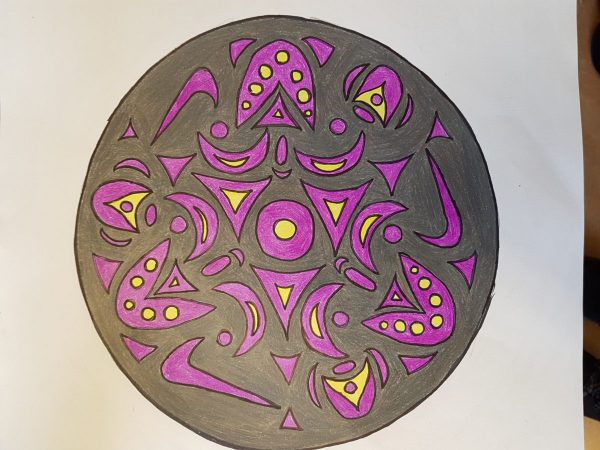
We looked closely at the story of the Spindle Whorl, discovering how this spinning tool was not only carved with special artwork and passed down in families, but also represented the family’s identity and indigenous group.
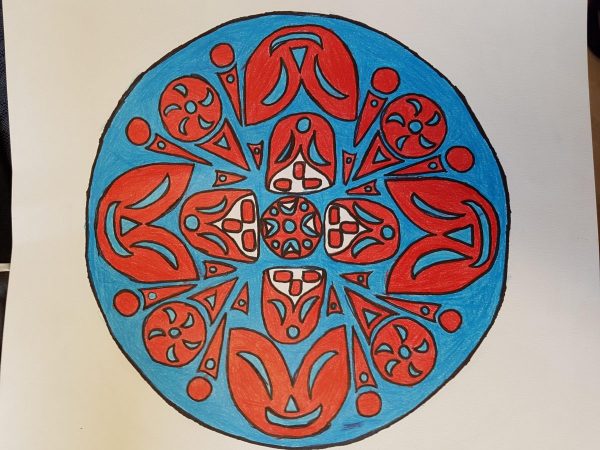 Then we looked at the shapes and colours of art from local Salish groups such as the Musqueam peoples, as compared to form line shapes of art done by indigenous groups further north such as the Haida. Inspired by the art of Susan Point, each student created their own circular print, using geometry to create reflexive symmetry through reflection, rotation, and translation of Salish shapes.
Tiny House Revolution! (Identity, Math, Applied Design, Career Education)
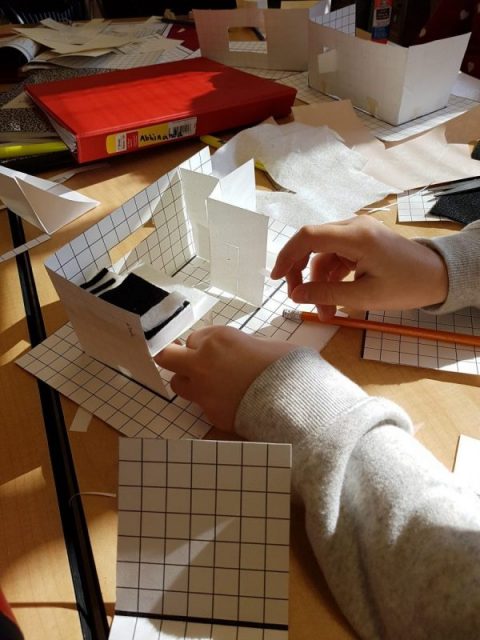
People are choosing to live in less space, so their impact is less on the world. How does a living space represent you and your beliefs about what is essential? What choices would you make? Using our ongoing work with multiplication, measurement, geometry, and proportionate reasoning, as well as the design process, students created tiny house models and discussed the area and perimeter of their final creations.
Term Two Music Notes from Ms. Fletcher:
 While more information can be found on Ms. Fletcher’s blog, here is a summary of the main areas covered in music by our class:
Core Competencies: Communication, collaboration, thinking, and personal awareness.
Big Idea: Music is a unique language for creating and communicating.
 Curricular Competencies: Students will explore elements of music, and create music collaboratively and as an individual. Students will experience and present creative works in a variety of ways.
Content/Overview: In music class students worked on developing music skills – beat, rhythm, tempo, pitch, dynamics, form and music literacy through playing hand chimes and ukuleles.
Overall, term two has been rich with learning experiences, and this overview is only a snapshot! We look forward to term three, with two new units and our independent projects on June 10th!