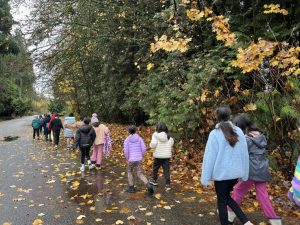
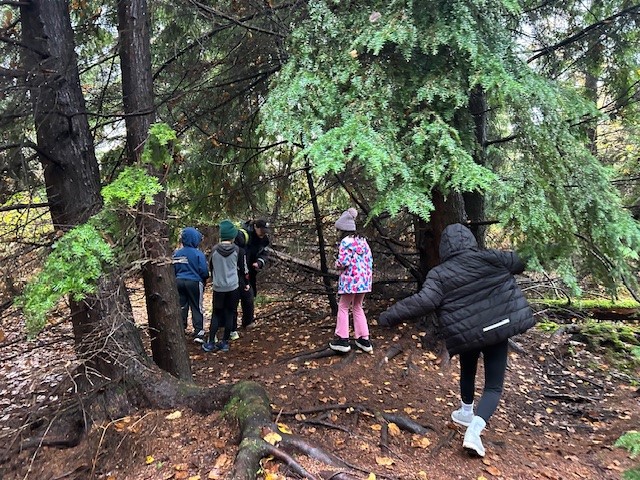
 Last week, Division 7 went to Burnaby Lake. We went for a visit to get to know the animals and plants that we share this land with, and how they change over the seasons. Our purpose was to connect to place through observation. We saw and learned so much! Even for me–who grew up in this area and have spent a lot of time walking around, canoeing in, and visiting the ducks at Burnaby Lake–I learned so much during our visit!
Our park leaders led us through several different activities, and we stopped to observe surprise guests on our visit (a woodpecker, a muskrat, and a stinky mushroom!).
Stream Cologne
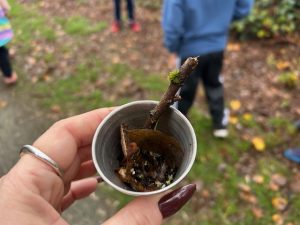 Did you know that the way salmon find their way back to their particular stream is by scent? They navigate back from the ocean with a kind of “magnet” in their heads, but they find their specific stream through the mixture of scents from that specific place. Students looked around the ground near the stream to collect bits of plants and soil to mush together to smell. We had a good time mixing our potions and comparing scents.
Observing Water Fowl
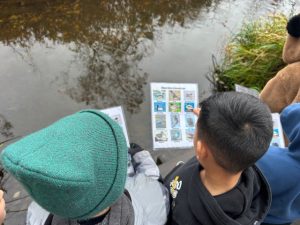
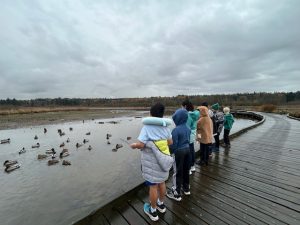 Students were given visual guides about the various winged wonders that alight on Burnaby Lake. We spent a long time playing a version of eye-spy with the birds. We learned that some of them stay year round, some are visitors from further north, and some will head south for even warmer weather. The wood ducks were a big hit! We also observed many gulls and crows feeding on the carcasses of salmon who have spawned and are now giving back to the waterways that once gave them life. We didn’t see any bears, who also feed on these fish, but we did note that there is no feeding birds seed right now since that will also attract bears as they prepare for the winter months.
Plant Identification
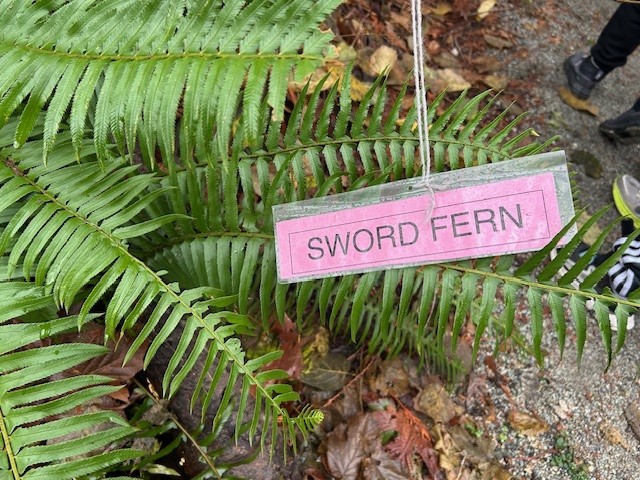
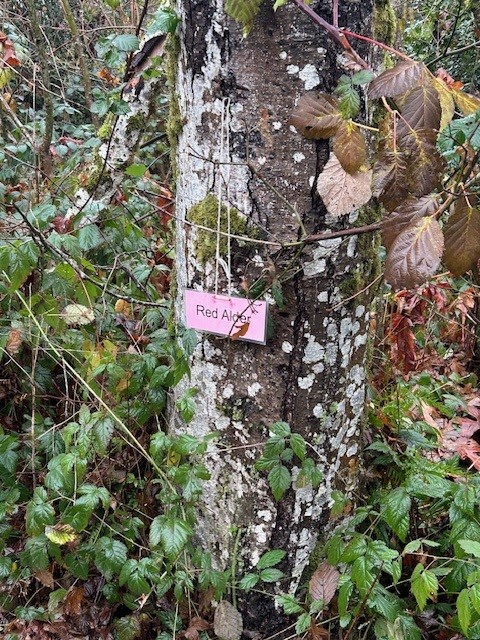
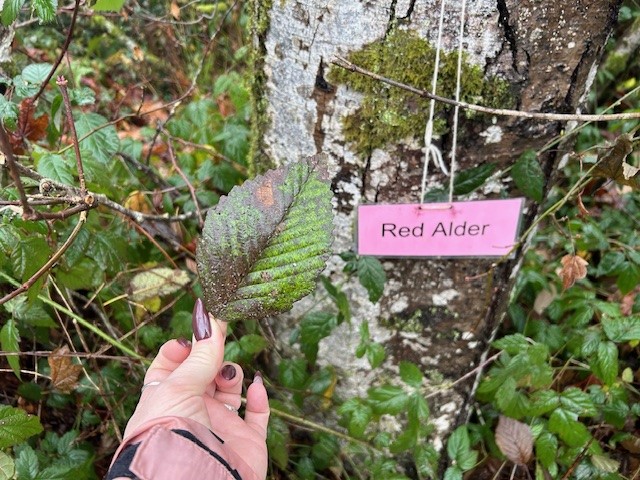
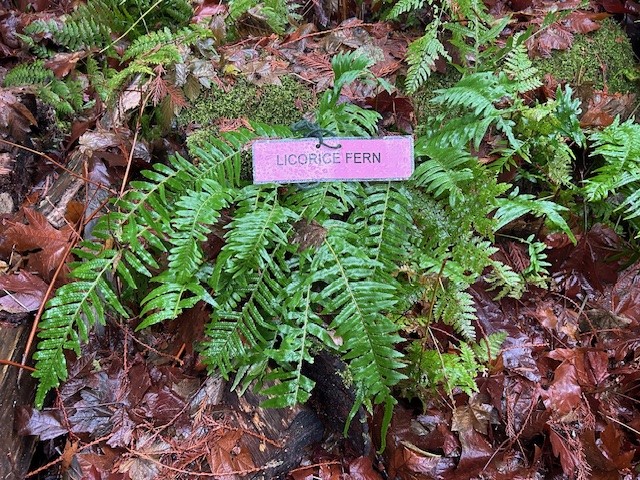
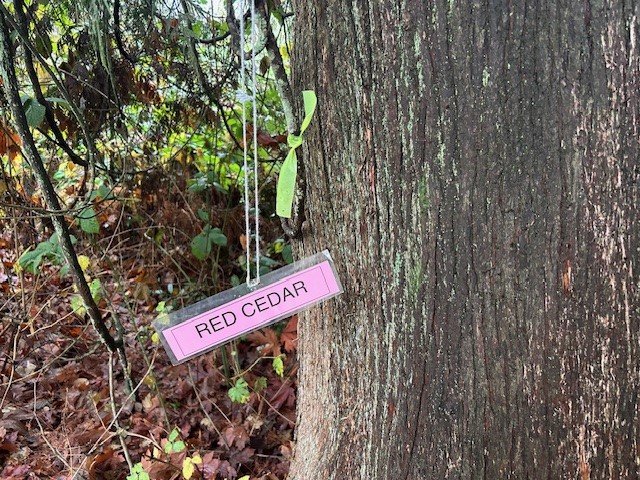
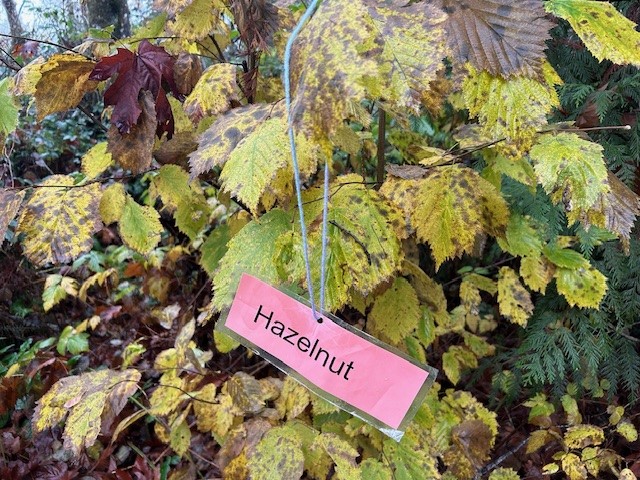
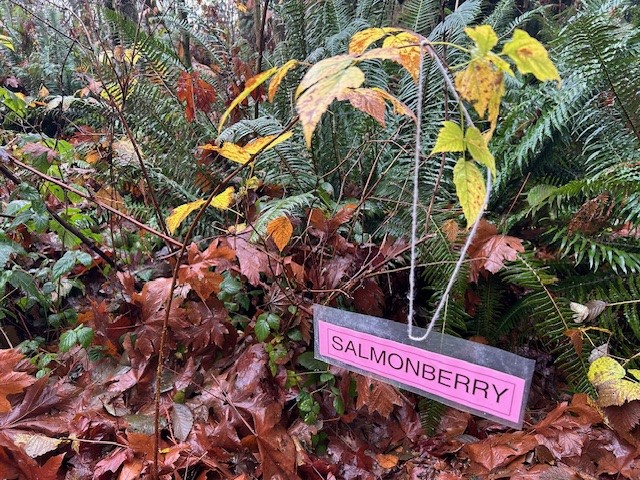
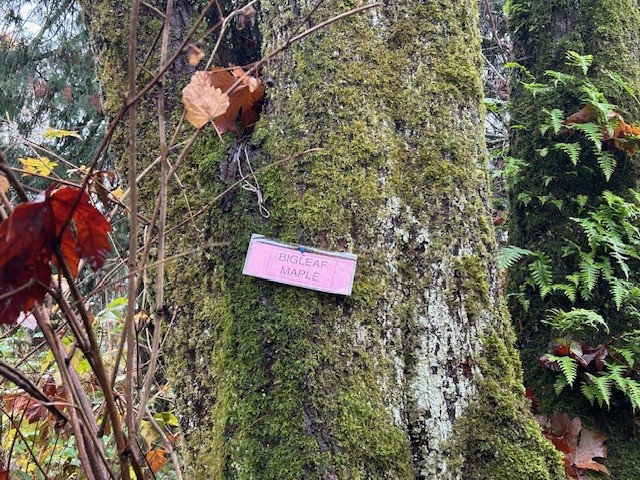
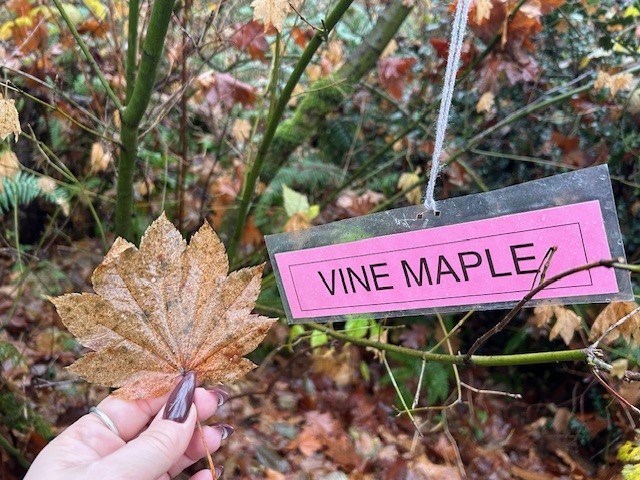
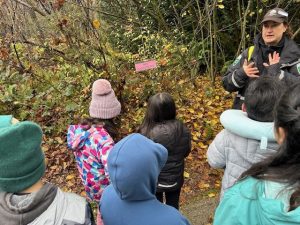 Students learned about some local plants and how to identify them. They played a running game where they got a card with clues about the plant, had to locate and tag the plant, and then race back to our leader for confirmation they identified the plant correctly and to get a new card. So fun! Check out the gallery for the different plants we identified. Some change through the seasons, but still have identifiable characteristics. Keep an eye out for these on your next walk!
Owls & Fungi
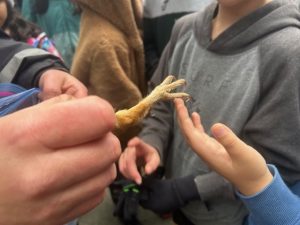
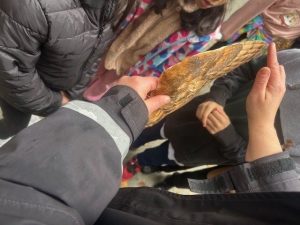
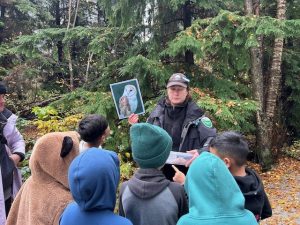 We had a very special experience to see and feel the silent wings and fierce talons that make owls efficient predators. It was interesting to compare and contrast how loud a goose feather is when flapped versus an owl wing. Geese don’t have to be stealthy, and they have waterproofing features on their feathers, but owls need to be silent to be effective birds of prey. Their talons are very sharp, too! I wouldn’t want to be on the receiving end of those razor sharp claws! We got to look at an owl skull, and we observed that the owl’s eyes sit in bony sockets to maintain their shape. Because of that, they cannot move their eyes, and that’s why their heads can rotate 270 degrees.
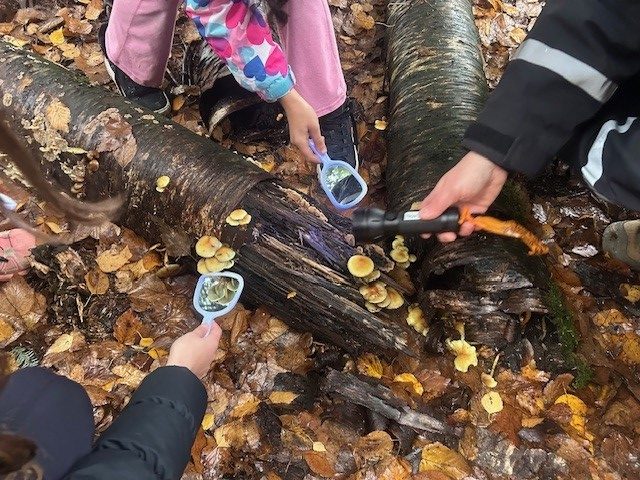
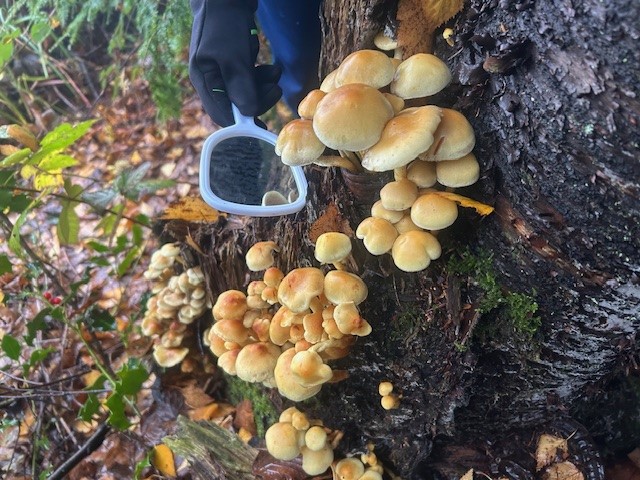
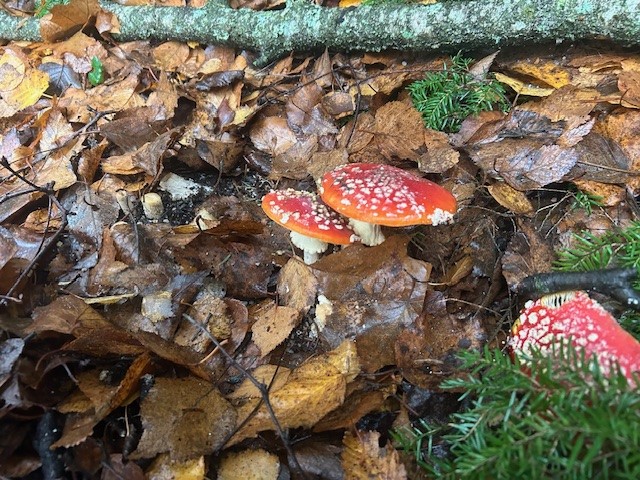
We also explored some of the fungi that grow out of logs, trees, and the ground. Because these structures are very delicate, we used small mirrors to observe the underside of mushroom caps. Seeing what kind of underside they had helped us identify what kind of fungus it was according to the identification sheet. We even saw that some fungi glow on the underside when a black light is shone on them. I wonder why they do that? What do you think?
Putting It All Together
Our guide brought out a big box with different bags in it. Each bag had a few items that connected with each other in some way that we’d talked about on our tour. As we observed and passed around the items, students inferred about what the connections could be. Sharing ideas helped spark thinking in others, and everyone could help build on the connections.
We had a really great afternoon exploring, observing, and learning more about the plants and animals with whom we share this land. I hope that students came away with increased understanding of the connectedness of this place, and compassion for all the living things here. Thank you very much to our parent volunteers for joining us, also.
Leave a Reply