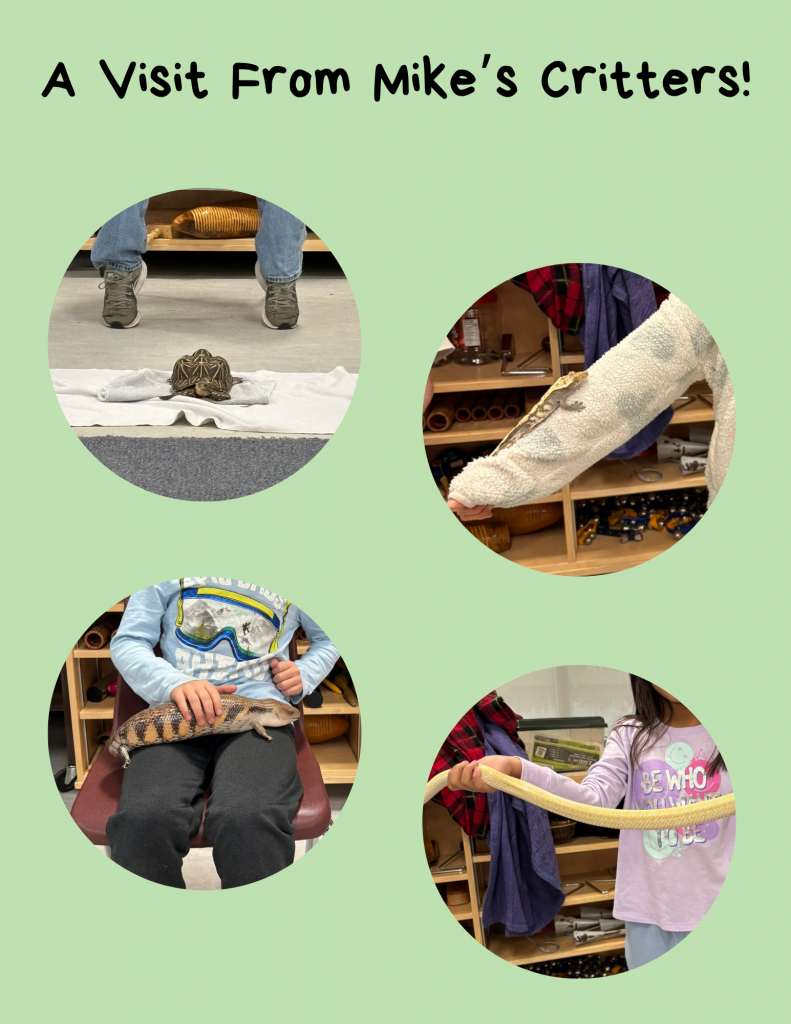
We had a visit from Mike’s Critters, where he brought some amphibians and reptiles!

It was so exciting to see the variety of amphibians and reptiles he brought in—frogs, a toad, a turtle, a tortoise, lizards, a skink, snakes, and an alligator head—and we learned so much about what they eat, what they need to survive, and where they live.

Thank you Mike for bringing your critters to visit!

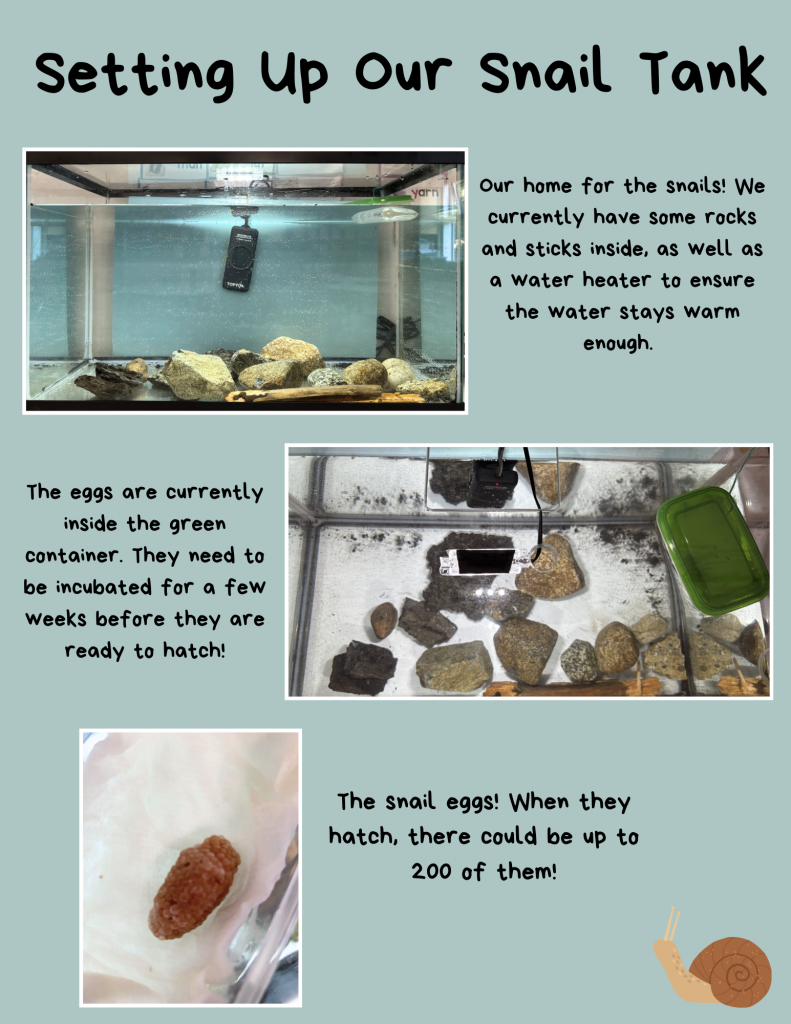
We now have aquatic snails in our classroom! They are currently in the egg stage, but we already have a fish tank and some rocks set up for them. It will take about 2-5 weeks for them to hatch, so it will be a bit of a wait, but we are eagerly anticipating their arrival. Once they hatch, there could be up to 200 snails!

This is a wonderful learning opportunity, as we are studying life cycles and biodiversity in science! We will also learn more about the snail life cycle and what they need to survive, helping us understand the importance of healthy ecosystems.

Feel free to choose from these spelling activities to practice the weekly word list sent home each week!

  • Pictures: Ask your child to draw a picture for each spelling word. This will help them grasp the meaning behind the word, ensuring they aren’t just memorizing it but also understanding its definition.
  • Count the sounds: Say each word to your child and have them count the sounds they hear. Have your child draw a line for each sound or use sound boxes. Then, have them spell each sound on the line or in the box.
  • Word Work Chains: Using the sample word work chain provided, guide your child’s practice by asking them to spell or read a new word. The Sample Word Work Chain Script shows how to alternate between reading and spelling practice. You can do this activity on a whiteboard with a dry-erase marker, or use the digital word work mat provided: click here
  • Write: Say each word to your child and have them spell it on paper, a dry-erase board, with paint, or by building the word with Play-Doh.
  • Build their own sentences: To help build understanding, ask your child to write sentences using their spelling words.
  • Dictate sentences: Read a sentence aloud that contains the spelling word, and have your child write the sentence to the best of their ability.
  • Heart word practice: Practice sounding out “heart words,” and place a heart over the part of the word they need to memorize by heart.
  • Word Hunt: Read a book (or use the readers sent home) and ask your child to find as many words as they can with the same phonics pattern. For example, if the focus for the week is the digraph “ch,” they can search for and write down words with “ch.” You can also do this activity while driving or on a walk, looking for words on signs!

We read the books The Peace Book by Todd Parr and What Does Peace Feel Like? by Vladimir Radunsky to gather ideas about peace. Then, we brainstormed about what peace means to us. We talked about how peace can be feeling calm, helping others, or being kind to one another. Some of us imagined peace as quiet moments in nature, while others thought of it as a peaceful community where everyone is treated with respect. We learned that peace can mean different things to each of us, but it’s always something that brings us comfort and joy.

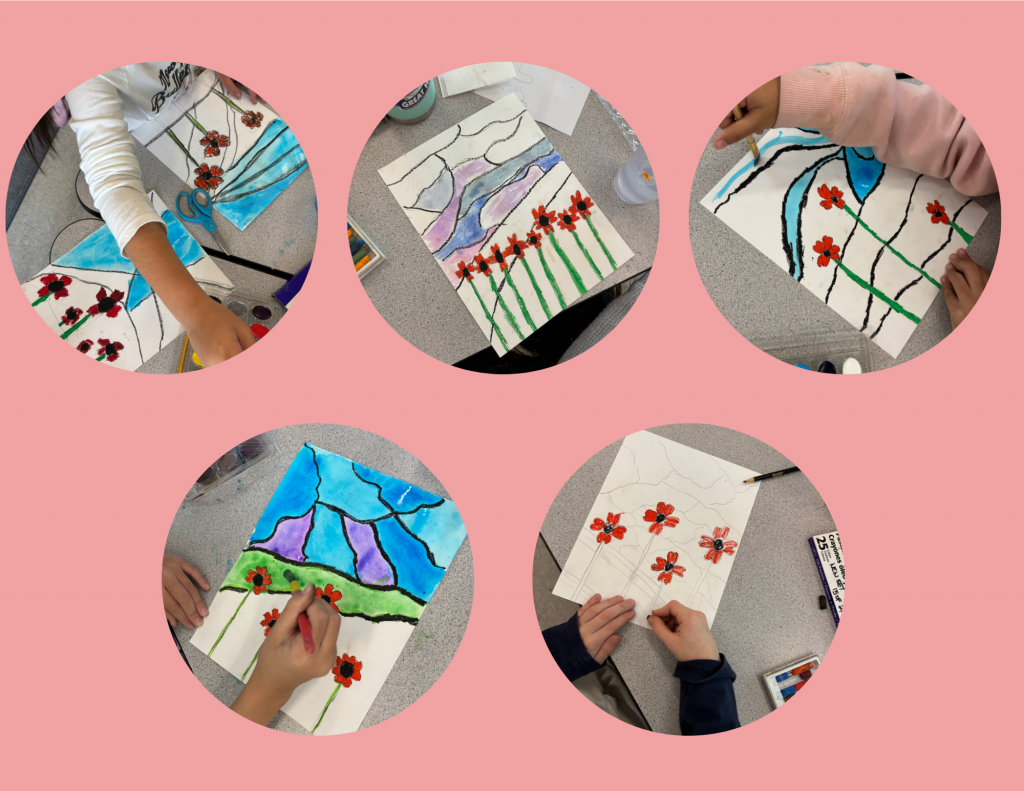
For our art project, we created a poppy landscape using a stained-glass effect! First, we drew our poppies and outlined the landscape with oil pastels. We used a black oil pastel to create the stained-glass effect, outlining the sections of the sky and hills. Then, we painted the background with watercolour paint. The oil pastels resisted the paint, creating a beautiful contrast where the outlines remained bold and vibrant against the soft, blended background.
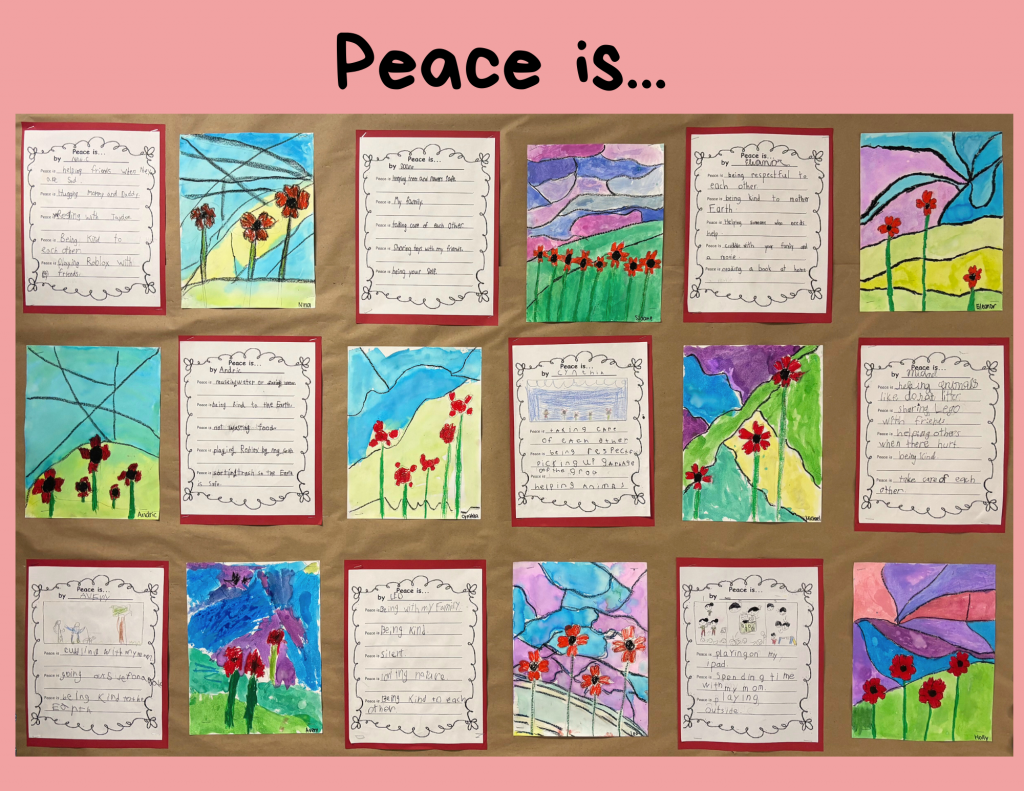
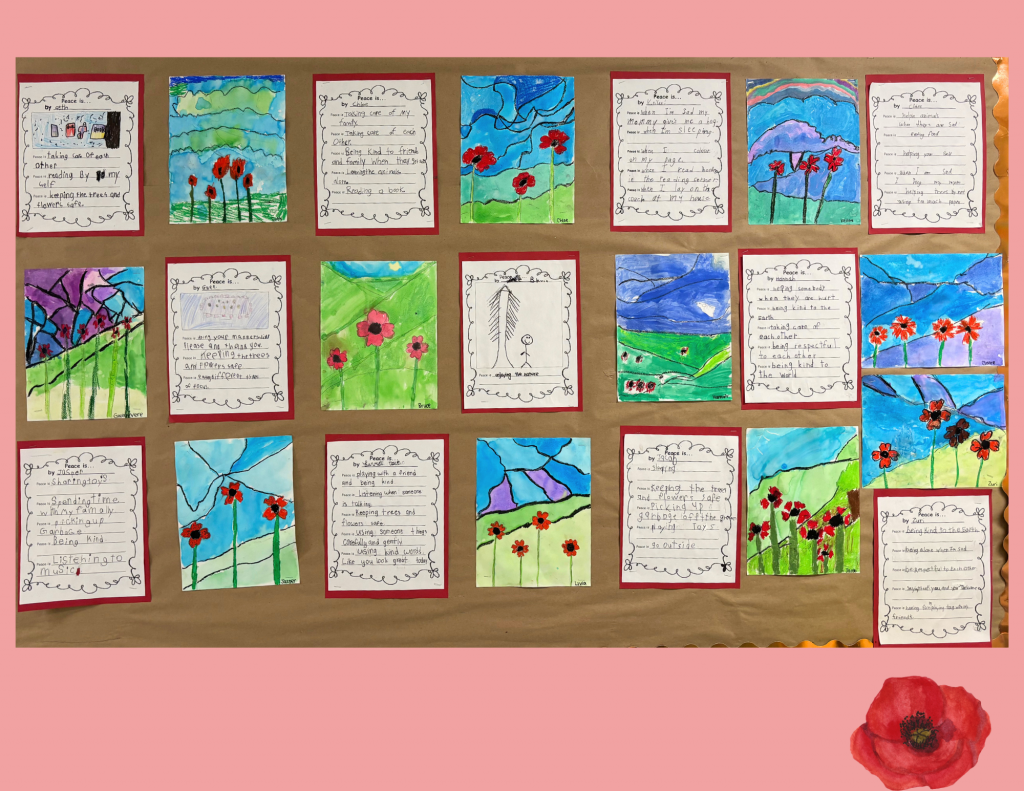
Click here to download a PDF copy to view their responses!
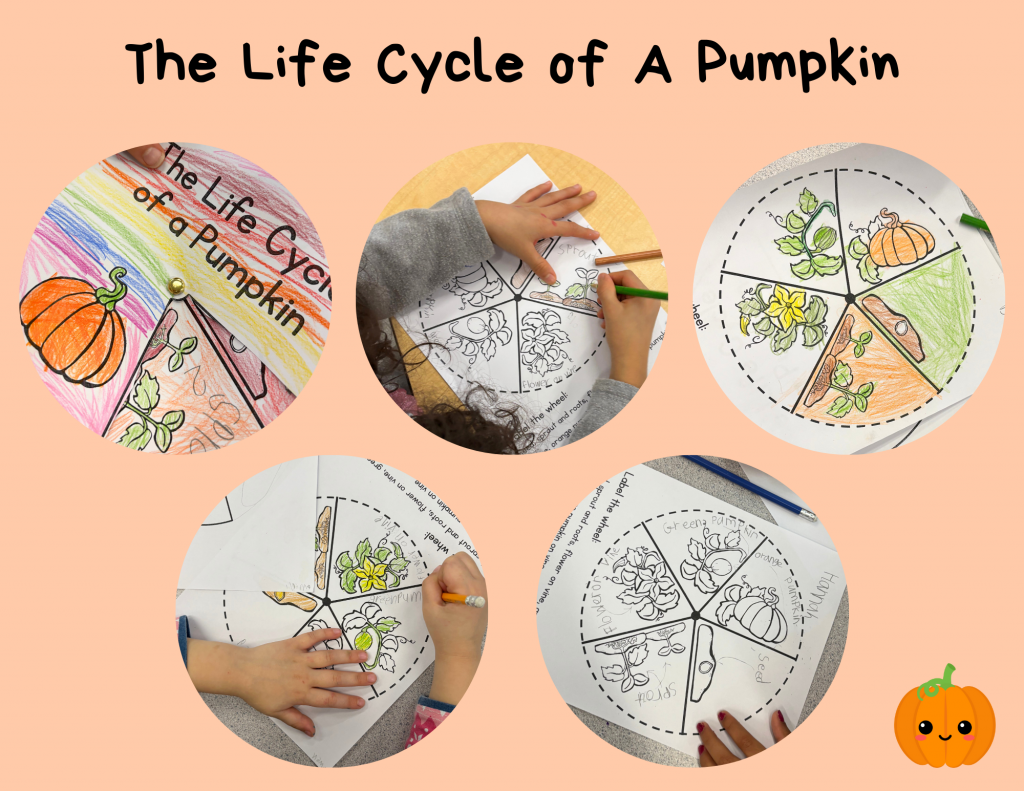
After visiting the pumpkin patch, we learned more about pumpkins! We learned about the different parts of a pumpkin and its life cycle. We discovered that a pumpkin begins as a seed, sprouts from the soil, and grows into a vine with yellow flowers. These flowers must be pollinated, often by bees, for a green pumpkin to form. Once the green pumpkin matures, it turns orange, and the cycle starts again!