
Nature Space ADST Project

Hello Everyone,

Our time outdoors during this unit has resulted in some discussions about how walking is great for your physical and mental health and how being in nature makes us feel relaxed and calm.

Let’s give some ideas to the school about what it could look like! Invent a natural space you would enjoy spending time in during your breaks. What natural elements would you include? Get creative! Remember, this is not a playground, so no playground equipment. Think trees, rocks, natural space, garden, etc.

Try to include math in the way you design your elements! Can angles, perfect circles, and/or Fibonacci play a role in your design? How will your elements work with the surrounding natural space rather than against it?

Try to include some of the indigenous plants, trees, and shrubs we will talk about in class in your space!

Here are the steps for the project with a partner!

  1. Make an individual brainstorm plan (knowing you will need to adjust your ideas once you are with a partner). Look at the websites below for ideas.
  2. Measure the actual space. We will be basing it off of the space beyond the swings in the upper intermediate playground area.
  3. Compare ideas with multiple classmates to further develop your ideas.
  4. Choose a partner you feel you can work with, and who has similar ideas (not your best friend — a classmate who can compliment your ideas.) If you are unable to get matched up, Ms. D will help. You may not work with a partner you have done things with before this year.
  5. On grid paper, begin to plan out a space together. Each block is equal to 2 feet.
  6. Start thinking with your partner about what the scale will be for the box I will provide for your project model. Set the scale and tell Ms. D.
  7. Brainstorm what materials you may need. I have lots of things including pieces of wood, sand, clay, paint, and more, but maybe you want something specific from outdoors or from home?
  8. Write a quick explanation on your e-port for me by June 15th about what your plan is and why you are doing it the way you are.
  9. Create the model! Go crazy!
  10. Write a reflection about your model on your e-port. What went well in your design process? What would you change for next time? How did it go working with a partner? Do you think this model represents a natural space someone could actually build? Is it doable? Due by June 27th.

Here are the criteria, which will be put into a rubric for your thinking!

  • Show an appropriate sense of scale when creating elements in your natural space. (applied math)
  • Include only natural elements and have a variety of different types of things to make the space interesting.
  • Use indigenous plants, trees, and shrubs, and tell us which ones.
  • Include math patterns we discussed during this unit in your design, as well as angles, shapes, equidistant measurement, balanced thinking,
  • Show thinking, through the model and your reflection, about creating a realistic space that will allow all ages to relax and enjoy the natural elements you included.
  • Use a variety of materials to represent your natural elements.
  • Show evidence in your reflection of your design process, including ways you would improve the process for next time, how you worked with materials, and how you worked with your partner.
  • Create a model that communicates your ideas clearly through specific, neat features, and clear sections
  • Provide a written explanation that further details your thinking and design process.

The written explanation for your project is due by June 15th. The model and reflection is due June 27th.

Websites As Food For Thought:

Oberlander Landscapes in Vancouver

Nine Buildings Inspired by Nature – BBC

Mathematics Garden Design

Pictures of Math in Garden of Versailles

Parc Guell Math – Gaudi

Geometry of Gaudi

The Mathematics of Play, Video

Mathematical Art of MC Escher

MC Escher Math Gallery

Nature and Architecture

10 Ways Architecture and Nature Can be Combined

Reconnecting to Nature Through Landscape and Design

Andy Goldsworthy Art

James Brunt Artist

Ten Best Roof Gardens

Math-Inspired Playground

How Fibonacci Can Make Your Garden Beautiful

Chihuly Gardens and Glass

Elements of French Garden Design with Math

The Magic of Islamic Geometric Design

Five Elements to Creating a Nature Play Space for Children

How 3D Printing Helped Us Build a Nature Space
 

Nature Math

Hello Everyone,

I wanted to update you about the math we are doing during our unit the Nature Connection.

First, we are doing math in a series of books dealing with real-life math topics. 

  • The main required book is Planet Earth Math. For quick finishers, there are also the books on Oceans and Space and the Animal Kingdom, but they are not required.
  • All books can be found on EPIC. The main one we will focus on, Planet Earth, I have paper copies of for use in class only.
  • EPIC can be accessed from anywhere online during school hours and up to 4PM. After that time, students can still access it if parents sign up for the free extended access at home. The class code to access our EPIC group and the lists of books I have provided was sent home earlier this month.
  • The topics deal with standard curriculum in grade 4/5 and are linked to nature themes connected to our unit.
  • Ms. D is providing some time in class in between our IP prep times, and during those sessions, students can come for one-on-one lesson or help with questions.

Second, we will be focusing on geometry as we look for patterns in nature.

  • We did some measuring and did some practice on metric conversions, with the idea we may need measuring as a tool to talk about patterns in nature. We will also use it as we discuss scale and use this in our ADST project.
  • We talked about the different kinds of shapes and the math vocabulary we use to classify them. We discussed regular polygons and platonic solids.
  • We talked about the different types of angles, how to use a protractor, the different types of triangles, and the sums of inner angles of regular polygons and platonic solids.
  • We discussed Science and Symmetry, watching a video on Ted Ed talking about how symmetry has a scientific purpose.
  • Students did a symmetry challenge using the Fold and Cut Theorem. It was harder than it looked!
  • We will look at Fibonacci, and do some drawing and investigating of pine cones and outdoor plants to see the sequence in action.
  • We will discuss how indigenous thinking about the nature around us and traditional scientific thought can be combined to have deeper understandings of why nature is the way it is.
  • If we get time, we will do some work with pentominoes, which allows us to review the math terms of translation, rotation, and reflection in terms of congruent shapes.
  • If we get time, we will also do some Area Maze challenges, which are just for fun, and related to geometry concepts.

Third, we will be making our own outdoor education playground model.

  • This will be an ADST project. Please stay tuned for a separate post about what to do for this project, which will be due end of June, as report cards do not go out officially until June 29th.

Nature Connection Websites

If you would like to investigate a topic with more depth, or you just need to rewatch a video from class, here are some links for you!

Math:

Math in Nature Video Series (seen in class)

Numberphile YouTube How to Trisect an Angle with Origami

How Plants Tell Time, TED Ed

The Science Behind Natures Patterns, Smithsonian Magazine

Can One Math Pattern Explain All Nature? YouTube

Alan Turing’s Patterns in Nature, Wired Magazine

Math Patterns in Nature, The Franklin Institute

Some zebras are developing odd stripes, humans may be to blame, CBC

The unexpected math of origami, TED Ed

The Math and Magic of Origami Robert Lang TED Talk

Fold and Cut Theorem Numberphile YouTube

Describing nature with math, PBS NOVA

Nature by the Numbers, Golden Ratio and Fibonacci, YouTube

Doodling in Math Class, Fibonacci Part 1

Doodling in Math Class, Part 2

Doodling in Math Class, Part 3

Painted with Numbers, Math Patterns in Nature, The Guardian

The Magic of Fibonacci, YouTube

Incredible Geometric Shapes Found in Nature, YouTube

Fibonacci in Nature Go Figure

The Golden Angle Go Figure

Fibonacci and Spirals, Fractal Foundation

Videos, Fractal Foundation

Pi and the Fibonacci Sequence, PBS


Science:

How Nature Gets Its Rhythms, TED Ed

Bird Video Library, Cornell Lab of Ornithology

Quizzes from the NCC to Learn About Animals

6 Ways Mushrooms Can Save the World, TED

Suzanne Simard How Trees Talk to One Another, TED

Nature is Everywhere, We Just Need To Learn to See It, TED

Plants Use an Internet Made of Fungus, TED Ed

What is a Fungus?, TED Ed

Reasons for the Seasons, TED Ed

Where We Get Our Fresh Water, TED Ed

Symbiosis, A surprising tale of species cooperation, TED Ed

Why do we harvest horseshoe crab blood, TED Ed

A simple way to tell insects apart, TED Ed

Birds of the World Database, Cornell Lab of Ornithology

Bird Sounds of the World, Birds.net

University of Victoria Ethnobotany Plant Profiles

Inside the Killer Whale Matriarchy, YouTube

Jellyfish Predate Dinosaurs, How did they live so long?

Hydrothermal vents, Geysers of the Deep 

Taking a Lichen to Lichen, Island Nature Blog

Lichens, Go Hiking

Bees, SFU

BC Species Explorer, BC Government Website

Fern Identification, Stanley Park Ecology Blog

Tree Book BC

Ocean Networks Canada

Arctic Diversity, Ocean Networks

E-Flora BC Plants Database at UBC

Seaweeds and Sea Grasses BC Coast

Seaweeds the Ocean’s Superfood and Where to Get It

Edible Seaweed of the Pacific Northwest

Slideshow All About Seaweed

TED, the Roots of Plant Intelligence

Can Plants Talk to One Another, TED Ed

Got Seeds?, TED Ed

Why we’re storing millions of seeds, TED Talks

Zoology UBC Mushrooms Database

The Electrical Blueprints that Orchestrate Life – Ted Ed


Health

Trees are not just for the birds, Birds Canada

Nature’s Sounds Improve Well Being, CBC

NCC Nature Tours

The Healing Power of Plants

Blue Space is the New Green Space


Socials and Social Responsibility:

TED Ed Climate Change Game of Tetris

TED Ed Climate Change Series of Videos and Lessons

Bill Nye Climate Change National Geographic/YouTube

Bill Nye 5 Things to Remember About Climate Change, YouTube/Nat Geo

Scientists team up with First Nations to revive herring stocks, CBC

Healthy Food Systems for a Healthy Planet, David Suzuki Foundation

Intact Forest, Boreal Forest Conservation

Disappearing Frogs, TED Ed

Difference Between Global Warming and Climate Change USGS (plus other articles)

Reforestation, Impact on Climate, TED Ed

Threat of Invasive Species, TED Ed

Invasive Species in BC

Burnaby Climate Action Plan

From the top of the food chain down, rewilding our world, TED Ed

Buildings Made of Fungus Could Live, Grow, Biodegrade, CBC

Climate Solutions 101

The Indigenous Science of Permaculture

Walking in Two Worlds, Inuit-Led Research in the Arctic, Science World

How Science and First Nations oral traditions are converging, CBC

Article List of Indigenous Traditional Knowledge and Western Science Connections, Stitcher

Clam Garden Network

Our Home on Native Land Maps

The Great Bear Sea Curriculum Video Links

13 Moons of the Wsanec

Silolem Moons

Moon Phases from First Nations Perspective, Teacher Blog

First Peoples Interactive Map BC

Secwepemc World View You Tube

Mysteries of Ancient Clam Gardens

Aboriginal Uses of Plants

SFU Ethnobiology Database for Indigenous Names/Uses of Plants and Animals

Inuit Sky (Astronomy)

Inuit Knowledge and Climate Change Movie

Sacred Relationship Videos About Aboriginal Connection to Water and Land

First Nations Traditional Foods Fact Sheets

Climate Change Bill Nye, Found on YouTube

A Subsistence Culture Impacted by Climate Change, Alaska, PBS

Keepers of the Coast Movie, Vimeo

Northern Abalone in Haida Gwaii

Why Beavers Matter, CBC

Eyes and Ears on the Land and Sea Movie, Vimeo

Indigenous Plant Diva, Vimeo

11 Foods Already Being Impacted by Climate Change, Rolling Stone

Micro organisms and their role in combating climate change, TED Talk

Sea Urchins in Haida Gwaii

Kelp Forest Disappeared in Haida Gwaii, and here is how they were revived

Indigenous Knowledge and Ocean Science, TED

Pacific Northwest Forests Deliberately Planted by Indigenous Peoples

What’s In the Air You Breathe – Ted Ed

Genetically Modified Grass Can Suck Toxins Out of the Ground – CBC


Language Arts:

Raven Stories

Raven Goes Fishing Story/Video

The Raven Symbol in art

Common Raven Overview, Cornell Lab of Ornithology

Common Raven, National Bird Project

Squamish Legends Database

Raven, a Haida Creation Story, YouTube

The Raven in Haida Culture

The Raven and Oral Traditions BC First Nations

Make 1,000 Ravens for Reconciliation

Vimeo, What is Difference Between Raven and Crow

Caw vs Croak Crow vs Raven Sounds YouTube

Raven and Crow Training Test YouTube

EPort Boundary Bay

Title:  Boundary Bay Trip

Questions:

1. How do you show respect for the ecosystem we visited today? What behaviours should we have in nature like the shoreline, and why?

2.  What is a specific organism you could find at the high tide line? Tell me what you know about them.

3.  What are organisms you can find in the inter tidal zone before the water?

4. What are tips you can give to someone digging for creatures in the tidal mud, so they can find them?

5. What are some of the threats to organisms at the seashore?

6. Tell me something else you learned today.

7. What did you enjoy about the trip?

Bonus:  How can you tell a male from a female Crab?


Independent Project Reflection, Due June 15th

In your e-port, please answer the following questions by June 15th, please. You will need to wait to answer questions 5-7 until after we present on June 12th.


TITLE:  Independent Project Reflection

QUESTIONS:

  1.  Why did you choose this topic for independent project?
  2.  What are some questions you asked as you did research and what categories were they in?
  3.  What did you choose to do for primary research? How did it go?
  4.  What did you choose to do for your presentation?
  5.  After presentation day, how did your presentation go when speaking with the public about your topic?
  6.  What are you most proud of from this project?
  7.  What would you do differently for next year when doing independent research?

Core Competency Reflection 2022-23 School Year

Before June 15th, please have this completed as we would any e-port. It is included as a part of your report cards and will be visible to parents, principal, and your future teacher if applicable. Thank you!

We have gone over the core competencies; however, if you need a review of what they are, so you can know which one you are talking about, here is a link to the BC Core Competencies Ministry of Education

TITLE:  Core Competency Reflection 2022-23 School Year

For each of the core competencies below, please:

  1. Tell me what the competency means to you.
  2.  Give me a specific example of a way you have used that competency this year.
  3.  Tell me what you would like to work on in that competency for next year.
  4.  Feel free to include any pictures. Please size them to be smaller, so this entry doesn’t become too long on your e-port.
  5.  Limit your response to one paragraph maximum for each competency.

The core competencies are:

  1.  Communicating
  2.  Collaborating
  3.  Creative Thinking
  4.  Critical and Reflective Thinking
  5.  Personal Awareness and Responsibility
  6.  Positive Personal and Cultural Identity
  7.  Social Awareness and Responsibility

E-PORT Curious Crows and Symbiosis

TITLE:  Curious Crows and Symbiosis

QUESTIONS:

How do you tell the difference between a crow and a raven?

What is a crow’s job in our ecosystem? Please be specific and give examples.

Who lives longer, a crow or a raven? Why?

What kinds of things would be a threat to a crow?

How are crows smart?

What is symbiosis?

What are the three types of symbiosis — tell me what they are and give an example of each one.

Bonus Question Only (answer if you can): She mentioned biomagnification and crows. What is this, and what does it have to do with crows?

End of Week Check In May 18th

Hello Everyone,

Here is a check in for everyone about what we are working on. This isn’t everything, but just an overview of some of the key items so you keep on track. Thank you!

Socials/Science:
E-Port Check In on Connection (overdue)
Map of Ecoprovinces Handout (due by Friday May 19)
Animal Research in Journal (we will check in on May 19)
Discussion on Symbiosis and Notes in Journal (done in class)
VARC Presentation on Curious Crows (done Tuesday May 16)
E-Port on VARC Presentation and Symbiosis (due Thursday, May 25)

Language Arts:
Greek/Latin Tasks (overdue)
AutoBio Poem in Journal (overdue)
Questions Poem in Journal (overdue)
List of Facts Poem in Journal (overdue)
Things I Like/Dislike  and   Mixed Senses Poems  (overdue)
Alliteration List ABCs and Poem (due Tuesday, May 23)
Ode (due Tuesday, May 23)
Lyrics Rewrite (due Tuesday, May 23)
Reading of Skeleton Tree Novel (done in class)

Math:
Measurement Handout (overdue)
Origami Hummingbird and Notes in Journal on Geometry – Origami Math (done in class)
Tricky Triangles Handout, Making a triangle and using it for art (done in class)
Planet Earth Math (ongoing, in class on EPIC or using handouts in school only)

Independent Project:
Notes, digital or journal (overdue)
Bibliography  (due May 31 to Ms. D in email)
Primary Research Documents (due May 31 to Ms. D in email)
Handouts (due June 8th)
Presentation Items (due June 9th so we can check in before presentation day)
Reflection on E-Port (due June 15th)

Other:

Core Competency Reflection (due June 15th)

Monday May 15 Check In – Ongoing work we are doing!

To help keep students on track, I always write down assignments on the board and go over planners with everyone, so we all know how to use our 30-40 minutes. I can’t do this all of the time, but as we have a lot going on right now, and we are working on our personal awareness and self-management skills, I think it would be helpful to have a list here to refer to. I will update it every few days.

***Time is given in class for all of these things, but everyone needs to be using their 30-40 minutes to do catch up.

Socials/Science:
E-Port Check In on Connection (due Wed May 17)
Map of Ecoprovinces Handout (due by Friday May 19)
Animal Research (we will check in on May 19)

Language Arts:
Greek/Latin Tasks (due Tues May 16)
AutoBio Poem in Journal (overdue)
Questions Poem in Journal (due Tues May 16)
List of Facts Poem in Journal (due Tues May 16)
Things I Like/Dislike  and   Mixed Senses Poems  (due Wed May 17)

Math:
Measurement Handout (Marked in class today May 15, please turn in)

Independent Project:
Notes, digital or journal (overdue)
Bibliography  (due May 31 to Ms. D in email)
Primary Research Documents (due May 31 to Ms. D in email)
Handouts (due June 8th)
Presentation Items (due June 9th so we can check in before presentation day)

Nature Connection and Language Arts

Hello Everyone,

As we continue our unit on the Nature Connection, here is a summary of what we are doing for Language Arts, which is intertwined into all of our activities:

  • Latin Words: To better understand our discussions around taxonomy and the classification of animals in science, we are studying Latin prefixes and suffixes, which are often used in scientific terms. They are also useful for gleaning the meaning of words we don’t know, as Latin is the root of the English language. There are tasks in each student’s binder, and there was class time given to do the work. Ideally these are completed by Tuesday, May 16th end of day.
  • Descriptive and Figurative Language: As we go outside for our walks and discuss our connection to nature, we are working on being descriptive with our vocabulary. In class, we have done some exercises in our journal to begin this journey. We are using the book Rip the Page to do poetry writing explorations, designed to get our creative imaginations flowing. We will also learn about figurative language such as personification, metaphor, and simile, as well as forms of poetry including free verse, tankas, quatrains, and ballads. Each day we will try to do 1-2 different activities.
  • Poetry Journal: Students will store these poetry explorations in their journals and then select some to be put in an artistic presentation. More to come on the options for completing this, but in the meantime, students are collecting their poems each day in their journals.
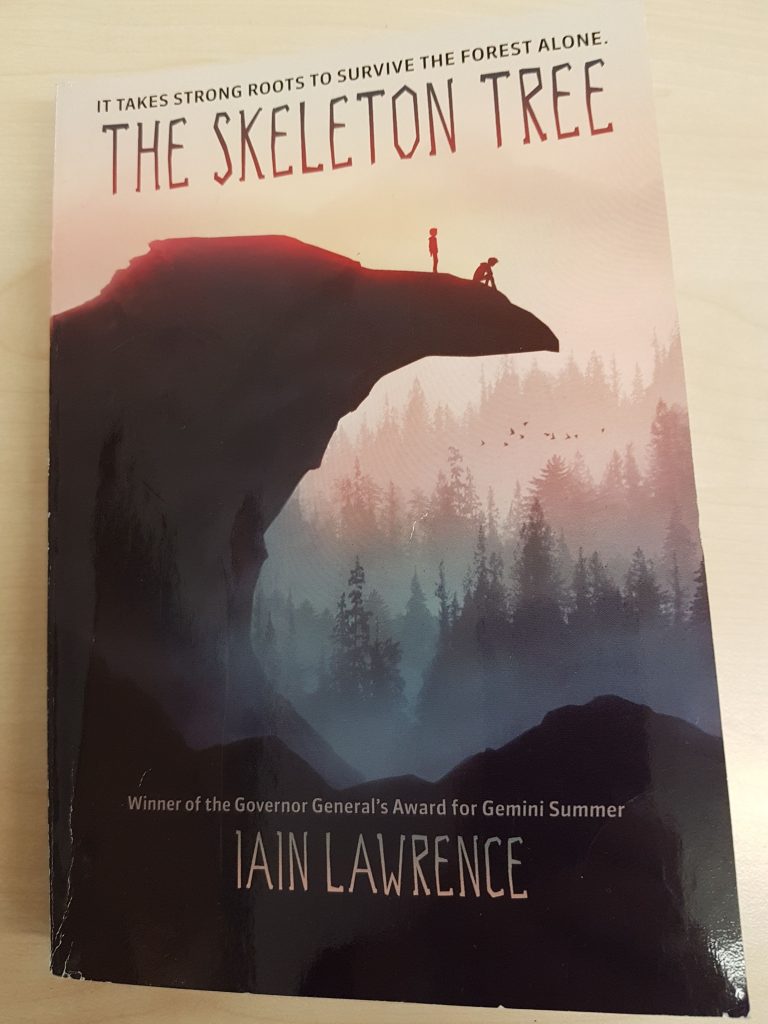
  • Skeleton Tree: We will be discussing how one can survive in nature, and the relationship between people and the land, through the novel Skeleton Tree. Students will use the Question, Answer, Response method as we read, which encourages them to think of deeper questions and to notice details while reading. We will do this together as a group, then students will produce a brief e-port book report.

More details to come about specific assignment details and due dates. This is just a summary of what we are doing.

Thank you,

Ms. D

1 2